Adventures of Anette: Japanese temples
Showing posts with label Japanese temples. Show all posts

Sunday, September 14, 2025

Hidden Templestay in Japan’s Sacred Mountains | Yamanashi’s Habanobo

5:17:00 PM


What is it like to spend the night inside a Buddhist temple in Japan?

In Yamanashi Prefecture I discovered Habanobo (端場坊), a temple stay that has been welcoming travelers for more than 750 years. Unlike a ryokan or hotel, this is a true shukubō experience where guests live as part of the temple community, taking part in daily practice and finding peace in the surrounding mountains.

During my stay I joined the monks for the evening chanting of the Lotus Sutra, ate beautifully prepared shōjin ryōri (temple cuisine), and walked the famous 287 stone steps up to Kuonji Temple at sunrise. Each moment was both humbling and inspiring.

Habanobo is located on sacred Mount Minobu, the spiritual heart of Nichiren Buddhism. From the temple grounds you can explore hidden pagodas, centuries-old cherry trees, and on clear days even see Mount Fuji in the distance. The atmosphere is calm, authentic, and far away from mass tourism.

In my latest video on "Onsen with Hansen", I take you with me to experience this unforgettable templestay. You will see the rituals, the food, the quiet mornings, and the beauty of Yamanashi’s sacred landscape.

👉 Watch the full video here: https://www.youtube.com/watch?v=aI1TJijBilI&feature=youtu.be

If you are interested in Japanese culture, spiritual travel, or simply want to discover something new in Yamanashi, a templestay at Habanobo is one of the most unique experiences you can have. Would you try it yourself?


Thursday, February 1, 2018

Sightseeing in Nagano: Morning Procession (お朝事) at the Zenkouji Temple (善光寺)

10:29:00 PM
Above: The head priest returning to his quarters after the morning prayers

A little while ago I had the chance to visit the 1998 Winter Olympic city Nagano. Having a friend visiting from abroad I wanted to give her a memorable Japan experience that included a night at a traditional ryokan hotel. Our choice of accommodation fell on Jizo Matsuya Ryokan (full blogpost here), which turned out to be the perfect starting point for visiting Zenkoji Temple.

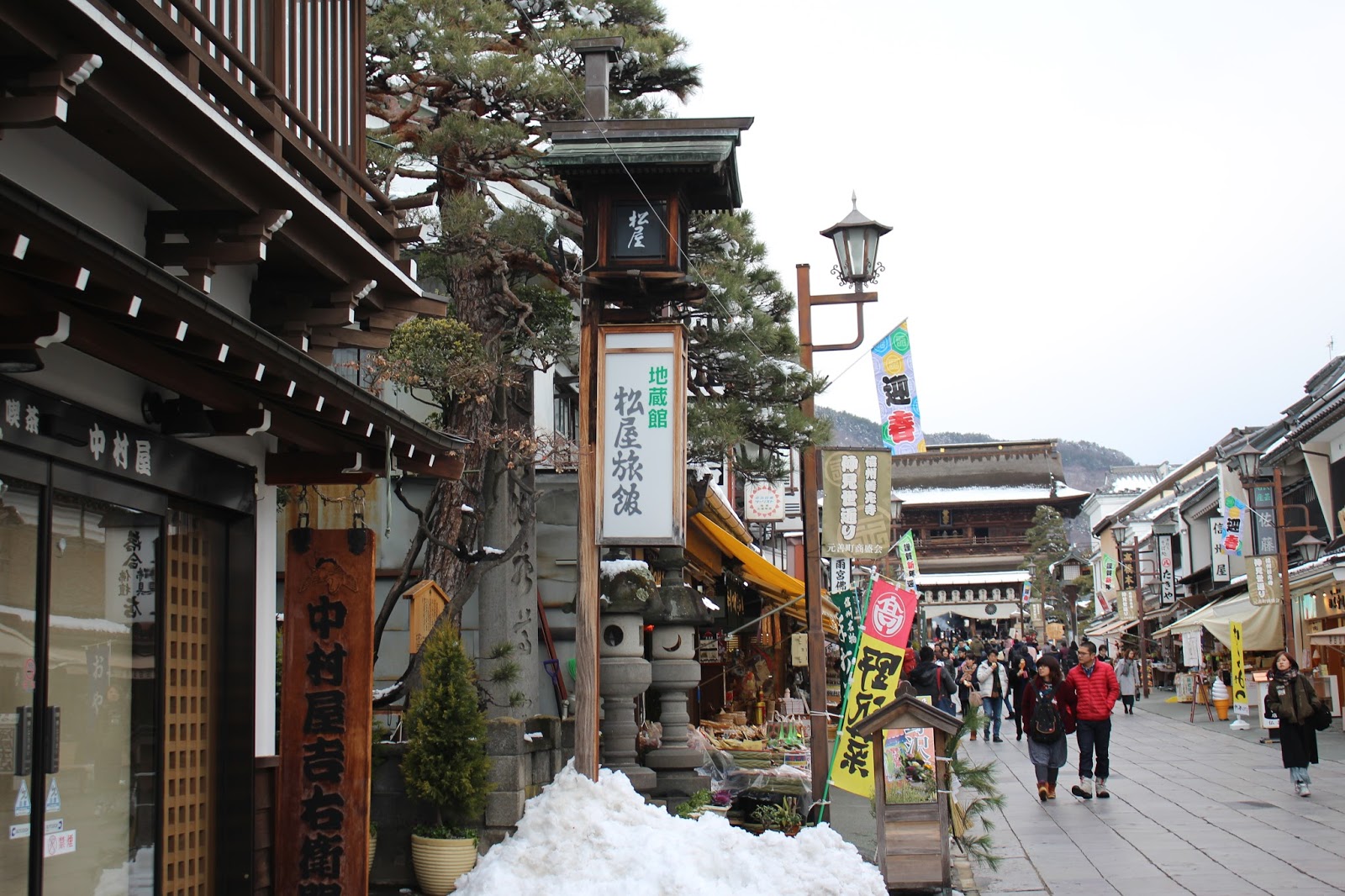
Above: The street sign of accommodation for the night, Matsuya Ryokan (松屋旅館), and the street leading up to the entrance to Zenkouji Temple

Zenkoji Temple (善光寺, Zenkōji) is one of Japan's most important temples and has a history that goes back to the 7th century. Zenkoji temple has also been of great importance for the city of Nagano, as it grew from a temple town that had developed around the Zenkoji Temple.

Sunday, May 8, 2016

Sightseeing in Niigata: The Yahiko Shrine (弥彦神社)

12:59:00 AM

The Yahiko shrine (弥彦神社 or 彌彦神社) in Niigata is situated at the root of the sacred Mt. Yahiko, and surrounded by a forest of 400-500 year old cedar and zelkova trees it is known throughout Niigata as a "power spot". It is one of the most popular shrines in the prefecture, and has a history dating back to around 711 when according to ancient records the main shrine was built.

During my trip to Niigata for the Tsubame Sakura Matsuri festival we made a short visit to the Yahiko shrine, which I have written more about below.

Saturday, November 14, 2015

Sightseeing in Nikko: A Visit to the World Heritage listed Toshogu Shrine (東照宮)

3:06:00 PM
Japan has numerous hidden gems outside the so-called “golden route” stretching from the ancient capital of Kyoto to the bustling metropolis of Tokyo. The city of Nikko is one of the many gems situated outside of the the typical tourist route that has become well-known throughout the whole world. Just a couple of hours by train north of Tokyo you can find Nikko and its famous UNESCO World Heritage Sites including the magnificent Tōshōgū Shrine (東照宮). In addition to its sheer beauty the shrine attracts tourists from all over the world as the place where one can visit the final resting spot of the Tokugawa Shogunate's founder, Tokugawa Ieyasu. If you're planning on a trip to Nikko then the Tōshōgū Shrine is without a doubt a must to visit.

Saturday, October 31, 2015

Sightseeing in Nikko: The Grand Autumn Festival Shuki Taisai (秋季大祭)

12:45:00 PM


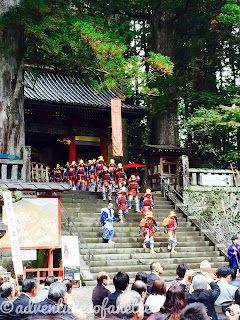
Festival participants waiting for the parade to begin
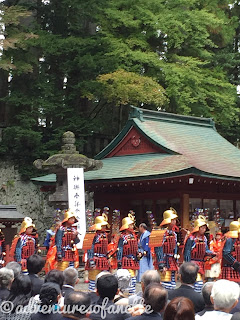
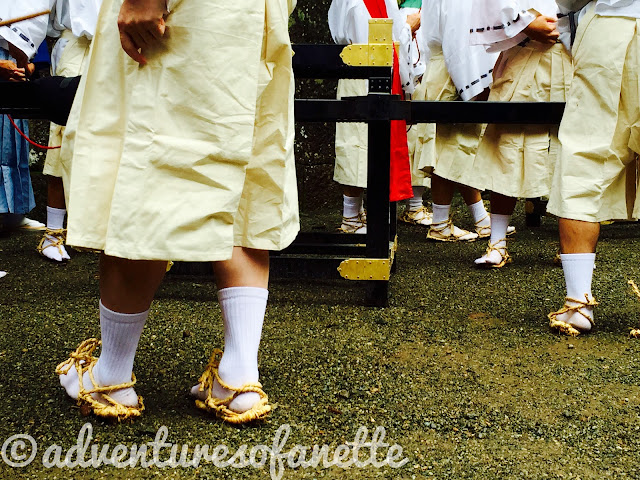
If you're planning on a visit to Nikko you might want to time it so that you get to see one of the local festivals as well. There are many events held throughout the year, such as the Grand Autumn Festival, also known as Shūki Taisai (秋季大祭). This annual event is taking place on the 16th-17th of October, and it is a smaller version of the Grand Spring Festival (Shunki Reitaisai). During the festival you can among other things see the Parade of 1,000 Samurai Warriors (百物揃千人武者行列 Hyakumono-Zoroe Sennin Gyoretsu). In reality the parade consists of not 1000 but 800 men dressed up in various historical costumes.

The parade began outside the entrance to the Taishōgun, which is Nikko's most famous temple. It is inside this temple area where the famous shogun Tokugawa Ieyasu has his final resting place. This year the event was particular important, as it commemorates the 400 years since the death of the shogun, and as you can imagine the area was packed with people traveling from near and afar to enjoy the historical event.


I traveled to Nikko with my mother and stepfather to visit the famous temples here, and we timed it so that we could see parts of the big festival as well. Although we arrived in Nikko a bit later than planed we were extremely lucky with the timing. Because it had been raining slightly in the morning the festival was delayed with a couple of hours, which gave us just enough time to do some sightseeing at some of the minor temples before the actual festival began. We lined up by the entrance gate to the Taishōgun, and ended up getting a spectacular view of the parade from where we stood. Here are some of my pictures from the parade:


Toshogu Tourist Information

Name of Place Toshogu Shrine (東照宮)
Address 〒321-1431 栃木県日光市山内2301
2301 Sannai, Nikko, Tochigi Prefecture 321-1431
Admission Tosho-gu Shrine tickets - ¥1,300 for adults,
¥450 for elementary and middle-school students
Business Hours Open all year from 8:00 a.m._5:00 p.m.
(closes at 4:00 p.m. in November through March)
Note: Last entry is 30 minutes before closing time
Public Transit
Access
Tobu-nikko Station → Tobu bus
(for Chuzenji Onsen or Yumoto Onsen) (5 minutes)
→ Shinkyo Bridge bus stop → 10 minutes on foot
* Or a 40-minute walk from Tobu-nikko Station.
Homepage http://www.toshogu-koyoen.com/toshogu/ (Japanese)
http://www.nikko-jp.org/english/toshogu/index.html 
(Nikko Tourist Association, English)


Recommended Hotels in Nikko

Nikko Station Hotel Classic
Hotel Lungwood Niigata
Iwaiyado Jyuan Ryokan
Kinugawa Onsen Hotel
Nikkorisou Backpackers


Related blog posts


Thank you for reading! Please feel free to leave any comments or questions below
- Anette

Monday, April 13, 2015

Sakura Season: Weekend Trip to Nara

10:30:00 PM
During the last couple of weeks I've had a visit from my mother and grandmother, and while I've been busy with work during the weekdays we did take some small trips during their weekends here.
For the first weekend we took the Shinkansen bullet train down to Kyoto, where we changed to the JR line heading for the ancient capital Nara. Despite having lived two years in Kyoto this was actually my first time visiting Nara.. Just about time for a visit then, one could say.!
Sakura flowers by the Himuro Shrine 
We were visiting Nara early in the cherry blossom (sakura) season, and luckily there was one small shrine along the way to famous Todai-ji (東大寺) temple called Himuro Shrine (氷室神社) where the flowers already were blooming. Apparently this shrine has a history stretching back to year 710, and it is also known for having some of Nara's earliest cherry blossoms.
We also found some other cherry blossom trees by some of Nara's famous temple buildings. Among them was, as mentioned, Todai-ji. In the picture below you can see Todai-ji and a blooming sakura tree.

Todai-ji in itself is one of the main temple buildings in Nara, and is of course a must to visit if you have the chance to travel here. With what is known as the world's largest wooden building the main hall known as the Daibutsuden (or the Big Buddha Hall) was a marvelous sight. We all felt pretty small in front of the gigantic bronze Buddha statue inside the hall called the Great Buddha (Daibutsu). It weighs 500 metric tonnes, and is the largest bronze statue of Buddha in the world.
The Great Buddha
But there are other things to see besides the temples in Nara. In fact, Nara is pretty well-known for its many deers. Nara's yuru-kyara is in fact a deer with Buddha-head (although just like Ishikawa-ken's mascot hyakuman-san he is struggling with his lack of popularity, it seems he just isn't kawaii enough for the Japanese people..). In the Shinto religion deers have been regarded as messengers of the gods, and in Nara the deers roam the grounds as they please. Tourists can buy them snacks, and we saw a lot of fat deers that seemed to have eaten too much of the snacks they are fed by tourists. Although the deer of course are wild animals and might butt you if you tease them they are generally used to people and very friendly. Yuma and I used the opportunity to take some selfies with them, and it didn't seem like they minded.
You can write your wish on a deer-shaped ema (絵馬)
A lazy deer that had gotten too much food from tourists

The deers are literarily lined up to greet you.
The deers aren't shy, and will do what they can to make you give them food
While we did spent most of our time in Nara roaming around in the parks and visiting temples our main reason for the short visit to Nara wasn't just the sightseeing. My boyfriend proposed to me at the end of last year, but our parents still hadn't had the chance to meet each other. This time my mother and grandmother had the chance to meet Yuma's parents for a nice lunch at an old ryokan (Japanese traditional style inn)/restaurant called Kikusuiro.
The entrance to Kikusuirou
The building dates back to the late 19th century, and along with the restaurant and hotel business they also arrange weddings here. I have added some pictures from our lunch below:
Lunchtime
The view from the second floor
Family picture
Our trip to Nara was very short, but we still got to see a lot in only two days. Most of the places we went by were quite typical tourist attractions, but for people visiting who are interested in eating at a historical Japanese restaurant I would definitely recommending stopping by Kikusuirou.

Related blogposts

Sunday, November 10, 2013

Traveling Japan: Mt. Fuji and its Vicinity

5:24:00 PM
Earlier this year Mt. Fuji was included in UNESCO's World Heritage List, making it Japan's 17th site on the list. As result the old volcano has experienced increased popularity, and not surprisingly the number of climbers who want to reach the top of Mt. Fuji is also on a rise. But although the view from Mt. Fuji is supposed to be very nice (when I climbed Mt. Fuji last year the weather was so bad we could not see much besides the heavy clouds), it is perhaps even better to climb one of the nearby mountain to take a look at Mt. Fuji from afar.
Mt. Fuji seen from the camping area by lake Motosuko
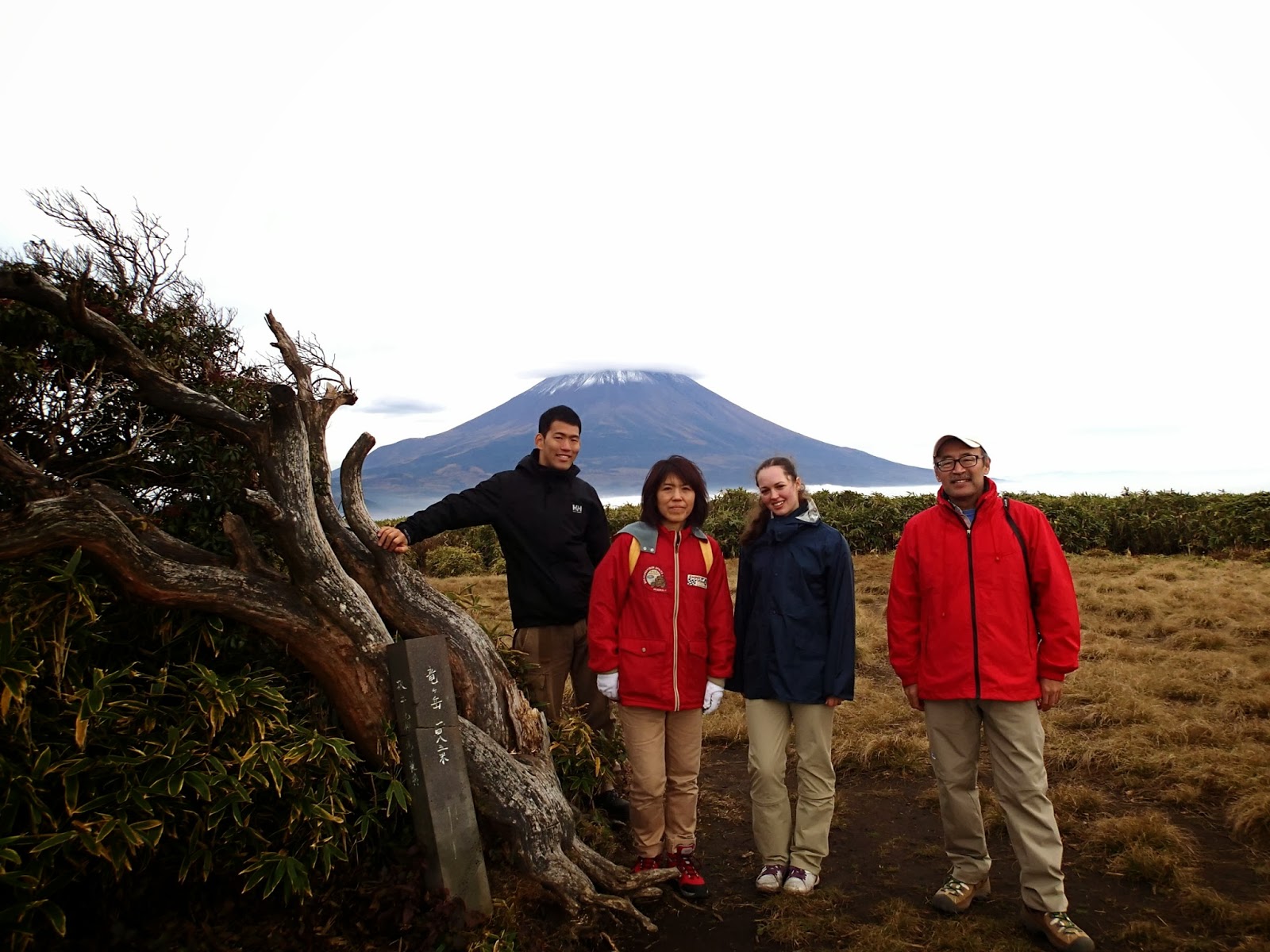
Last weekend I went on a trip to the lake area around Mt. Fuji along with my BF Yuma and his parents for a two-day hiking/onsen/tourist-trip. Our first goal was to climb some of the small mountains surrounding Mt. Fuji in order to get a good view of the mountain. The area around Mt. Fuji is quite mountainous, and there are many routes to choose from. We had first planned to climb Ryugatake (龍ヶ岳), and we started out by the camping area by lake Motosuko (本栖湖) on the west side of the famous volcano. It is easy to find the track from there, and once you get to the sign that marks the entrance to the mountain trail you can follow the path all the way to the top.

Be aware of bears at Mt. Ryuugatake
Mt. Fuji seen from Mt. Ryuugaktake 
At the summit of Mt. Ryuugatake
 Apparently there are some legends behind the name Ryuugatake (Dragon Mountain) too. They all are quite similar, and build around the story that a dragon protected a village from Mt. Fuji's lava during an eruption. For more information about hiking Ryuugatake, see this page (Japanese only).
集合写真
After our day in the mountain we spent the evening at a traditional Japanese hotel (Ryokan) called Fuji Ginkei, situated by lake Kawaguchi (河口湖) with a nice view of Mt. Fuji. At the ryokan we were met with the utmost service, and after having gazed at Mt. Fuji from the hotel's outdoor hot bath (Rotenburo 露天風呂) it was time for Japanese style dinner. Traditional Japanese washoku (和食) food is another expected Japanese contribution to the World Heritage List, and unless you either can't stand raw fish or are generally skeptical to unusual food you're guaranteed to get a lot of satisfaction out of a full course washoku dinner. The staff really pay attention to the details, and every plate we got served looked like some sort of art.

The devil is in the detail.
Dinner time!
The view from our room. Unfortunately Mt. Fuji was all covered by clouds..
 The next day it was quite cloudy so we could not get a proper view of Mt. Fuji from the hotel.. I've added this picture from Fuji Ginkei's homepage, depicting their outdoor onsen and Mt. Fuji:
Mt Fuji seen from Fuji Ginkei's outdoor onsen
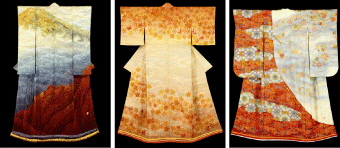
There are several interesting places to visit in the area as well. We visited the Ichiku Kubota Art Museum, where in addition to exquisite kimonos you can enjoy the beautiful garden and various treasures collected by the artist himself from all around the world. Ichiku Kuboto became famous after having rediscovered the Tsujigahana dying technique that had been lost since the 17th century. His museum featured a large number of kimonos he has made through his life, but unfortunately visitors are not allowed to take photographs inside the museum. I've only snapped a couple of pictures of the garden.
The entrance to Ichiku Kubota Art Museum
A red tree seen from the museum's gate. 
In the back of the museum there is a cafe where you can enjoy the view of the beautiful garden
A door inside the garden leading to.. 
Some of Ichiku Kubota's kimonos (take from the museums web page)
Another place that might be interesting to stop by for a short visit, is the small shrine called Tainai-jinja (胎内神社). From the outside it doesn't look like there is anything special about it, but when you enter you find that there is a hidden grotto in the back of the shrine's main building. The name Tainai actually means "interior of womb"... 
Although Tainai jinja looks like an ordinary shrine, that is not totally the case..
A hidden pathway in the back of the shrine
A statue inside the "womb" grotto
Be prepared to have minimal space to move..
No place to be if you have claustrophobia..
 I wouldn't recommend this place if you are afraid of being stuck underground.. But if you can cope with it, then this might be quite a unique experience to add to your list of adventures. It is not a very famous place, so there is not that information available. Place and description can however be found here.
My last picture from the trip. Mt. Fuji and the pretty red leaves..
All in all Mt. Fuji makes a great travel destination even if you don't intend to climb it. There are many places to visit in the area, and I personally think seeing Mt. Fuji from afar in itself is a must for anyone visiting Japan.

I would also like to add that I had a fantastic weekend with Yuma and his parents, and I'm lucky that I have such wonderful people in my life. Hopefully we'll get to spend some quality time together again in the near future.

Related blog posts


Recommended Hotels close to Mt. Fuji

Hotel Kaneyamaen
Hotel Kaneyamaen
Fuji Royal Hotel Kawaguchiko
Kawaguchiko Country Cottage Ban


This page contains affiliate links, and if you follow a link and make a hotel reservation through these links you help support this blog without any additional cost to you. Thank you so much for your kind support!


About Me

Adventures ofAnette


A modern day shield-maiden who loves to explore the unbeaten paths of the world. From her base in Tokyo, Anette takes on both rural and urban challenges, and goes by the motto "No challenge too big, no adventure too small"!
・Read more →


Recent Posts

recentposts

Random Posts

randomposts