Adventures of Anette: Nagano
Showing posts with label Nagano. Show all posts

Monday, October 6, 2025

I Stayed at 3 Real Life Japanese Inns That Inspired Spirited Away | Ghibli Pilgrimage Japan

8:31:00 PM


You know that quiet moment when dusk settles in, and the air turns a little thicker with memory? In Japan, that moment often happens at a ryokan.

During one of my most recent journeys, I decided to follow not just a trail on the map—but a trail of wonder. A Ghibli trail, to be exact. And if you’re a fan of Spirited Away (aren’t we all?), this one might just make you book your next trip.

I visited three inns that are widely believed to have inspired Spirited Away’s magical bathhouse. Each one felt like a different kind of portal—one into craftsmanship, one into artistry, and one into something… a little otherworldly.


Kanaguya: Wood, Lanterns, and the Whisper of Spirits

The first stop was Kanaguya Ryokan in Shibu Onsen, tucked away in the mountains of Nagano. The moment I stepped through the wooden entrance, I felt like I had landed in the 1930s—and possibly also in another dimension.

The ryokan’s crown jewel is the Seigetsuro, a four-story wooden masterpiece built entirely without nails. Every beam and balustrade was carved by hand, and at night, with the lanterns glowing and casting shadows down the creaky corridors, it was hard not to feel like soot sprites might be around the next corner.

Kanaguya doesn’t just look magical—it’s powered by it. The inn draws from nine different natural hot spring sources, which the current fourth-generation owner blends daily with a kind of alchemical care that’s almost poetic. I tried each of the indoor baths during my stay, and each felt slightly different—softer, lighter, deeper, like the water had mood swings.

And if you’re the type who enjoys a bit of ritual, the Shibu Onsen nine-bath pilgrimage is a must. I shuffled through town in my yukata and wooden sandals, little wooden key in hand, unlocking bathhouse doors one by one like I was collecting blessings.


Meguro Gajoen: The Dragon Palace Hiding in Tokyo

From quiet Nagano to the heart of Tokyo—it felt like I jumped timelines. Meguro Gajoen is not your average inn. It’s more like someone gave Japan’s best artisans a blank cheque and said, “Go wild.”

Originally opened in 1931, this place was once dubbed the Dragon Palace of the Showa Era. Walking through the Hyakudan Kaidan, the “100-Step Staircase,” I felt like I was in a fantasy film. Each of the connected banquet rooms is themed, and dripping with traditional arts: gold-leaf ceilings, mother-of-pearl inlays, hand-carved screens. It’s not subtle, but then again, neither is the bathhouse in Spirited Away.

Meguro Gajoen isn’t a ryokan in the traditional sense—you don’t sleep on tatami floors or wear a yukata here—but it is a preservation of cultural elegance, and walking through it made me feel oddly proud. Proud that spaces like this still exist in the chaos of a city like Tokyo.


Sekizenkan: Where Time Stretches and the Air Hums

Then there was Sekizenkan, in Shima Onsen. And this place… well. This place made me slow down without meaning to.

Founded back in 1691, Sekizenkan is one of Japan’s oldest ryokans, and stepping onto the red-lacquered bridge that connects the main building to the mountain annex felt like walking into a scene from a dream. At dusk, when the lanterns begin to glow and the water runs dark beneath the arch, it’s easy to understand why people say this was the bridge that inspired the one to the spirit world.

Their bathhouse, Genroku no Yu, is a marvel. Arched windows, tiled floors, and that soft, timeless echo of water dripping onto stone. I sat there longer than planned, letting my thoughts unravel.

There’s something about Sekizenkan that doesn’t try to impress—it just is. It has the kind of quiet dignity that makes you whisper without realizing it. And coming from a culture where silence can sometimes feel like space between thoughts, this place taught me that in Japan, silence is the thought.


A Glimpse Into Another Layer of Japan

As someone from the Nordics, I'm used to silence. But Japan's silence is different—more alive, more patient. These ryokans aren’t just accommodations. They’re portals. Each one showed me something deeper about Japan’s relationship with nature, time, and imagination.

If you’re looking to step beyond the Tokyo-Kyoto route and experience the kind of Japan that inspired the world’s most beloved animated film, these three inns belong on your map.


🎥 Want to See the Magic Come to Life?

I documented this journey in a video you can watch here:

👉 Watch: 3 Real-Life Ryokans That Inspired Spirited Away

Whether you're planning your next onsen stay, building a Ghibli travel itinerary, or simply dreaming of red bridges and lantern light, I hope it inspires you to go deeper into Japan.

Until next time—let's relax, rejuvenate, and rediscover Japan one ryokan at a time.

Thursday, February 1, 2018

Sightseeing in Nagano: Morning Procession (お朝事) at the Zenkouji Temple (善光寺)

10:29:00 PM
Above: The head priest returning to his quarters after the morning prayers

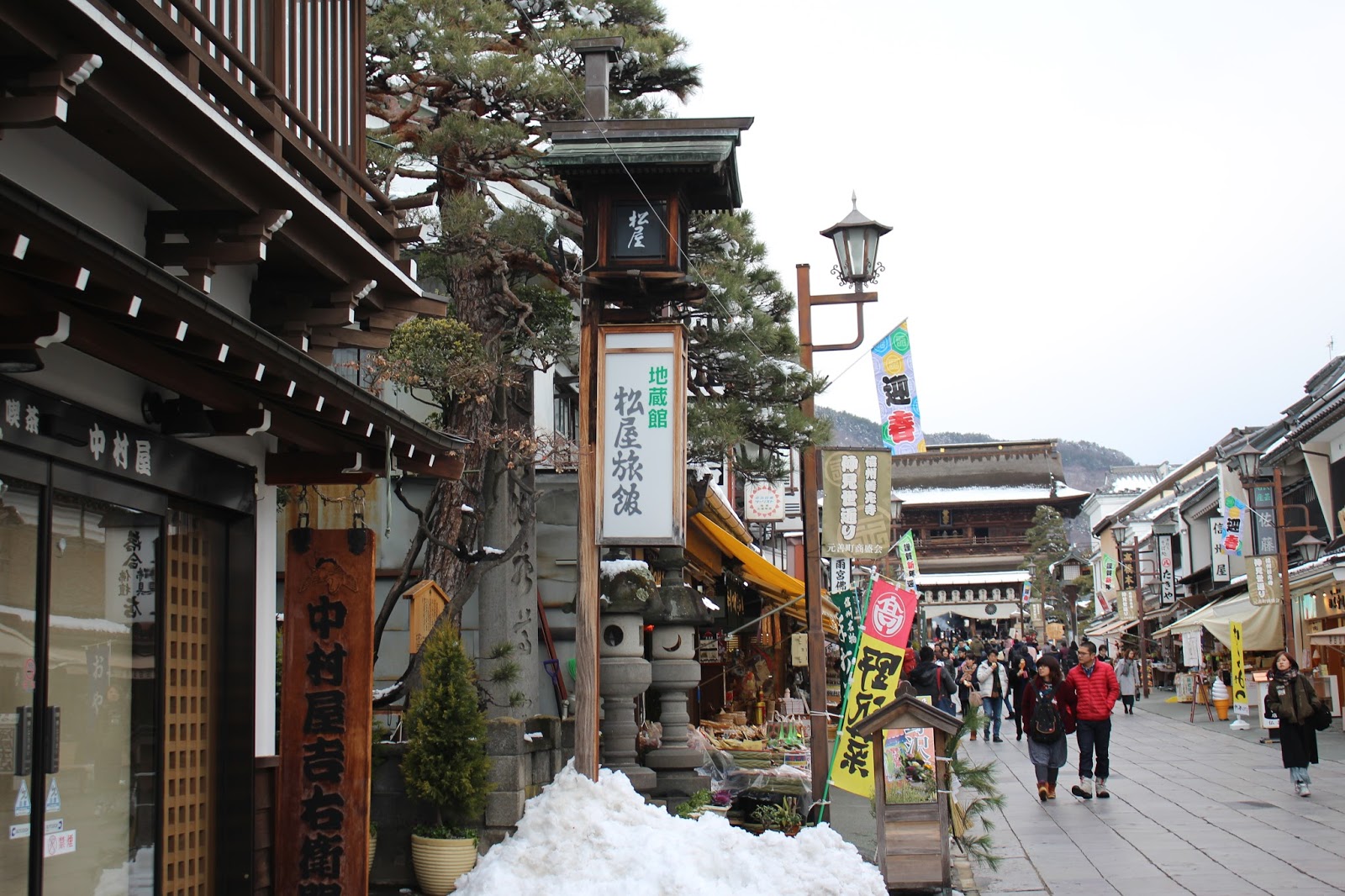
A little while ago I had the chance to visit the 1998 Winter Olympic city Nagano. Having a friend visiting from abroad I wanted to give her a memorable Japan experience that included a night at a traditional ryokan hotel. Our choice of accommodation fell on Jizo Matsuya Ryokan (full blogpost here), which turned out to be the perfect starting point for visiting Zenkoji Temple.

Above: The street sign of accommodation for the night, Matsuya Ryokan (松屋旅館), and the street leading up to the entrance to Zenkouji Temple

Zenkoji Temple (善光寺, Zenkōji) is one of Japan's most important temples and has a history that goes back to the 7th century. Zenkoji temple has also been of great importance for the city of Nagano, as it grew from a temple town that had developed around the Zenkoji Temple.

Tuesday, January 23, 2018

[Hotel Review] Zenkoji Temple's Jizo Matsuya Ryokan (松屋旅館)

10:51:00 PM
One of the most popular things to do for visitors to Japan is to stay a night at a traditional Japanese ryokan hotel. The ryokan hotels hold a long history in Japan that goes back as far as the eighth century, and with all of the ryokans having their own unique style and history it is definitely one of the most extraordinary things you can experience as a foreigner in Japan. When my friend told me she wanted to visit me in Japan the first thing I did was to search for potential destinations not too far from Tokyo where I could show her the special atmosphere you only can find at an old ryokan.
Above: Jizo Matsuya Ryokan seen from the temple street

Our choice landed on Nagano, a city made known worldwide through the 1998 Winter Olympics, and more recently for the famous bathing monkeys of Jigokudani. While Nagano also offers great outdoor activities like skiing (see: HakubaShiga-Kogen, and Nozawa Onsen) or hiking (Kamikochi) our trip this time was focused on getting some relaxing time in a traditional ryokan hotel.
Jizo Matsuya Ryokan immediately attracted my interest with the picture of a large Jizo statue in front of the ryokan’s main entrance. Although ryokan hotels usually have a touch of traditional Japan I found this feature highly unique. After reading a bit about the history of the ryokan I learned that the main hall of the famous Zenkoji Temple (善光寺)  now situated just down the street used to stand at the very spot of Jizo Matsuya Ryokan before it burned down 300 years ago… Needless to say, I was sold.

See also: 

Monday, February 27, 2017

Nagano: Skiing in the Nozawa Onsen Snow Resort

7:01:00 PM
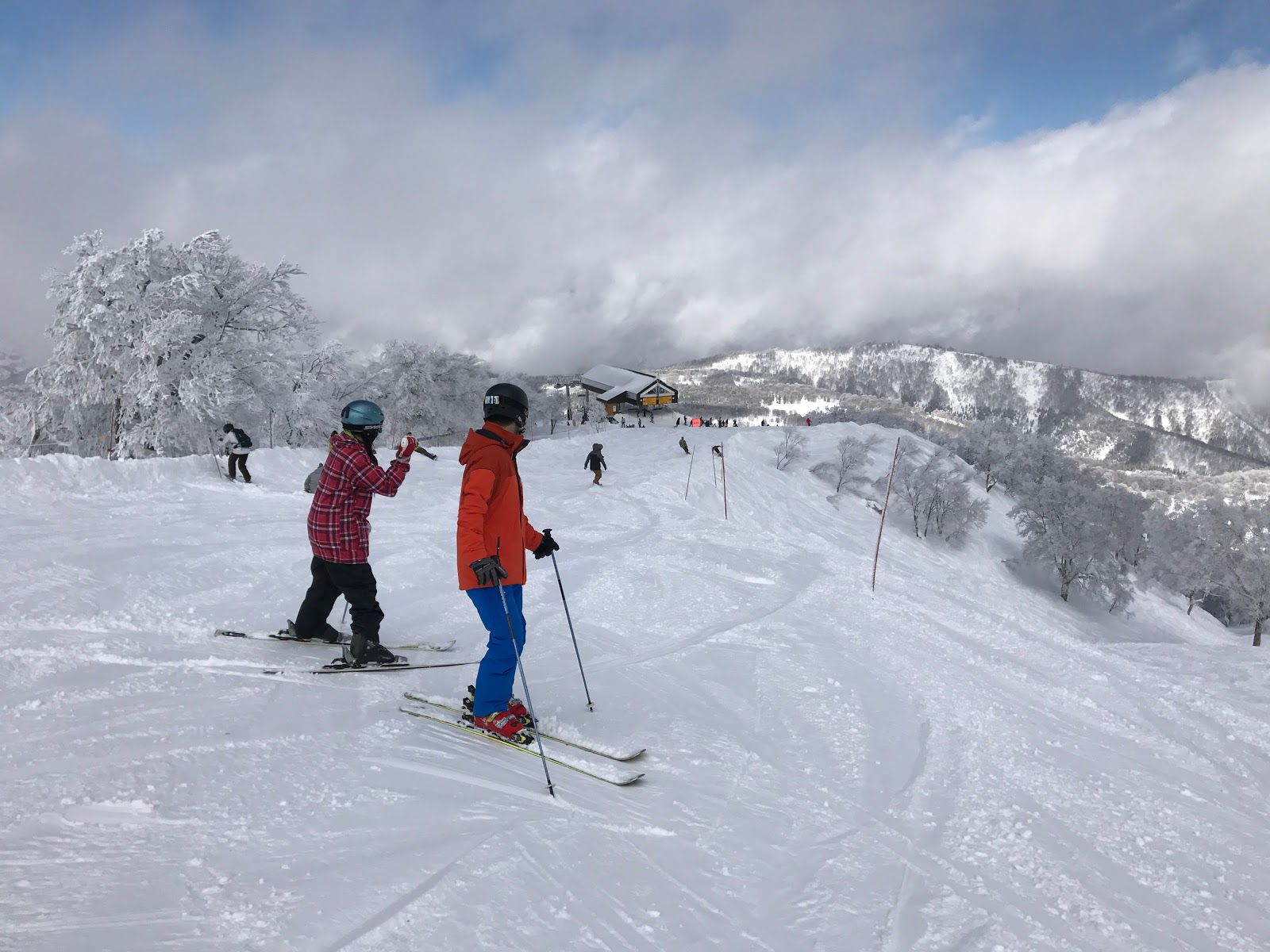
Nozawa Onsen Snow Resort is one of Japan's largest ski resorts, and has among others been listed by Powerhounds as one of Japan's best ski resorts based on things like infrastructure, snow and overall value. I've been in Nagano a couple of times for skiing, both in Hakuba and Shiga-Kogen, and this time it was finally time to take a trip to check out the slopes in Nozawa. Part of the 1998 Winter Olympics were held in Nozawa, and thanks to the games you can find up-to-date infrastructure all there to make your skiing as smooth as possible.

Thursday, February 23, 2017

Sightseeing in Nagano: 5 things to do in Nozawa Onsen (野沢温泉)

11:29:00 PM
It is again ski season here in Japan, and this time I've had the pleasure of trying out the ski slopes in Nozawa, which is an area that is also famous for.. You guessed it right; onsen! Just like Kusatsu where I visited a couple of months ago Nozawa has what they call and onsen-gai (温泉街); a hot spring district within the town. This made Nozawa an extra great ski destination; after a day out in the cold we could all go and soak in the hot spring and at the same time enjoy the laid back atmosphere of the town.

Sunday, February 14, 2016

Sightseeing in Nagano: Shibu Onsen (渋温泉)

11:09:00 PM
For people taking the trip to Yudanaka to see the bathing monkeys in Jigokudani there are not too many options for other things to do in the area unless you, for instance, go skiing in Shiga-Kogen. Last week during my Nagano trip we were a bigger group, which made it harder to coordinate the sightseeing with skiing, so instead, we spent our leftover day walking around in the area of our ryokan hotel Aburaya Tousen. About 15 minutes away from Yudanaka by foot you can find the historic Shibu-Onsen (渋温泉) area that is mainly famous for its 9 small hot springs. But even if you're not interested in public hot spring baths in the first place you'll find gorgeous old Japanese architecture that will make a stroll in the area well worth your time.

Friday, February 12, 2016

[Hotel Review] Nagano: Aburaya Tousen Ryokan (Yudanaka) - あぶらや燈千

1:00:00 AM
Room with private onsen bath
During my recent trip to see the bathing Snow Monkeys in Jigokudani I had the pleasure of spending a night at the renowned ryokan (traditional Japanese style hotel) Aburaya Tousen (あぶらや燈千) with a group of friends. The ryokan was located only 5 minutes away from Yudanaka Station by foot, but when we arrived at the station a representative of the hotel was already there to pick us up.

Thursday, February 11, 2016

Monkey see, monkey do: Visiting Jigokudani's Bathing Snow Monkeys

2:56:00 PM
As the old saying goes; monkey see, monkey do! In Jigokudani - literarily Hell's Valley - the monkeys have learned to enjoy bathing in the hot spring, and if you visit the valley you can see both young and elder monkeys monkeying around or just soaking in the hot water. Although these monkeys belong to a very common Japanese species called macaque, the monkeys living in the snowy areas of the country are more often referred to just as that - “snow monkeys” (スノーモンキー). You can find macaque monkeys all over Japan, but it is only the snow monkeys in Nagano's Jigokudani that are known to take hot spring-baths, a peculiar sight that attracts visitors from all over the world.

Thursday, March 26, 2015

Skiing in Japan: Shiga Kōgen

11:42:00 AM

Japan has a number of famous places for people who enjoy winter sports like ski and snowboarding, and with its steep mountains and beautiful powder snow, it is a popular ski destination from people from near and far. One of the places well-known for people who enjoy winter activities is Shigakōgen in Nagano. With 21 ski resorts it is one of Japan's largest ski areas, and during the 1998 Nagano Olympics, a number of the games were hosted here.

Saturday, August 9, 2014

Sighteeing in Karuizawa: Old Karuizawa Main Street

11:17:00 AM
Old Karuizawa Main Street (旧軽井沢)
Karuizawa is an area famous for its many high-end resorts and luxurious summer houses owned by the country's many billionaires and celebrities. In the summer it is a popular destination for people who want to get away from the hot and humid city life in Tokyo, and in the winter the area attracts visitors from people interested in winter sports.
Old Karuizawa Main Street (旧軽井沢)
Last weekend I went to Karuizawa along with my friend and co-worker Kristian, some of his friends and my boyfriend Yuma to spend some time outside the increasingly hot and humid Tokyo. The first day was spent mostly relaxing, but the second day we had the chance to do some sightseeing too. We went to the old shopping street known as the Old Karuizawa Main Street, sometimes also is referred to the Old Karuizawa Ginza. Here you can find both expensive brand stores, but also interesting local stores that offer some of Karuizawa's local specialities.  

Pictures of a man with a bee beard
Totoro!

Kristian trying on some gigantic crocs

You can also visit a small bakery called the France Bakery where John Lennon apparently used to stop by frequently. There is a picture of him on the wall inside the bakery taken during one of his visits.


Another place that might be worth a visit is the small Karuizawa Photo Studio (軽井沢写真館) situated further down the Old Karuizawa Main Street. You can have your photo taken with dresses that make you look like you've just been traveling back in time to Europe in the 18th century or something. Apparently this photo studio is quite well-known, and it has previously been introduced on Japanese TV as well. Next time I visit Karuizawa I might want to get my picture taken here, it looks pretty cool.. Haha..


Some of the dresses you can try on for your own back-in-time photo
But of course, Old Karuizawa is also packed with more traditional Japanese places to visit. You can shake off most of the tourists and shoppers once you get further down the road, and see some nice old buildings at the same time. At the end of the road you'll find yourself almost at the brink of the forest. So if you get tired of the swarm of shoppers at the beginning of the street you might want to head over to this part of the street instead.

Typical Japanese 雰囲気


An old house at the end of the Old Karuizawa Main Street


How to get there
You can easily get to Karuizawa by Shinkanzen from Tokyo, a trip that costs 5000 yen and takes little more than an hour. If you're on a budget you can also get there for only 2000 yen by bus leaving from Ikebukuro Station. The bus trip takes about 3 hours (during the weekend you usually have to add an hour due to the congested traffic). To get to the Old Karuizawa Main Street from the station you walk north and turn right after about 1km.

Other Pages:
Karuizawa Tourist Guide
Some information about Old Karuizawa in Japanese (w. pictures)

Related Blogposts:
Rakuten Travel Hotel Training: Karuizawa Prince Hotel

Saturday, October 19, 2013

Hiking in Kamikōchi - The Japanese Alps: Mt. Yake (焼岳)

12:50:00 PM
Getting closer to the mountain
Although Japan might be most known for its major metropolitan areas like Tokyo there are also mountainous areas such as the so-called Japanese Alps on the main island Honshū. I've already visited the Japanese alps once this year, as Yuma and I climbed Mt. Chōgatake (蝶ヶ岳) in July. This time our goal was the summit of Mt. Yake (/Yakedake 焼岳), which actually is an active volcano and listed as one of Japan's 100 most famous mountains (百名山). We left Tokyo early Saturday morning with the bus from Shinjuku, and reached Nagano's Matsumoto city at 9 am. This time Yuma's father also joined us for the hike from Matsumoto, and together we took a taxi to the trail entrance and began the hike (although I would recommend taking the train from Matsumoto rather than a taxi. You can't go all the way to Kamikochi by train, but taking the taxi form Matsumoto takes about an hour and is thus sliiightly expensive..).

Autumn is on its way here in Japan, and as we walked through the green forest we could see a gradual increase in trees with red leaves. This phenomenon is known as kōyō (紅葉) in Japanese, a word that literarily means "red leaves". In October and November, the leaves of among others the blood maples turn red, and this time of the year is therefore widely regarded the kōyō-season in Japan. 

Sunday, July 21, 2013

Lodging in Kamikōchi - Nishiitoya (西糸屋)

4:47:00 AM
Kamikōchi is a popular tourist destination, both for hikers but also for people who want to chill out and enjoy the sight of the beautiful nature. As a result there are a small number of traditional Japanese guesthouses situated by the river where you can stay the night and enjoy the typical hospitality of the Japanese people.
During our weekend trip to Kamikōchi last weekend my boyfriend and I stayed for one night at a guesthouse called Nishiitoya, a name which litterarily means "south thread house".

The Nishiitoya situated right by the river, and surrounded by mountains.

Our Japanese style bedroom

.. And with a typical tokonoma (床の間) alcove

Both dinner and breakfast was included in the stay, and in the evening we had a delicious washoku (和食) Japanese style dinner.
An overview of the food we has for dinner Yummy!
Like most Japanese guesthouses they also offer free access to their Japanese style bath, where one could sit and enjoy the view towards the mountains. In addition they also had a small sauna.


The changing room

For those who want to spend time reading about things related to hiking and nature they also provide their guest with a common room where a wide range of books can be read.
The common room, which offered a wide selection of books about outdoor activities

Our favorite was still the cafe, where they offered free drinks for staying guests and a nice view of the outside river.

After having hiked the nearby Mt. Chogatake it was refreshing to spend a day relaxing in the beautiful Kamikōchi. I already look forward to the next time my boyfriend gets some days off work. This time we're going to visit my hometown in Bergen, Norway.

About Me

Adventures ofAnette


A modern day shield-maiden who loves to explore the unbeaten paths of the world. From her base in Tokyo, Anette takes on both rural and urban challenges, and goes by the motto "No challenge too big, no adventure too small"!
・Read more →


Recent Posts

recentposts

Random Posts

randomposts