Adventures of Anette: Festival
Showing posts with label Festival. Show all posts

Saturday, October 6, 2018

How to become a Fukumusume (Shrine Maiden) - Imamiya Ebisu, Osaka

10:03:00 PM
Back when I was a student in Kyoto I had the chance to participate in the popular festival "Toka Ebisu" (十日戎) in Osaka as a "lucky girl" - fukumusume (福娘). This was a great cultural experience for me, and one of the most fun memories I have of my time as a student in Japan. Each year the Imamiya Ebisu shrine elects a total of 50 girls through the Fukumusume contest, and the lucky chosen get to work at the shrine during the 3-day long Osaka festival held on an annual basis in January, and if you are lucky you could have the chance to become one of the lucky girls of next year!

Thursday, September 20, 2018

Gifu: 7 Tips About the Gujo Odori Festival You Need To Know

11:32:00 AM
Non-stop dancing until dawn. This is the Gujo Odori.
Photo: Anette

Bon-Odori (A dance taking place during the Japanese Obon period) is a typical sight during summer in Japan, concentrating on mid-August. You can find these dances being held throughout the country, both in the bigger cities (here from Bon-Odori in Ebisu) and out on the countryside. Amongst them is the Gujo Odori taking place at Gujo Hachiman (郡上八幡) in Gifu Prefecture, known as one of Japan's three most important Obon Odoris. Every night tens of thousands of people come together to dance to the songs of ancient times, with the sound of their geta shoes clashing against the pavement and tunes of shamisen filling the air. As you get closer to dawn the sounds around you intensify, and it is as if you can feel the spirits of an age long gone. This is a Japanese Obon festival you wouldn't want to miss out on.

Sunday, August 19, 2018

Papua New Guinea: An Introduction to the Tolai Tubuan's Kinavai Ceremony - National Mask Festival

12:50:00 PM
The Tolai Tubuans' Kinavai arrival at dawn by boat
Photo: Anette
To celebrate the diversity of its people, the province of East New Britain hosts an annual National Mask Festival in July where people from the tribes of Tolai, Baining, Pomio, and Sulka gather up to display their unique attires and dances (see also: 10 Tips for Visiting PNG's National Mask Festival - Kokopo & Rabaul). The festival commences with a ceremony called the ‘Kinavai’, where the Tolai Tubuans arrive at dawn in boats from the sea.

Papua New Guinea: An Introduction to the Tolai Tubuan 's Kinavai Ceremony

Friday, August 3, 2018

10 Tips for Visiting PNG's National Mask Festival - Kokopo & Rabaul

4:52:00 PM
You can see a large variety of exotic and colorful masks at PNG's National Mask Festival
Photo: Anette

The National Mask & Warwagira Festival is an annual event taking place in East New Britain where the local tribes gather to display their traditional attires and dances. In July I had the honor of seeing the festival first-hand in Kokopo, and have gathered 10 tips for those interested in visiting Papua New Guinea for the National Mask Festival.

10 Tips for Visiting PNG's National Mask Festival - Kokopo & Rabaul

Thursday, July 26, 2018

A Guide To PNG's Sacred Baining Fire Dance - Rabaul

10:59:00 PM

The sacred Fire Dance of the Baining tribe - the first settlers on the Gazelle Peninsula
Photo: Anette

Papua New Guinea is a country that consists of thousands of smaller tribes, all with their own unique culture and often even language. If you visit the country a stop by one of their local festivals where you can see some of these tribes by yourself can provide a unique cultural experience and an excellent memory from your trip. During our visit to PNG my hubby and I traveled by local plane from Port Moresby to Kokopo to experience the National Mask Festival, and one of the biggest highlights of the festival for me was the trip into the jungle to see the sacred Baining Firedance.

Tuesday, June 19, 2018

Tokyo Festivals: Hydrangea in bloom at the Hakusan Shrine (白山あじさい祭り)

6:20:00 PM
Hydrangea in bloom at the Hakusan Shrine
Photo: Anette

Summer is peak season for festivals here in Japan, and those of you who stop by Tokyo in June might just be in time for festivals related to the hydrangea flower, known in Japanese as Ajisai (紫陽花). You can find various flower festivals held throughout the year in various places in the country, with the most popular ones being related to the cherry blossom, sakura. But other flowers like the hydrangea are also becoming increasingly popular, and just last week I went to check out the festival held at the Hakusan Shrine in Tokyo's Bunkyo-ku area.

Wednesday, March 7, 2018

Japan Sakura Season: Early March Cherry Blossom Viewing in Shonan - Oide River (小出川)

10:52:00 PM
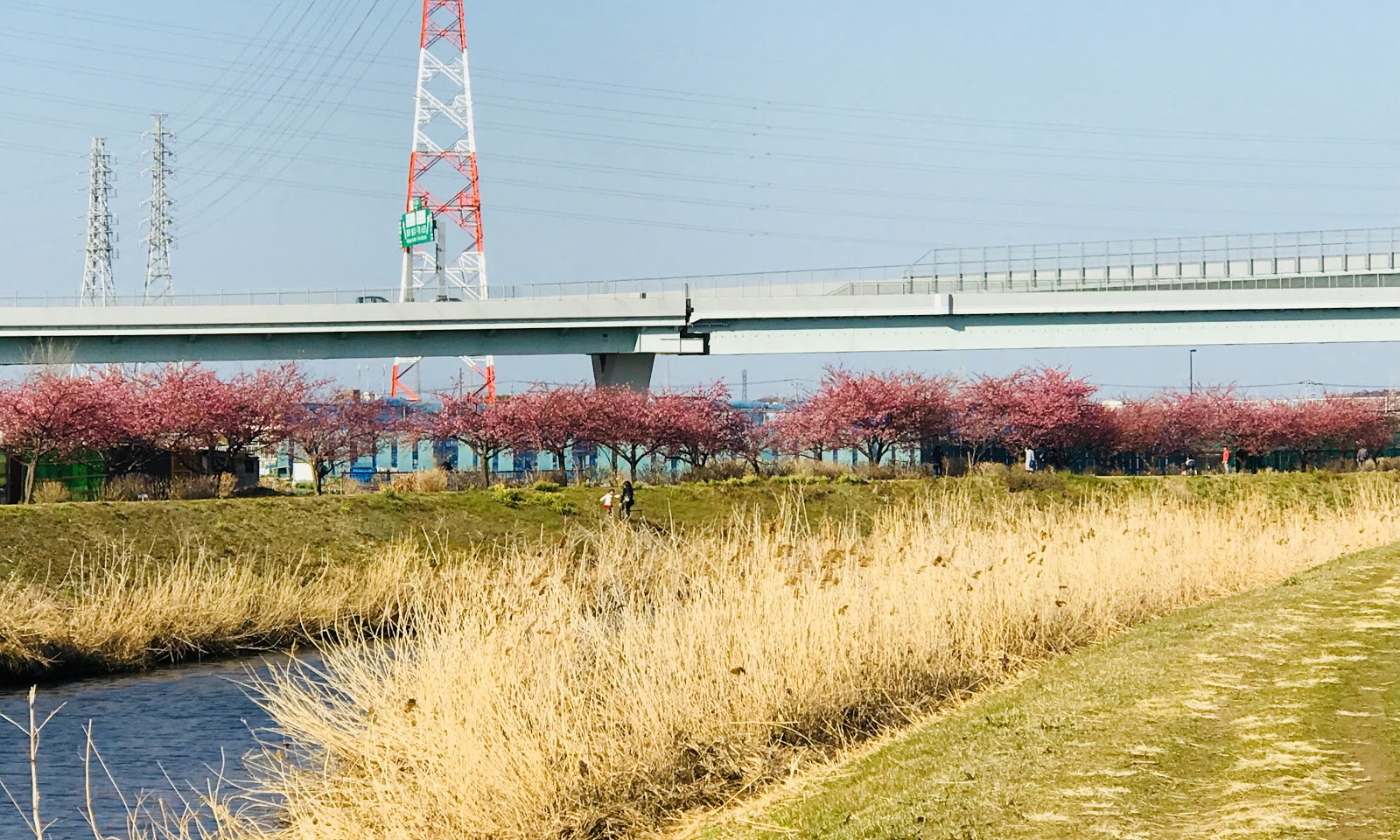
Above: Sakura flowers by the Oide River
One of the most popular seasons to visit Japan is in spring when the cherry blossoms color the Japanese landscape with its pink cape. The timing of the sakura season changes depending on the area (sakura forecast for 2018 here) and the type of sakura. If you find yourself in the Kanto area you can see the Japanese national flower already in January in Atami and in February the flowers bloom in the southern part of Izu, Kawazu.
Above: The sakura trees, seen from the road 
As a part of a small day trip to the Shonan area (south of Tokyo) I and some friends stopped by the Oide River (小出川) where they were having a small sakura festival.
Above: A sign that says Oide Sakura Festival


We were quite lucky with the timing, as most of the flowers were in full bloom. It seemed like some of the locals were enjoying flower-watching (hanami) by the river, but to be honest there wasn't that much going on there besides the little hanami.
Above: A blooming cherry tree with locals enjoying their hanami in the background.
Above: Visitors viewing the beautiful flowers.
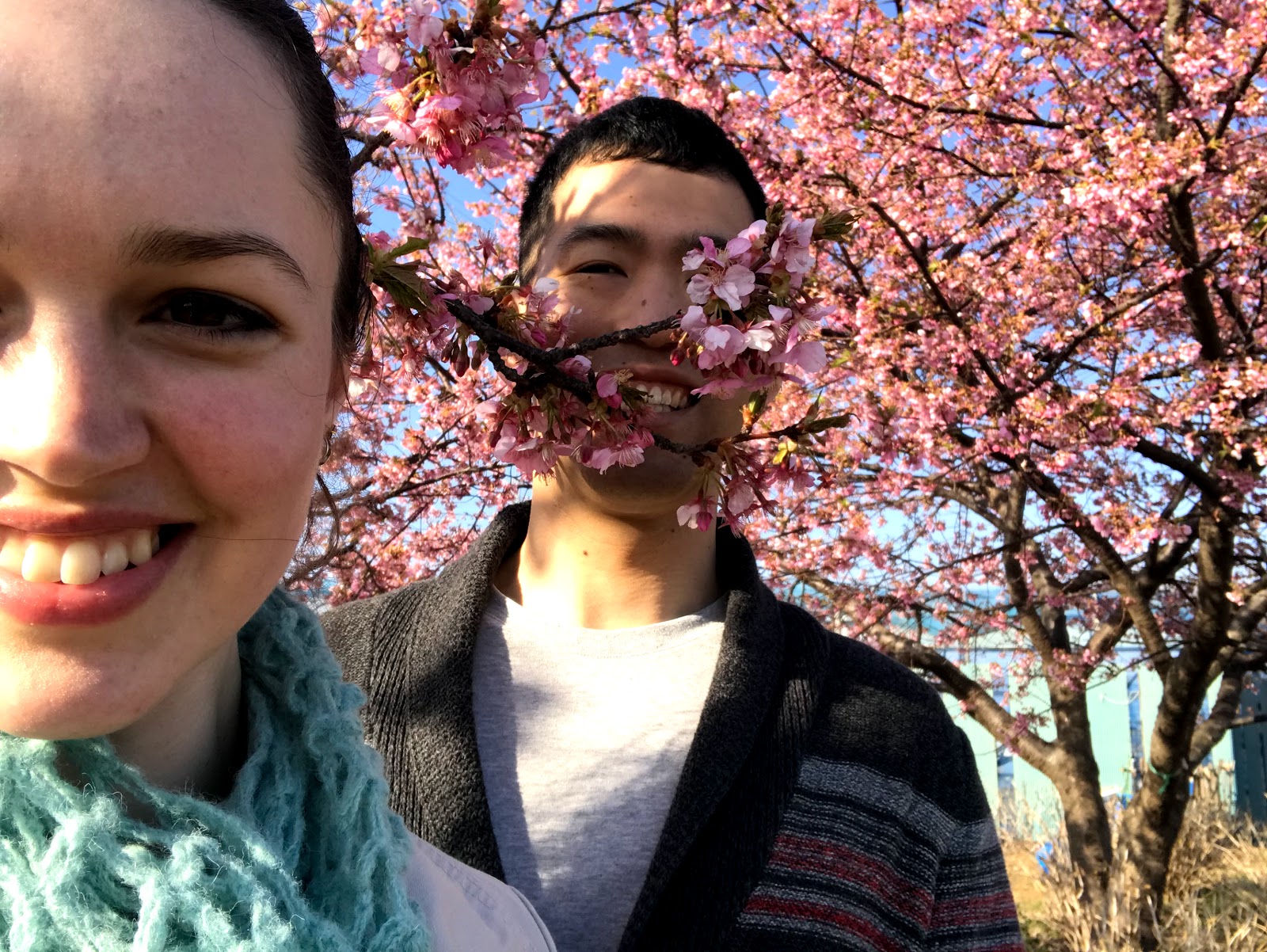
Above: Sakura date with hubby
This is an event most recommended to those who have other plans in the vicinity. There are some entertainment scheduled during the festival period, but if you visit on a day without anything scheduled there honestly isn't that much to see besides the flowers. We got our nice cherry blossom pictures and headed over to Enoshima for some more in-depth sightseeing. If you find yourself in the Tokyo area early March and looking for opportunities to see the sakura it might be a good option as a part of a trip to Shonan.

Thank you for reading! Please feel free to leave any comments or questions below
- Anette

 Basic Info
  • ・Oide River Cherry Blossom Festival (小出川桜まつり)
  • ・Event Page: http://www.city.chigasaki.kanagawa.jp/kankou_list/event/1006878.html (Japanese only)

Related blog posts


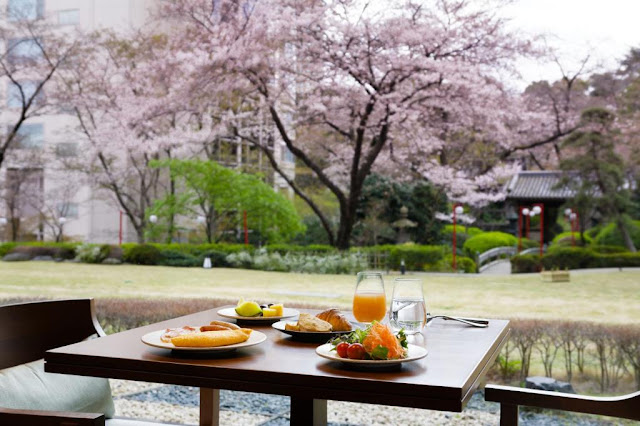
Recommended Sakura View Hotels in Tokyo

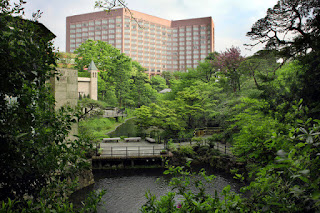
Hotel Chinzanso Tokyo
Hotel Chinzanso
★★★★★
 
→ review
.
Centurion Classic Akasaka
Hotel New Otani Tokyo
★★★★★

.
The Prince Sakura Tower Tokyo
★★★★★

,
Grand Prince Hotel New Takanawa
★★★★

.


This page contains affiliate links, and if you follow a link and make a hotel reservation through these links you help support this blog without any additional cost to you. Thank you so much for your kind support!


Monday, March 5, 2018

Tokyo: The Gajoen Hinamatsuri Doll Festival (百段雛祭り)

10:39:00 PM
Above: Inside the Gajoen. Photo from the official event page
The Meguro Gajoen is one of Tokyo's best-hidden gems, and one of the few sightseeing spots I wouldn't mind revisiting multiple times. Not only does the Gajoen offer one of Tokyo's best-rated hotels, inside the former wedding complex you also find the historical hundred-stairs staircase that helped inspire part of the architecture in the Ghibli movie "Spirited Away". Although much of the Gajoen was rebuilt after the Second World War the old wing still remains in its former glory and is used throughout the year for special exhibitions. This time we went to see the special Hina Matsuri (ひな祭り) doll festival exhibition that is held at the Gajoen from mid-January to mid-March.
Above: Inside the Gajoen 
The Hina Matsuri doll festival is a yearly event held in Japan on the 3rd of March to celebrate and pray for the health and happiness of girls. It is common that a collection of dolls is displayed in both private homes and public buildings, often set up in a multi-tiered doll stand called hinadan (雛壇). The Hina Matsuri tradition is celebrated all over Japan, but the features and details of the practice vary from area to area. In the Gajoen they have collected Hina dolls from various places in Japan, giving visitors a chance to see and compare dolls from different Japanese prefectures.

Sunday, October 15, 2017

Behind the Scenes of the Kawagoe Festival: Pulling the Festival Floats

11:47:00 PM
Every year on the third weekend of October the charming town Kawagoe, also known as "Little Edo" (Koedo), gets ready for one of their biggest events of the year; the Kawagoe festival. The town attracts around 6.2 million visitors a year, with the 2-day long Kawagoe festival being the liveliest event of the year.
Above: Photo taken from the last time I visited the Kawagoe festival
I visited Kawagoe a couple of years ago to see the Kawagoe festival (you can read more about that here), but this time I had gotten the chance to be one of the participants pulling the floats thanks to Japan Room Finder

Saturday, August 13, 2016

Pikachu Outbreak in Yokohama - Pikachu Tairyou Hassei-Chu 2016 (ピカチュウ大量発生チュウ)

7:13:00 PM
This week the annual Pikachu event "Pikachu Tairyou Hassei-Chu" has been held in Yokohama, and with the recent popularity of Pokemon Go it's quite unsurprising that a huge number of Pikachu fans have flocked to Yokohama to see the yellow thunder-mice. During the one week long event there are over 1,000 Pikachus to be seen in the harbour area of Yokohama, with all the main event spots located around the Minato Mirai harbour area. 

Saturday, July 30, 2016

Bon Odori Midsummer Festival in Ebisu (恵比寿駅前盆踊り)

12:33:00 AM
The rainy season has come to an end here in Japan, and it is finally time for summer (although as a Norwegian in Tokyo it has already been what I would describe as summer temperatures for the last 4 months already). This time of the year you can find a number of places arranging so-called Bon festival dances, and this weekend the Ebisu district in Shibuya is hosting their annual Bon Odori event.

Monday, May 2, 2016

Behind the Scene of the Tsubame Sakura Matsuri - The Oiran Dochu (つばめ桜まつりおいらん道中)

10:49:00 AM
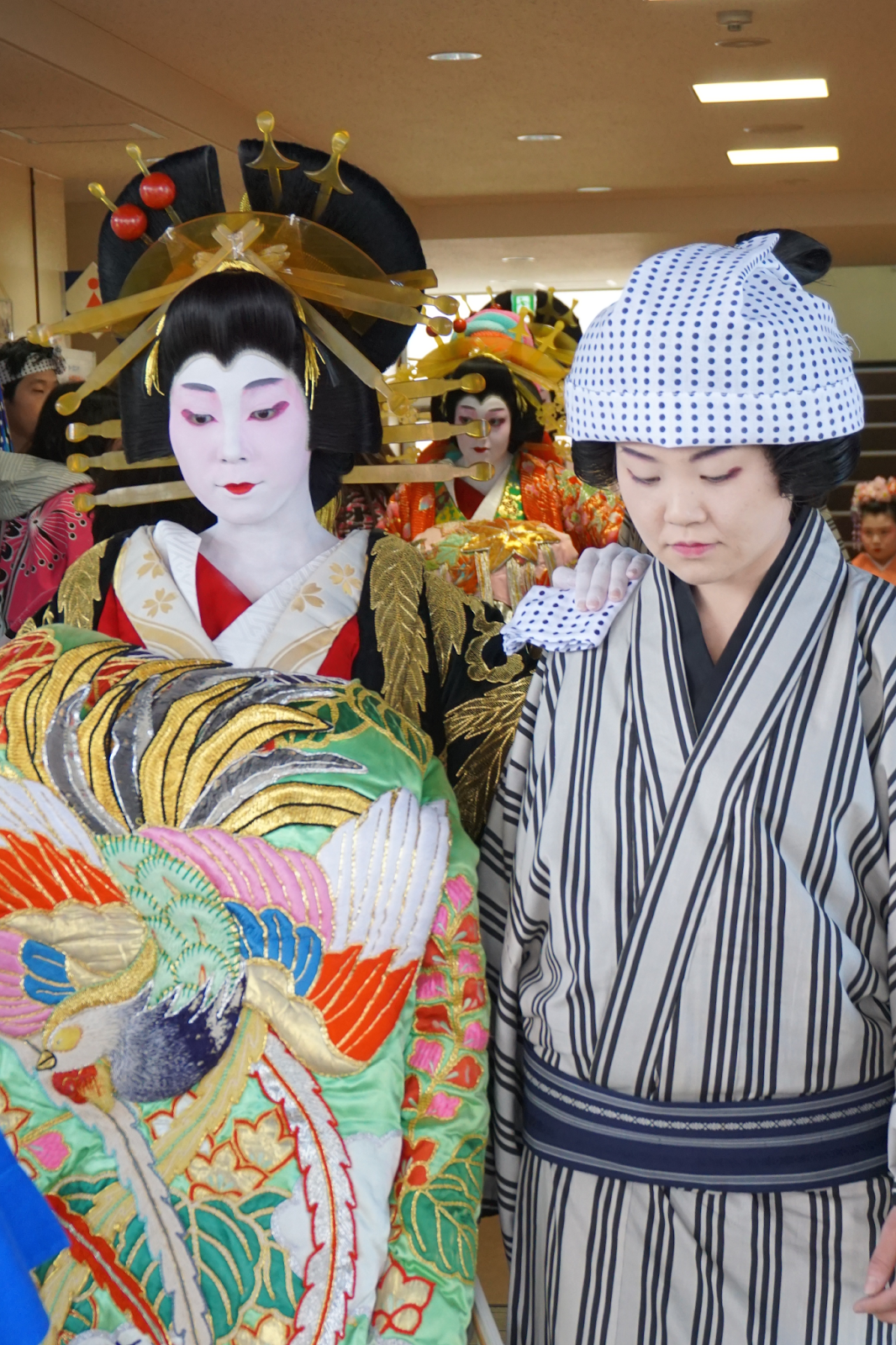
Above: The oiran procession of the Tsubame Sakura Festival where I participated as an Oiran

On the 17th of April, it was finally time for the Tsubame Sakura Matsuri (つばめ桜まつり), a festival that is held annually in April in the southern part of Niigata (新潟). 
Earlier this year I had applied for a role as one of 3 oiran in what is thought of as the highlight of the festival, the Oiran Dochu (おいらん道中) procession, and as the first foreigner in the 74-year long history of the festival, I was selected for the role. As preparations for the festival we had been practicing to walk on 15-cm high geta-shoes in a style called sotohachi-monji (外八文字) and taken part in various PR-events for the festival, and were all extremely excited for the big day. 

Above: Me dressed up as the sakura taiyu Oiran

A video from the procession

In the morning we gathered at the Tsubame Bunsui Welfare Center where it was time to get dressed for the event. With more than 70 people participating in the procession in different roles you can imagine all the work that is necessary to prepare for the parade.
It took a couple of hours before we finally were ready to leave the building.

In advance of the festival I had been a bit nervous about the weight of the outfit; with a 20-kilo heavy kimono, a 10-kilo heavy wig and 15 cm high geta shows I had been slightly worried about my ability to finish the whole 2-hour long parade. However, it turned out that the weight of the outfit itself was no problem, it was the wig (katsura - 桂) that ended up being the biggest challenge for me. At one of the practices we had had two professional katsura-makers from Tokyo measuring our heads and shaping the inner metal frame of the katsura to fit our heads perfectly, but despite the detailed construction, the constant pressure on the head from the katsura was still harder to handle than expected. This experience certainly made me a lot more impressed with the oiran who had to wear these sorts of outfits on a regular basis! To me, the katsura felt more like a torture device than something to wear for beauty.. Haha..
Usually the festival is carried out in an area of Bunsui famous for its beautiful cherry trees, but unfortunately, we were unlucky with the weather, and the procession had to be carried out inside the local gymnasium. After arriving at the gymnasium we got our final pep talk before entering the area where the audience was waiting. People had been lining up to get tickets since early morning, and the gymnasium was packed with visitors. 
The procession itself wasn't that long, we walked around in a circle inside the gymnasium using both regular walk and sotohachi-monji. All in all we had 4 performances to make sure that all the visitors could see the procession. Below are some more photos from the Oiran Dochu:
shamizen-performers onstage
Although it was a bit disappointing that we weren't able to walk outside underneath the cherry trees it was still a fantastic day and without a doubt one of the highlights of my stay in Japan. Personally, I enjoyed just being a part of the preparations for the festival too, for instance, to be able to see part of the process of making the katsura or the huge transformation people go through when they get totally painted with the white makeup. As a foreigner, I felt very blessed to be a part of all this, as it is definitely a once-in-a-lifetime experience. If I get the chance I would love to visit Bunsui next year and hopefully see the Oiran Dochu procession outside with the blooming cherry trees in the backdrop.

Related blog posts

Saturday, April 16, 2016

The Tsubame Sakura Matsuri: Cherry Blossom PR & Last Minute Preparations

12:31:00 AM

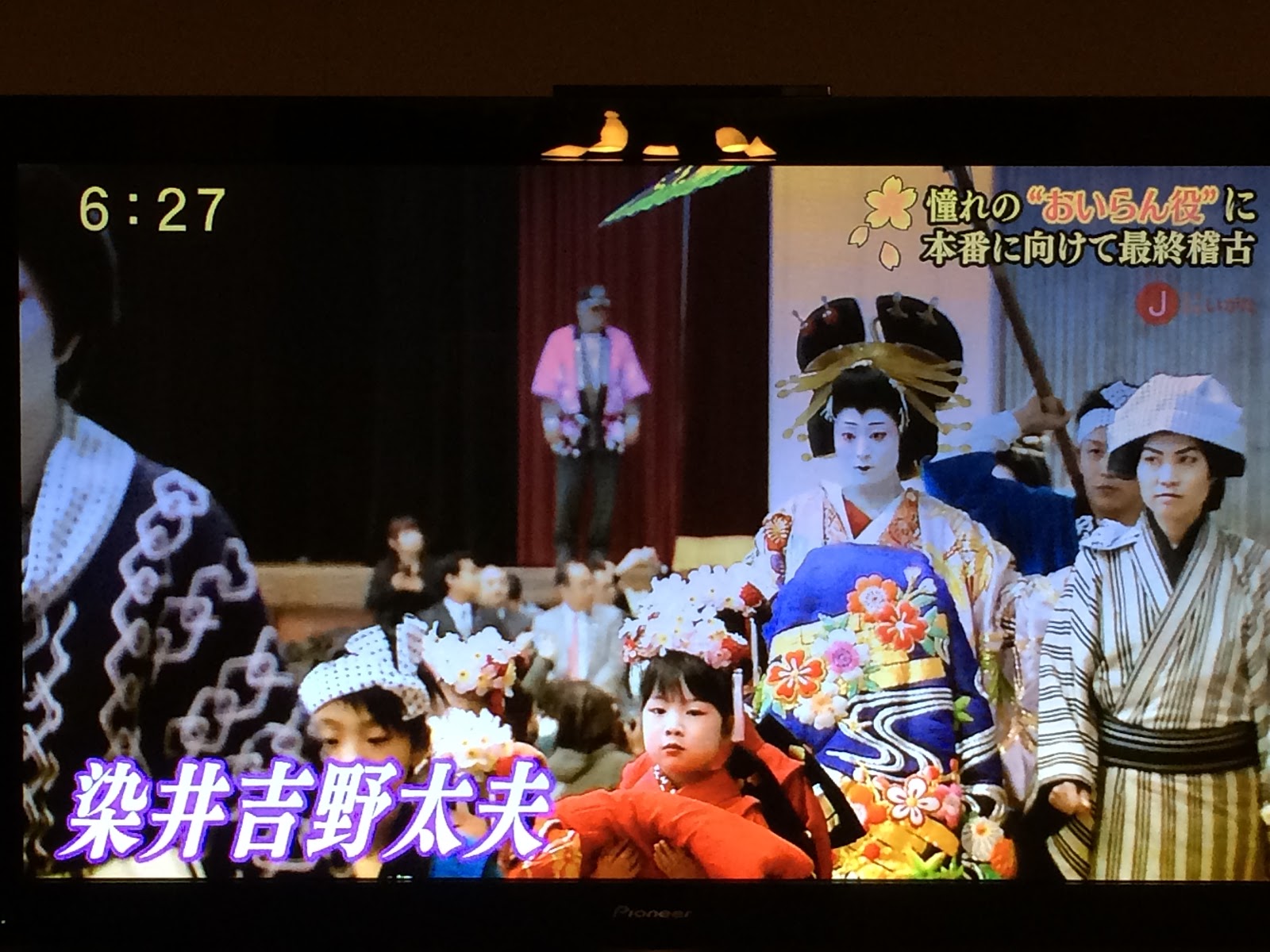
It is only 2 days left until the Tsubame Sakura Matsuri festival (つばめ桜まつり) in Bunsui, Niigata, and we have had a last round of practice for the big day. The 17th is the day of the Oiran Dochu where I'll be one of four girls getting dressed up as an Oiran - a courtesan lady from the Edo period. As a part of the preparations for the festival we went to the Bunsui station where we took part in greeting travellers who had come to the Bunsui station to see the yozakura (夜桜) evening cherry blossoms.
The Bunsui Station is known for its beautiful sakura, most of which were planted more than a hundred years ago, and the row of cherry trees by the platform have come to symbolize the station itself. 

In addition to the event at the station this day we also got our last chance to practice the particular walking style called Soto-Hachi Monji (外八文字) before the festival. Local and national press joined us for the practice, which was sent on the news both on the direct and on the following day (all photos in this blogposts have been taken from TV broadcasts). 
With only two days left to the festival it is hard not to feel slightly nervous, as there will be people coming from near and far to watch the procession. There is also a certain chance that we'll have rain on the 17th, in which case they might be forced to hold the festival indoors. Fingers crossed! 
If the weather is bad on Sunday the procession will be held indoors.

Related blogposts

About Me

Adventures ofAnette


A modern day shield-maiden who loves to explore the unbeaten paths of the world. From her base in Tokyo, Anette takes on both rural and urban challenges, and goes by the motto "No challenge too big, no adventure too small"!
・Read more →


Recent Posts

recentposts

Random Posts

randomposts