Adventures of Anette: Ryokan
Showing posts with label Ryokan. Show all posts

Sunday, October 4, 2026

♨️This Japanese Ryokan’s Bridge Disappears Every Winter

9:49:00 PM


Staying at Oodaira Onsen Takimiya, Deep in the Mountains of Yamagata

Every winter, the suspension bridge disappears.

Not metaphorically. It is physically taken down.

Without it, the final route into Oodaira Onsen Takimiya (大平温泉 滝見屋) is gone. The ryokan closes, snow takes over the valley, and for several months no guests arrive at all. Pasted text

That fact was already unusual enough to make me want to visit. But it was only when I found myself standing at the top of a rain-soaked mountain trail, with a typhoon passing through Yamagata and my luggage disappearing down the valley on a wire, that I began to understand what makes Takimiya different.

Here, the journey does not end when you reach the ryokan. The journey is part of the ryokan.

↑ Check out the video here ↑


Why Oodaira Onsen Takimiya Is So Unusual

Takimiya sits deep in the mountains outside Yonezawa, beside one of the uppermost stretches of the Mogami River.

You cannot drive to the entrance.

The road ends high above the valley. From there, guests descend roughly 15–20 minutes on foot down a steep mountain path and eventually cross a suspension bridge to reach the inn. Luggage and supplies can travel separately by wire. Pasted text

Even the official Hidden Onsen Association describes it as an inn that cannot be reached by car: roughly 45 minutes by road from Yonezawa, followed by the walk into the valley. 

It is tempting to call that inconvenient.

But inconvenience is not really the right word.

Takimiya exists where it does because of the hot spring beneath it. The modern road simply stops before the mountain does.

And once you accept that, the logic of the place begins to change.


The Descent Into the Valley

I arrived during Obon, with a typhoon moving through the region.

By the time I reached the parking area, the forest was saturated. Rain covered the leaves, the path had become slick, and somewhere below me was a ryokan I still could not see.

My luggage had already begun its journey.

I started walking.

The path drops steeply through the trees, and in good weather I imagine the descent feels adventurous rather than difficult. That afternoon, with one hand holding an umbrella and the other trying to keep myself steady, it felt considerably more serious.

Then the red roof appeared.

Below it was the swollen mountain stream.

And stretching across the water was the suspension bridge.

The last few metres were strangely easy. After the steep trail, simply walking horizontally across the bridge felt almost luxurious. Pasted text

On the other side, Takimiya was waiting.

Where the Road Ends, the Ryokan Begins

That phrase came to describe the stay for me.

Most hotels are designed around removing the effort of arrival. Takimiya does almost the opposite.

The road stops.

Your luggage leaves you.

You walk.

You cross water.

Only then do you enter.

Inside the lobby, I noticed the familiar white lantern of Nihon Hitō wo Mamoru Kai (日本秘湯を守る会) — the Association to Protect Japan’s Hidden Hot Springs.

After the descent I had just made, the word hitō, or “hidden hot spring,” required very little explanation. Pasted text


A Ryokan That Is Off-Grid Because It Has to Be

Takimiya sits at around 1,050 metres above sea level. The parking area is higher still, at roughly 1,200 metres.

Even in the middle of August, the temperature difference was noticeable.

My room had tatami, simple bedding and the sound of the river outside the window. There was no air-conditioning.

It did not need it. Pasted text

There was also no television, no Wi-Fi, and effectively no mobile signal down in the valley.

Takimiya does have electricity — but the inn generates it itself.

These days it would be easy to package that as a “digital detox retreat.” But that would almost misunderstand the place.

Nobody removed the Wi-Fi to create a wellness experience.

This is simply what operating a ryokan here requires.

The absence of connectivity is not the concept.

The mountain is the reason.


The Onsen: When the Mountain Still Gets a Vote

The outdoor baths sit close to the river.

At this altitude, the Mogami is still a mountain stream, far removed from the great river it will eventually become. After the storm, however, it was anything but gentle. The sound of rushing water filled the valley.

Takimiya has separate outdoor baths for men and women, as well as two smaller private open-air baths. Indoor baths use a different hot spring source from the outdoor baths. Pasted text

The Hidden Onsen Association lists the outdoor water as a sulfur-containing calcium sulfate spring emerging at around 63°C, with approximately 720 litres per minute in use. It is used without added heating or added water and flows continuously through the baths as kake-nagashi. 

Those numbers sound technical.

Then you experience what they mean.

Because the water is not being engineered into exactly the same experience every day, conditions outside matter.

After heavy rainfall, the baths can run cooler. During drier periods, they can become hotter.

On my visit, one of the smaller baths was almost lukewarm.

At another ryokan, I might have considered that a problem.

At Takimiya, it felt more like a reading of the mountain that particular day.

The bath had not failed to meet a specification.

The weather had simply participated.


Two Sources, One Ryokan

There is another detail that onsen lovers will appreciate.

Moving between Takimiya’s indoor and outdoor baths does not only change the view.

It changes the water.

The indoor and outdoor baths are supplied by different sources. Pasted text

That makes the bathing experience especially interesting because Takimiya is not presenting one spring in several architectural settings. Different parts of the inn allow you to encounter different water.

It is the kind of distinction that can be easy to overlook if your attention is focused only on which bath has the most dramatic scenery.

Here, the scenery is spectacular.

But the water deserves equal attention.


Dinner at the Headwaters

Everything consumed at Takimiya has to reach the valley somehow.

The same wire that carries luggage also helps move food and supplies.

That made dinner feel slightly different.

The handwritten menu called the meal Genryū no Kunpū — “a breeze from the headwaters.”

There was salt-grilled iwana river fish, Yonezawa carp prepared carpaccio-style, and a mountain-vegetable hot pot bubbling over a small tabletop flame. Pasted text

After descending through the rain, it was exactly the sort of meal I wanted.

Nothing needed to be theatrical.

Warm food, dry clothes and a room beside a mountain river suddenly felt like considerable luxuries.

Breakfast the following morning was simpler: grilled fish, rice, pickles, salad and tofu warming in its own small pot.

The tofu was probably my favourite thing on the tray.

There was also one considerably more unexpected item: inago no tsukudani, grasshopper simmered in soy sauce.

Not something I had anticipated encountering over breakfast. Pasted text


A History of Rebuilding

Takimiya’s remoteness can initially make the inn feel timeless.

Its history suggests almost the opposite.

According to the history used in the film, the spring is traditionally dated to 860. A bathhouse opened here in 1801, while Takimiya itself became a ryokan in 1909.

Then nature repeatedly intervened.

A severe storm damaged the inn and spring in 1926. Reconstruction continued until 1934.

Four years later, the ryokan burned down.

By 1940, the family was discussing whether to close permanently. Pasted text

And yet Takimiya is still here.

That history changed the way I thought about preservation.

We often imagine preserving an old ryokan as preventing change.

Takimiya suggests something more difficult.

Sometimes continuity means rebuilding.

Sometimes it means adapting.

And sometimes it means accepting that, for several months every year, the inn has to stop.


When the Bridge Becomes a Calendar

Takimiya normally operates from late April until early November. Then the suspension bridge is removed and winter effectively closes the valley to guests. The Hidden Onsen Association likewise currently lists the operating season as late April through early November. Before leaving, the okamisan spoke about the seasons.

She apologized for the terrible weather the previous day, but then described what happens here throughout the year: melting snow and fresh green growth in spring, naturally cool nights in summer, and the forest changing colour in autumn.

Her invitation was simple.

Come back in another season. Pasted text

I liked that she did not treat the storm as though I had somehow visited Takimiya on the wrong day.

The storm was also Takimiya.

When I crossed the bridge again the following morning, I stopped thinking of it purely as an obstacle.

It felt more like a calendar.

As long as that bridge remains across the river, Takimiya can receive guests.

Then winter comes.

The bridge disappears.

The river does not.


Practical Information for Visiting Oodaira Onsen Takimiya

Location: Oodaira Onsen Takimiya, Yonezawa, Yamagata Prefecture.

Getting there from Tokyo: Take the Yamagata Shinkansen to Yonezawa Station. Takimiya currently lists a 14:00 pickup from Yonezawa Station for overnight guests, requiring advance reservation. However you arrive, the final approach still requires approximately 15–20 minutes of steep walking from the parking area. The inn specifically recommends suitable footwear and warns that high heels are not appropriate.

Driving: There is parking above the valley. From the Yonezawa area, the official listing gives roughly 45 minutes by road to the mountain parking area before the walk begins. The final road itself is mountainous, so allow extra time.

Operating season: Approximately late April to early November. It is not a winter ryokan despite how fascinating its winter story is.

Best time to visit: There is no obvious single answer. Late spring brings fresh mountain greenery, summer offers remarkably cool nights for Yamagata, and autumn transforms the surrounding forest. The limited season is part of the appeal rather than something to work around.

Who will enjoy Takimiya: Travelers interested in genuine natural onsen, remote mountain inns and places where the landscape remains more important than modern convenience. It is less suitable for anyone with significant mobility limitations because the final descent is steep and unavoidable.

Booking: The Hidden Onsen Association currently accepts online reservations, including solo stays on some plans. Private open-air baths can be reserved at check-in. Because access and operations can be affected by mountain conditions, confirming transportation and arrival arrangements directly before traveling is sensible.


Why Takimiya Matters

There are many beautiful remote ryokan in Japan.

What stays with me about Takimiya is that its remoteness has not been polished into an aesthetic.

The inn generates its own electricity because it has to.

Supplies cross the mountain because they have to.

Guests walk because the road cannot reach the door.

The temperature of the bath changes because the spring and weather are not completely controlled.

And every winter, the bridge disappears because leaving it in place would mean asking the mountain to behave differently for us.

That may be the most interesting kind of luxury a ryokan can still offer.

Not perfect control.

But the opportunity to spend one night somewhere that has not completely rearranged itself for our convenience.


Continuing the Hidden Ryokan Journey

Takimiya is part of my ongoing journey through Japan searching for inns where the building, water, landscape and people still feel connected.

For Hidden Ryokan Hunters, those are often the places worth making a little more effort to reach.

And I am always looking for the next one.

If you know a ryokan somewhere in Japan that still feels shaped by its landscape — especially one most international travelers have never heard of — I would love to hear about it.

Sunday, April 19, 2026

A Ryokan Without Electricity in Aomori | Lamp no Yado Aoni Onsen

8:05:00 PM


The Night That Stays

The lamps are already glowing when you arrive.

Not electric light, but flame—small, steady, and deliberate. They gather quietly across the grounds, holding back just enough of the mountain darkness to guide your steps.

In most places, night is something we push away.

Here, it is allowed to exist.

At Lamp no Yado Aoni Onsen, darkness is not an absence. It is a presence you learn to move within.


Why This Place Is Special

Hidden deep in the mountains of Aomori Prefecture, in the northern region of Tōhoku, this ryokan offers something increasingly rare in modern Japan: continuity.

Founded in 1929, Aoni Onsen made a quiet but radical choice.

It never installed electricity.

This isn’t a performance or a themed experience. It’s simply how the inn has always existed—unchanged while the rest of the country modernized around it.

For Hidden Ryokan Hunters, this is the kind of place that matters. Not because it’s luxurious, but because it preserves a way of living that has almost disappeared.


Arrival & First Impressions

The journey itself feels like a transition.

The road narrows as you descend into the valley. Signal fades. Guardrails thin out. The landscape begins to feel more distant from the modern world.

This region has long been described as michinoku—the end of the road.

And you feel it.

By the time you arrive, the quiet is already different.

There are no buzzing lights, no glowing signs. Just the soft flicker of oil lamps and the sound of the surrounding forest.

You don’t step into a building.

You step into a different rhythm.


The Ryokan Experience

Architecture and Atmosphere

The architecture here is shaped not by design trends, but by absence.

Without electricity, light becomes intentional. Each oil lamp is placed by hand as evening falls, creating pools of warmth instead of uniform brightness.

Shadows are not eliminated.

They are part of the structure.

There is a Japanese concept—yūgen (幽玄)—a quiet awareness of something deeper, something felt rather than explained.

This ryokan doesn’t display beauty.

It suggests it.


The Room and Views

Guest rooms are simple, traditional tatami spaces.

No outlets.

No Wi-Fi.

At first, it feels unfamiliar. Then, gradually, it begins to feel natural.

Without screens or overhead lights, your attention shifts. You notice textures. Sounds. The subtle movement of shadows across shoji screens.

Time doesn’t stop.

But it slows.


The Onsen Experience

The baths are fed by a natural sodium chloride spring, known for retaining heat and warming the body deeply—especially during Tōhoku’s long winters.

The outdoor bath, set beside a river, is where the experience becomes something else entirely.

Cold water rushes past.

Steam rises into the night air.

And for a moment, it feels as if nothing has changed for centuries.

Historically, places like this were not indulgences. They were essential stops—rest points for travelers crossing remote regions on foot during the Edo period.

You don’t just soak here.

You recover.


Seasonal Highlights

Each season reshapes the experience.

  • Winter brings deep snow and near-total silence, with the contrast of hot water and freezing air at its most dramatic

  • Spring softens the valley, with new greens and fresh mountain air

  • Summer offers cool refuge from Japan’s humidity

  • Autumn wraps the valley in muted reds and golds

But no matter the season, the defining element remains the same:

Darkness.


Cultural Context

There is a word in Japanese: yūgure (夕暮れ).

It describes the gradual darkening of evening—not a moment, but a transition.

At Aoni Onsen, you feel that transition fully.

Without artificial light, your body adapts naturally. You move more slowly. Speak more quietly. Listen more carefully.

And in the morning, another concept reveals itself: komorebi (木漏れ日)—sunlight filtering through leaves.

After a night shaped by flame, daylight doesn’t feel brighter.

It feels earned.


Food and Seasonal Cuisine

Meals follow the rhythm of the region.

Simple, nourishing, and rooted in local ingredients—mountain vegetables, river fish, and seasonal specialties that reflect the surrounding landscape.

There is no theatrical presentation here.

Just balance.

And intention.

Like everything else at the ryokan, the experience is understated—but deeply satisfying.


Why This Ryokan Matters

Aoni Onsen is not comfortable in the way modern travelers expect.

You can’t charge your phone easily. The hallways are dim. The pace is slower than you’re used to.

But that discomfort is precisely what makes it meaningful.

Because here, you don’t choose to disconnect.

The environment does it for you.

And in that surrender, something returns—something quieter, more attentive.

This ryokan reminds you that hospitality doesn’t depend on technology.

Before electricity, there was still warmth. Still care. Still light.

Just softer.


Practical Information for Travelers

Location & Access
Located in the mountains of Aomori Prefecture.
From Tokyo:

  • Take the Shinkansen to Shin-Aomori Station

  • Continue by local transport and ryokan shuttle (advance coordination required)

Best Season to Visit

  • Winter for snow-covered landscapes and dramatic onsen contrasts

  • Autumn for foliage and atmospheric valley views

Who This Ryokan Is Best For

  • Travelers seeking authentic, off-grid experiences

  • Cultural explorers interested in traditional Japan

  • Hidden Ryokan Hunters looking for rare, preserved stays

Booking Tips

  • Book well in advance, especially in winter

  • Prepare for limited connectivity and charging access

  • Bring essentials (flashlight optional, but helpful)


Connection to the Ryokan Discovery Journey

Aoni Onsen is part of a larger journey—an ongoing exploration of Japan’s hidden inns.

Places where time moves differently.

Where traditions are not preserved for display, but simply lived.

Each discovery adds another piece to the map.


Invitation to Readers

There are still places like this in Japan.

Quiet. Unchanged. Almost forgotten.

If you’ve come across a hidden ryokan that left an impression on you, share it.

Because the journey is far from over.

And the most meaningful discoveries are often the ones that don’t appear on the map.

Thursday, March 26, 2026

Following the Sakura Front: A Journey Through Japan’s Hidden Ryokan

11:01:00 PM


Every spring, Japan becomes a moving target.

The sakura zensen — the cherry blossom front — drifts slowly north, unfolding across the country in a way that feels both predictable and impossible to pin down. The blossoms don’t bloom on command. And they certainly don’t wait for your flight to land.

If you stand in a famous park at the right time, you’ll see them.

But that doesn’t always mean you’ve experienced the season.

For me, the most unforgettable hanami hasn’t happened under crowded trees or along popular riverbanks. It has happened quietly — behind sliding doors, beside rising steam, in places where spring feels less like an event and more like a presence.

This year, I followed the bloom across five traditional ryokan. Each offered a different way of tuning into spring. And somewhere along that journey, my understanding of sakura season began to shift.


↑↑↑Full video here ↑↑↑


Why These Places Are Special

Japan has no shortage of beautiful places to see cherry blossoms.

But ryokan offer something fundamentally different.

They are not designed for spectacle. They are designed for perspective.

In a ryokan, the experience of the season is shaped by architecture, by the placement of a window, by the relationship between interior space and the landscape beyond it. You’re not just looking at nature — you’re placed within it, guided to notice it in a certain way.

Hidden Ryokan Hunters will recognize this immediately. These are places where the atmosphere has been refined over decades, sometimes centuries, to frame something as fleeting as a few days of bloom.


Arrival: Following a Moving Season

Traveling with the sakura front is not like planning a typical itinerary.

It requires a certain acceptance — that timing might shift, that forecasts might change, that the perfect moment can’t be fully controlled.

In Yamanashi, petals were already beginning to open.

Further south in Osaka, the blossoms were framed in carefully composed gardens.

By the time I reached Nagano, spring felt like it was just arriving — hesitant, delayed by elevation.

And in Nara, the season expanded into something much larger than a single tree or garden.

Each destination felt like a different chapter of the same story.


Yamanashi: Living Inside the Blossoms

At Kaminoyu Onsen, sakura isn’t something you step outside to see.

It surrounds you.

From the higher guest rooms, you look down onto a canopy of blossoms spreading across the grounds below. In the lobby, the trees feel almost within reach, filling the windows with layers of soft pink.

But the most memorable moment comes in the bath.

From a private kashikiri onsen, you sit in still water while the landscape opens outward — a quiet sweep of blossoms just beyond the edge of the bath. Steam rises gently, softening the view.

There’s a stillness here that makes you aware of time passing.

A subtle expression of mujo — impermanence.

You’re warm, grounded, and yet everything around you is changing.


Osaka: When Architecture Frames the Season

At Nanten-en, the experience shifts.

This is not immersion. It’s composition.

Designed by Tatsuno Kingo, the architect behind Tokyo Station, the ryokan feels intentional in a different way. The garden is not simply planted — it’s arranged, framed, and revealed.

From certain rooms, sliding doors open onto views that resemble living paintings. The cherry blossoms are positioned within the frame of the architecture, creating a sense of balance between inside and outside.

This is shakkei — borrowed scenery.

You’re not moving toward the blossoms.

You’re observing them from stillness.

And in that stillness, you begin to notice details you might otherwise miss.


Nagano: A Second Chance at Spring

Further north, in Nagano, the pace changes again.

Spring arrives slowly here.

At Masuya Ryokan, a place that has stood for over 500 years, that slower rhythm becomes part of the experience. Time feels stretched — not just across the landscape, but across generations.

From your room, petals drift past tiled rooftops.

From the rotenburo, the mountain air carries the softness of early bloom.

What becomes clear here is that sakura season isn’t fixed.

It’s shaped by microclimates — by sunlight, by elevation, by the direction a slope faces. Two ryokan in the same town might reach peak bloom days apart.

And that creates something unexpected.

A second chance.

While cities like Tokyo have already moved into green, places like this are just beginning to open.

You arrive — and you realize the season hasn’t passed you by.

It’s simply been waiting somewhere else.


Hyogo: Stillness Within Movement

Kinosaki Onsen is known for its energy.

The canals, the seven public bathhouses, the evening strolls in yukata — during sakura season, it becomes lively, almost festive.

But Migumiya offers a different perspective.

Here, you don’t need to go out to find the blossoms.

You return to your room.

Tatami floors. A low table. Soft, diffused light.

And just beyond the window, sakura branches stretching gently over the river.

After a day of movement — walking from bath to bath, passing through crowds — this stillness feels intentional.

The only motion is outside.

Petals drifting past your window.

It’s a quieter way to experience the same season.


Nara: Seeing the Landscape, Not Just the Tree

By the time I reached Shigisan in Nara, I thought I understood what a sakura ryokan could offer.

I was wrong.

Shigisan Kanko Hotel sits along a mountainside, opening out toward a valley filled with spring color. This isn’t a garden view. It’s a landscape.

From the baths and terraces, the blossoms extend across hills and valleys, creating layers of pink that shift throughout the day.

Here, you’re not beneath the blossoms.

You’re looking across them.

The rotenburo becomes something else entirely.

In daylight, the valley stretches outward in soft gradients.

At night, the mountains fade into shadow, and the blossoms seem to float above the water.

It’s an experience that changes hour by hour.

But what makes this place unforgettable is what lies just beyond it.

A short walk leads to Chogosonshi-ji Temple.

Perched high along the mountainside, it offers a view often compared to Kyoto’s Kiyomizu-dera — but without the crowds.

There is silence.

Wind moving through wooden corridors.

Petals drifting across ancient beams.

This is where the idea of oku — inner depth — becomes real.

The ryokan doesn’t replace the destination.

It leads you deeper into it.


Food and Seasonality

At each of these ryokan, the meals reflect the same philosophy as the spaces themselves.

Seasonality isn’t just a theme — it’s the foundation.

Spring kaiseki brings together delicate mountain vegetables, fresh ingredients, and presentations that echo the landscape outside. The pacing of the meal mirrors the rhythm of the evening.

Nothing feels rushed.

Like the blossoms, it’s meant to be experienced as it unfolds.


Why This Journey Matters

After following the sakura across these different regions, one thing became clear.

The most meaningful hanami doesn’t announce itself.

It doesn’t always happen in the most famous places.

It happens quietly.

Behind sliding doors.

Beside rising steam.

Framed by architecture.

Or hidden on a mountainside that few people visit.

The real value isn’t the blossom itself.

It’s the vantage point from which you see it.


Practical Information for Travelers

If you’re considering a similar journey, a few things make a difference.

Access is relatively straightforward from Tokyo, with most destinations reachable within two to five hours by train. But timing is everything.

Central regions like Yamanashi and Osaka typically bloom from late March to early April. Mountain areas like Nagano follow later, often extending the season into mid or even late April.

Flexibility is key.

Booking early is essential, especially for sakura season, but leaving room for slight adjustments can make all the difference.

These ryokan are best suited for travelers who are willing to slow down — who value atmosphere over checklist sightseeing, and who are curious about the deeper rhythms of Japan.


A Continuing Discovery

These five ryokan are just part of a much larger journey.

Across Japan, there are countless hidden inns, each offering a slightly different perspective on the seasons. Mapping them — understanding how they connect to place, timing, and culture — is an ongoing process.

One that continues to evolve with every stay.


An Invitation

Some of the most meaningful places in Japan are not the ones you plan for.

They’re the ones you discover along the way.

If you’ve come across a ryokan that changed how you experience a season, I’d love to hear about it.

Because sometimes, the season isn’t something to chase.

It’s something you learn to tune into.

Sunday, September 14, 2025

Hidden Templestay in Japan’s Sacred Mountains | Yamanashi’s Habanobo

5:17:00 PM


What is it like to spend the night inside a Buddhist temple in Japan?

In Yamanashi Prefecture I discovered Habanobo (端場坊), a temple stay that has been welcoming travelers for more than 750 years. Unlike a ryokan or hotel, this is a true shukubō experience where guests live as part of the temple community, taking part in daily practice and finding peace in the surrounding mountains.

During my stay I joined the monks for the evening chanting of the Lotus Sutra, ate beautifully prepared shōjin ryōri (temple cuisine), and walked the famous 287 stone steps up to Kuonji Temple at sunrise. Each moment was both humbling and inspiring.

Habanobo is located on sacred Mount Minobu, the spiritual heart of Nichiren Buddhism. From the temple grounds you can explore hidden pagodas, centuries-old cherry trees, and on clear days even see Mount Fuji in the distance. The atmosphere is calm, authentic, and far away from mass tourism.

In my latest video on "Onsen with Hansen", I take you with me to experience this unforgettable templestay. You will see the rituals, the food, the quiet mornings, and the beauty of Yamanashi’s sacred landscape.

👉 Watch the full video here: https://www.youtube.com/watch?v=aI1TJijBilI&feature=youtu.be

If you are interested in Japanese culture, spiritual travel, or simply want to discover something new in Yamanashi, a templestay at Habanobo is one of the most unique experiences you can have. Would you try it yourself?


Monday, August 4, 2025

🌿 Escaping Tokyo's Heat: A Hidden Mountain Onsen in Yamanashi | Akaishi Onsen Ryokan

9:56:00 PM

Tired of Tokyo’s relentless summer heat? Just a couple of hours away lies a secret retreat so tranquil, it feels like you’ve slipped into another era. Nestled deep in the Akaishi Mountains, also known as the Minami-Arupusu (Southern Alps), sits Akaishi Onsen Ryokan—a rare gem where nature, nostalgia, and craftsmanship come together in perfect harmony.

🎥 Prefer video? Watch the full Akaishi Onsen experience on my YouTube channel — Onsen with Hansen.


🏞 A Ryokan Built by Hand (and Heart)

What sets Akaishi Onsen apart isn’t just its location—though that alone is worth the journey. This ryokan was built, quite literally, by the hands of its 80+ year-old owner. From the structure to the hand-carved rotenburo (outdoor bath), the spirit of dedication is visible in every beam and stone.

The moment you arrive, you’re greeted by okami-san, who embodies Japan’s omotenashi—that warm, genuine hospitality that makes you feel instantly at home.


♨️ The Rotenburo: Healing Waters in the Forest

Akaishi Onsen’s name comes from the iron-rich red stones that tint both its landscape and its onsen. The outdoor bath is stained with these mineral deposits, creating a warm, earthy aesthetic that feels straight out of a Ghibli dream. It’s also classified as a 含鉄泉 (iron spring)—great for circulation and deep muscle relaxation.

This isn’t just a bath. It’s shinrinyoku—forest bathing for the soul.

The largest rotenburo operates as a konyoku (mixed-gender bath) most of the day, with limited women-only hours. For more privacy, there’s also a smaller women-only outdoor bath.


🛏 Our Stay: Simple Comfort and Soulful Stories

Our room had a classic tatami layout with a square chabudai—like a kotatsu without the heater. After checking in, we took a short forest trail right behind the ryokan to a hidden waterfall. Our dog absolutely loved it—this spot is perfect for travelers with pets and a love for mini-adventures.

Dinner and breakfast were hearty inaka ryōri—home-style mountain meals made with care, if not finesse. If I visit again, I’d definitely try their BBQ plan.


🧘‍♂️ The Magic of Stillness

Akaishi Onsen isn’t for everyone. It’s remote, rustic, and—yes—home to a few bugs. But it’s also quiet, sincere, and spiritually rich. During our stay, the owner shared a story about a raccoon dog that once visited the property, and how he crafts new woodwork each year to keep the space evolving.


To top it off, we ended our visit with a short hike to a hidden waterfall behind the ryokan and to Himuro Shrine, home to a 1,200-year-old sugi cedar—the very wood used in the ryokan’s bathhouse. The connection between shrine and spring felt beautifully symbolic.


🎵 An Enka Farewell

As we drove back to Tokyo, we listened to a CD of the owner’s own enka song—a heartfelt ballad about the onsen he spent his life creating. I can’t imagine a better sendoff.


🚗 Getting There

  • Location: Yamanashi Prefecture, Japan

  • Access: ~2.5 hours by car from Tokyo (via Chūō Expressway)

  • Public Transit: Reachable via JR Minobu Line + taxi, but car is highly recommended

  • Note: Narrow mountain roads—drive carefully, especially in winter


📺 Watch the Full Experience

For a closer look at the rotenburo, the hidden waterfall trail, and our full ryokan stay, watch the full video here:

👉 Watch on YouTube: Tokyo Too Hot? Secret Mountain Onsen 5°C Cooler | Akaishi Ryokan


🔖 Final Thoughts

Akaishi Onsen Ryokan isn’t a luxury stay—it’s a soulful one. Perfect for seasoned Japan travelers, onsen lovers, or anyone craving reconnection with nature. Whether you're escaping the heat or just want to experience the heartbeat of old Japan, this is a place that stays with you.

Let me know in the comments:
Would you stay here? Or do you prefer a more polished ryokan experience?

Thursday, June 19, 2025

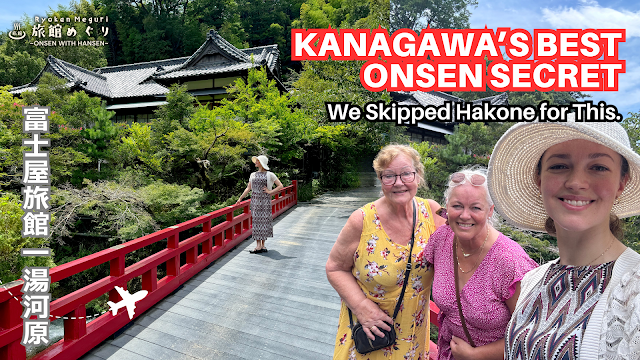
Why Locals Choose This Hidden Onsen Over Hakone | Fujiya Ryokan, Yugawara

10:17:00 PM


Looking for an authentic onsen ryokan experience close to Tokyo, but without the tourist crowds of Hakone?

Let me introduce you to Fujiya Ryokan (富士屋旅館) — a historic hot spring inn in Yugawara, Kanagawa, that’s quietly become one of my all-time favorite getaways.


🏯 A Ryokan Steeped in History

Established in 1876, Fujiya Ryokan is one of Yugawara’s oldest traditional inns. The current main building, constructed in 1923, is a beautifully preserved Taisho-era wooden structure and is officially registered as a Tangible Cultural Property of Japan. Staying here feels like stepping back in time — but with all the comforts of a modern stay.

I visited with my mother and grandmother in late summer, and it turned out to be the perfect multi-generational escape. From the timeless architecture to the soft rustle of yukata in the halls, everything about Fujiya Ryokan speaks to the kind of understated luxury that Japan does so well.


♨️ Onsen for Mind and Body

Fujiya’s onsen baths are gender-separated and indoor, but don’t let that fool you — the atmosphere is just as soothing as any open-air rotenburo. With natural hot spring water drawn from Yugawara’s renowned sources, the baths offer a skin-softening experience in a calming, wood-framed space that feels timeless.


🍽️ Kaiseki with a Twist: Unagi Specialties

One of Fujiya Ryokan’s biggest surprises was the food. Dinner is served at their restaurant Hyōrokutei (瓢六亭) and features beautifully curated kaiseki cuisine made from seasonal ingredients.

Their unagi (eel), however, is what sets them apart. Served Kansai-style—grilled without steaming—it arrives crispy on the outside, tender on the inside, and full of smoky, savory depth. It’s presented in a traditional donabe (clay pot) over rice, making the experience even more memorable.


🌸 Perfect for a Peaceful Stay — Without the Hakone Prices

Yugawara often flies under the radar, sitting just before the more famous onsen resort of Hakone. But locals in the know often choose Yugawara instead. Why?

  • It’s less crowded,

  • Often more affordable, and

  • Home to hidden ryokan gems like Fujiya.

Whether you’re a solo traveler, a couple on a quiet retreat, or a family spanning generations like mine, this ryokan offers something rare: a chance to slow down and soak in Japan’s natural and cultural beauty without distraction.


▶️ Watch the Full Video

🎥 I captured our entire experience at Fujiya Ryokan on video!
▶️ Watch here: Why Locals Choose This Hidden Onsen Over Hakone | Fujiya Ryokan Yugawara

Get a closer look at the historic rooms, serene onsen baths, beautifully presented meals, and the surrounding charm of underrated Yugawara.


Monday, June 16, 2025

Birthplace of Shinto, Sake & Sumo: Hidden Ryokan in Nara You Need to Visit | 料理旅館 大正楼

10:09:00 PM


Tucked away in the sacred heartland of Nara, just a 3-minute walk from Miwa Station, lies a place where time slows down and history whispers from the mountains: Taishoro Ryokan. I recently had the chance to spend a night at this fourth-generation, family-run ryori ryokan—and I captured the experience in my latest video:

🎥 Watch the full video here: 


Taishoro isn’t just a ryokan—it’s a gateway to Japan’s spiritual roots. Located near Ōmiwa Shrine, believed to be the oldest Shinto shrine in Japan and the birthplace of both sake and sumo, this ryokan offers an unmatched blend of cultural depth, tranquility, and culinary excellence.

What Makes Taishoro Special?

🛏️ Tranquil Rooms with Garden Views: Spacious tatami rooms open out to a serene inner garden, making it the perfect setting for reflection or relaxation.

🍱 A Feast for the Soul: As a ryori ryokan, Taishoro places immense care into its food. The dinner I enjoyed was one of the highlights of the stay—local, seasonal, and beautifully presented. Don’t miss the pink somen noodles, a regional delicacy tied to Nara’s rich culinary heritage.

♨️ Beautifully Renovated Bath Area: Their shared bath features a gorgeous brick mural depicting a nearby shrine, blending modern comfort with historical reverence.

🙋‍♂️ Warm, English-Speaking Hosts: Mr. Uda, who runs the ryokan, greeted me personally and offered tips on the surrounding sacred hiking trails—including the Yamanobe Trail.


Why You Should Visit

Taishoro is ideal for solo travelers, cultural enthusiasts, and anyone looking to escape the crowds of Kyoto or Nara City. It’s not about luxury in the Western sense—it’s about quiet beauty, heartfelt hospitality, and reconnecting with an older Japan.

There are a few practical notes to keep in mind:

💴 In-house charges (like dinner and drinks) are cash only
🚿 Toilets and showers are shared, but kept spotless
🌄 There are no blackout curtains, so pack an eye mask if you’re light-sensitive
🦟 Mosquitoes may be around in the warmer months—bring repellent just in case!

Final Thoughts

If you're seeking a deeply authentic experience with soul-stirring food and rich cultural connections, Taishoro is a place that will stay with you long after you’ve left. It’s a rare gem where hospitality, history, and home-cooked perfection come together in harmony.

📍Location: Taishoro Ryokan, Sakurai City, Nara Prefecture
🎥 Watch the video tour here: https://youtu.be/7apQHNmCeTk

Sunday, June 8, 2025

Top 5 Quirky Ryokans in Japan You Need to Visit (2025 Guide)

12:53:00 PM


Experience Japan's most unique traditional inns, from mystical mountain retreats to seaside cave baths


Japan's ryokans offer more than just accommodation – they're gateways to experiencing authentic Japanese culture, history, and hospitality. While many travelers stick to well-known luxury ryokans, some of the most memorable experiences await at Japan's quirkiest traditional inns.

After years of exploring Japan's hidden corners, I've discovered ryokans that feel almost mythical in their uniqueness. These aren't your typical Instagram-perfect stays – they're places with soul, history, and stories that will stay with you long after you return home.

Watch the full video tour of these incredible ryokans here – and read on for detailed information, booking tips, and insider secrets!


1. Kita Onsen Ryokan (北温泉旅館) – A Journey Back in Time

Location: Tochigi Prefecture, Nasu Mountains
Established: Edo Period (1603-1868)
What Makes It Special: Unchanged for centuries, with mysterious Tengu carvings

Book your stay here

The Experience

Stepping into Kita Onsen Ryokan feels like discovering a secret that's been hidden in the mountains for generations. This isn't a place that's been restored or modernized – it's genuinely preserved from another era.

The wooden corridors creak under your feet with centuries of stories. Every beam is darkened from decades of mineral-rich steam, and the sulfur-laden air carries whispers of the thousands of travelers who've sought healing in these waters.

The Legendary Tengu Baths

What sets Kita Onsen apart are the mysterious Tengu carvings that watch over the bathing areas. These legendary mountain spirits, with their long noses and fierce expressions, are said to protect the sacred waters. Local legend claims that bathing under their gaze brings good fortune and protection during mountain travels.

Practical Information

  • Best Time to Visit: Winter months for the most atmospheric experience
  • Accommodation: Traditional tatami rooms, some with irori (sunken hearths)
  • Waters: Sulfur-rich springs believed to help with skin conditions and joint pain
  • Booking: Advance reservations essential, especially for rooms with hearths

Pro Tip: Bring an eye mask! This place gets light in the morning. Earplugs will come in handy on days when it rains.


2. Okawaso (大川荘) – Where Anime Dreams Come to Life

Location: Aizu, Fukushima Prefecture
Established: Over 300 years ago
What Makes It Special: A river flows through the building; resembles scenes from Demon Slayer
Book your stay here

An Architectural Marvel

Okawaso Ryokan represents the pinnacle of traditional Japanese inn design. The most striking feature? An actual river flows underneath and through parts of the building, creating a constant, soothing soundtrack of flowing water.

The grand open hall, supported by massive wooden pillars, hosts nightly shamisen performances that echo through the space like something from a Studio Ghibli film. Many visitors comment that it resembles scenes from popular anime, particularly Demon Slayer – and they're not wrong.

Culinary Excellence

The seasonal kaiseki dinner at Okawaso is legendary. Each dish represents the current season in Fukushima, with ingredients sourced within a 20-mile radius. The presentation is as much art as it is cuisine, with each course telling part of the region's story.

Cultural Experiences

  • Evening shamisen performances in the main hall
  • Seasonal festivals and local cultural events
  • Guided walks through historic Aizu

Practical Information

  • Best Time to Visit: Spring for cherry blossoms, autumn for fall colors
  • Accommodation: Riverside rooms offer the best experience
  • Special Features: Multiple indoor and outdoor baths, some overlooking the river
  • Cultural Programs: Traditional performances most evenings

3. Lamp no Yado Aoni Onsen (ランプの宿 青荷温泉) – The Ultimate Digital Detox

Location: Aomori Prefecture, deep in the mountains
Established: Traditional mountain lodge style
What Makes It Special: No electricity, no Wi-Fi, only oil lamps
Book your stay here

Disconnecting to Reconnect

In our hyperconnected world, Lamp no Yado Aoni Onsen offers something increasingly rare: complete digital silence. There's no phone signal, no Wi-Fi, and no electricity in guest areas. The only illumination comes from hundreds of oil lamps that are lit each evening at dusk.

The Transformation Process

First-time guests often experience what staff call "digital withdrawal" – the constant urge to check phones that no longer work. But by the second day, something remarkable happens. Conversations become deeper, sleep becomes more restful, and the simple pleasure of reading by lamplight returns.

Natural Hot Springs

The outdoor baths are particularly magical in winter, when you can soak in hot mineral water while snowflakes melt on your face and a canopy of stars shines overhead – stars you can actually see without light pollution.

What to Expect

  • Evening: Oil lamps lit throughout the ryokan as darkness falls
  • Dinner: Multi-course mountain cuisine served by lamplight
  • Activities: Reading, journaling, conversation, stargazing
  • Morning: Wake naturally with sunrise, no alarm clocks needed

Practical Information

  • Access: Requires advance arrangement for transportation from nearest station
  • Packing: Bring books, journals, and analog entertainment
  • Season: Open year-round, but winter offers the most dramatic experience
  • Duration: Minimum 2-night stay recommended for full detox experience

4. Isokano Yuyado Ubarakan (磯香の湯宿 鵜原館) – Bathing in a Sea Cave

Location: Chiba Prefecture, Pacific Coast
Established: Built into natural coastal cave
What Makes It Special: Onsen inside a seaside cave with crashing waves

Book your stay here

A Natural Wonder

Ubarakan offers an experience found nowhere else in Japan: bathing in hot springs inside a natural sea cave. As you soak in the mineral-rich waters, Pacific waves crash against the rocks just meters away, occasionally sending salty spray that mingles with the hot steam.

Historical Significance

During World War II, this same cave served as a shelter for local villagers during air raids. The current owner's family has maintained detailed records of those who sought refuge here, adding profound historical depth to your stay.

The Cave Bath Experience

The cave bath is naturally formed from centuries of wave action. The mineral content is incredibly high due to the unique combination of hot spring water and sea spray. Local beliefs hold that these waters have healing properties for respiratory conditions and skin ailments.

Seasonal Variations

  • Summer: Perfect temperature contrast between hot springs and cool sea breeze
  • Winter: Dramatic waves and storm watching from the safety of the warm bath
  • Full Moon: Moonlight reflecting on the waves creates an almost mystical atmosphere

Practical Information

  • Tide Times: Check local tide schedules for the most dramatic wave action
  • Safety: Bath access may be limited during severe weather
  • Cuisine: Specializes in ultra-fresh seafood, including cave-steamed abalone
  • Reservations: Book well in advance, especially for oceanfront rooms

5. Jano-yu Onsen Takarasou (蛇の湯温泉 たから荘) – A Fairytale Farmhouse

Location: Gunma Prefecture, 2 hours from Tokyo
Established: 18 generations of family ownership
What Makes It Special: Traditional thatched roof and white snake legend

Book your stay here

Living Heritage

Takarasou represents something increasingly rare in modern Japan: an authentic thatched-roof ryokan maintained by the same family for 18 generations. The current "kayabuki" roof was hand-crafted by master thatchers and requires replacement every 15-20 years.

The White Snake Legend

The name "Jano-yu" (Snake Hot Spring) comes from an ancient legend. A wounded samurai, lost in the mountains, followed a white snake to these healing waters. Today, guests occasionally report white snake sightings in the garden – considered extremely auspicious in Japanese folklore.

Farm-to-Table Cuisine

Nearly everything served at Takarasou is grown within sight of the ryokan. Meals follow the traditional "ichiju-sansai" style (one soup, three dishes) and change completely with the seasons. The family maintains traditional preservation methods, including their own miso and pickles.

Accessibility from Tokyo

What makes Takarasou special is that you don't need to journey to remote mountains for an authentic experience. This slice of old Japan is just two hours from Tokyo Station by train, making it perfect for travelers with limited time.

Practical Information

  • Transportation: Direct train from Tokyo to nearby station, then short taxi ride
  • Best Seasons: Spring for mountain vegetables, autumn for harvest cuisine
  • Activities: Traditional farming experiences, mountain hiking, shrine visits
  • Cultural Value: Recognized as tangible cultural property by local government

Planning Your Quirky Ryokan Adventure

Booking Tips

  1. Reserve Early: These unique ryokans have limited rooms and book up quickly
  2. Language: Basic Japanese phrases helpful but not essential
  3. Dietary Restrictions: Inform ryokans in advance of any food allergies or preferences
  4. Transportation: Most require coordination for pickup from nearest train stations

What to Pack

  • Comfortable Walking Shoes: For exploring mountain paths and historic areas
  • Camera: But be respectful of no-photo areas, especially in baths
  • Open Mind: Each ryokan has its own customs and rhythms
  • Cash: Many traditional ryokans prefer cash payment

Cultural Etiquette

  • Bath Etiquette: Always wash thoroughly before entering hot springs
  • Quiet Hours: Most ryokans observe early evening quiet periods
  • Meal Times: Dinner and breakfast are typically served at set times
  • Respect: These are often family-run businesses with deep cultural significance

Budget Considerations

Prices vary significantly based on season, room type, and included meals:

  • Budget Option: Takarasou (closest to Tokyo, family-run)
  • Mid-Range: Kita Onsen and Lamp no Yado (authentic experiences)
  • Premium: Okawaso and Ubarakan (unique features and locations)

Creating Lasting Memories

These five quirky ryokans represent more than just accommodation – they're cultural experiences that connect you with Japan's living history. Whether you're soaking in a seaside cave, bathing under the protection of mountain spirits, or disconnecting completely from the digital world, each offers something you simply won't find in standard hotels.

The beauty of quirky ryokans lies not in luxury amenities or perfect service, but in their authenticity and the stories they preserve. They remind us that travel is about more than checking destinations off a list – it's about experiencing places that change how we see the world.

Ready to experience these incredible ryokans for yourself? Watch my full video tour [here] for detailed footage of each location, and don't forget to subscribe for more hidden gems of Japan!


Frequently Asked Questions

Q: Do I need to speak Japanese to stay at these ryokans? A: While basic Japanese is helpful, most ryokans are accustomed to international guests. Key phrases and gestures go a long way, and staff are usually very patient and helpful.

Q: Are these ryokans suitable for families with children? A: Most welcome children, but check individual policies. Some, like Lamp no Yado, might be better suited for older children who can appreciate the unique experience.

Q: What's the difference between these and luxury ryokans? A: Luxury ryokans focus on premium amenities and service. These quirky options prioritize authenticity, history, and unique experiences over modern conveniences.

Q: Can I visit just for the day baths? A: Some offer day-use options, but the full experience really requires an overnight stay to appreciate the atmosphere and traditional rhythms.

Q: What's the best time of year to visit? A: Each has its charm in different seasons. Winter offers the most atmospheric experiences, while spring and autumn provide beautiful natural settings.


Have you stayed at any of these incredible ryokans? Share your experiences in the comments below! For more hidden gems and authentic Japanese experiences, subscribe to Onsen with Hansen on YouTube and follow my Japan adventures.

Monday, March 10, 2025

【Aomori】From Pleasure House to Cultural Landmark: The 125 Year Journey of Shin Mutsu Ryokan

9:22:00 PM

Hidden in the quiet streets of Hachinohe, Aomori Prefecture, stands a building that whispers stories from another time—Shin Mutsu Ryokan (新むつ旅館). Once a vibrant hub of the Meiji-era, this historical ryokan is no longer in operation, but its timeless charm and cultural legacy continue to captivate those who pass by.

On my recent journey through northern Japan, I had the chance to visit this remarkable architectural gem. Although the ryokan is now closed and not open for public tours, its beautiful wooden structure and curved roof still preserve the spirit of its past.

As I admired the exterior, something special happened—one of the local neighbors kindly stopped to chat and shared vintage photographs and personal memories of the ryokan’s glory days. It was an unforgettable moment that brought the story of this place to life in a way no guidebook ever could.

In my latest video, I invite you to step back in time with me and explore:

  • The history of Shin Mutsu Ryokan, from its origins as a Meiji-era pleasure house to its later days as a cultural inn.
  • The unique architecture that has earned it a place as a Registered Tangible Cultural Property.
  • An encounter with local artist Kiyotaka Osawa, whose presence added even more depth to the story.
  • A touching reminder of why places like this still matter in a rapidly modernizing world.

📺 Watch the video here: https://youtu.be/B8yYZ0Bgb_c


Whether you’re a lover of Japanese history, ryokan culture, or hidden gems off the beaten path, this short video is a tribute to a bygone era—and a quiet reminder to cherish what remains.

🧳 Join me on this journey through Japan’s timeless traditions—one ryokan at a time.
Let’s continue to relax, rejuvenate, and rediscover Japan together.

#ShinMutsuRyokan #Hachinohe #RyokanMeguri #OnsenWithHansen #JapanHistory #MeijiArchitecture #CulturalHeritageJapan #旅館めぐり

Sunday, March 2, 2025

A Step Back in Time: Staying at Kowakubi Onsen Shōhōen – A Historic Ryokan in Akita

10:35:00 PM


If you love traditional ryokan, natural hot springs, and Japan’s rich history, then Kowakubi Onsen Shōhōen (強首温泉 樅峰苑) is a hidden gem you won’t want to miss! Nestled in the snowy landscapes of Akita Prefecture, this 100-year-old family-run ryokan offers an unforgettable stay, blending stunning architecture, authentic hospitality, and a private outdoor onsen perfect for winter travel.

In my latest video, I take you on a journey to this incredible heritage ryokan, where I experienced a night in a former mansion, soaked in an untouched gensen kakenagashi (源泉掛け流し) hot spring, and enjoyed a taste of local Akita cuisine. Watch the full video here: 👇


📺 Watch the Full Ryokan Experience Here!


What Makes Kowakubi Onsen Shōhōen Special?

Unlike ryokans built specifically for travelers, Shōhōen was originally a luxurious private home for a wealthy family. Walking through its corridors feels like stepping back in time—intricate wooden architecture, a grand Rokumeikan-style staircase, and an impressive corridor made from a single piece of Akita cedar. It’s no wonder that this ryokan is a registered heritage property in Japan!

What sets it apart even further is the passion of the family running it. They are actively involved in preserving Japan’s ryokan culture and historical buildings, ensuring that places like Shōhōen remain for future generations. If you appreciate history and traditional Japanese aesthetics, this place is a dream come true.


The Onsen: A Hidden Treasure Recently Discovered

One of the highlights of my stay was the outdoor private-use onsen. The hot spring was only recently discovered, making it one of the newer additions to Japan’s extensive onsen culture. However, its water quality is excellent, flowing directly from the source (gensen kakenagashi), meaning it’s completely natural and untreated.

💧 Onsen Benefits:
✔️ Helps improve circulation and muscle relaxation
✔️ Rich in minerals that promote healthy skin
✔️ The perfect way to unwind in the snow ❄️♨️

With the snow falling around me as I soaked in the steaming waters, it was a truly magical experience that I won’t forget.


A Simple Yet Authentic Stay

Since this ryokan was originally a private residence, the accommodations are simple yet traditional. I stayed in a small tatami mat room—perfect for solo travelers looking for a quiet, authentic stay. While it doesn’t have the ultra-modern amenities of a high-end ryokan, that’s part of its charm! If you’ve ever wondered what living in a traditional Japanese home felt like, this is it.

At dinner, I enjoyed local Akita cuisine, carefully prepared with fresh, seasonal ingredients. Every dish was delicious, though I have to admit—I was too busy enjoying the moment to take note of all the details! 😉


Who Should Stay Here?

🔹 Intermediate or advanced Japan travelers who love traditional stays
🔹 Those who appreciate history, architecture, and cultural preservation
🔹 Onsen lovers looking for a private, natural hot spring experience
🔹 Travelers who enjoy local cuisine and family-run ryokans
🔹 People who don’t mind staying somewhere slightly off the beaten path

Since this ryokan is in a rural area, having a car makes access easier, but it’s well worth the journey!

📍 Location: Akita, Japan 🇯🇵
🚗 Best way to get there: Driving is recommended, but you can also check train & bus options.


Watch the Full Experience on YouTube!

If you want to see Kowakubi Onsen Shōhōen in all its historical beauty, check out my full video where I take you through the entire stay—from arrival to exploring the ryokan, soaking in the onsen, and experiencing the family’s incredible hospitality.

📺 Click here to watch the full video!

Would you stay at this 100-year-old ryokan? Do you prefer modern ryokans or historical ones like this? Let me know in the comments! 😊

📢 Don’t forget to subscribe for more hidden ryokan and onsen adventures across Japan! 🏯♨️

#AkitaRyokan #OnsenExperience #RyokanJapan #HiddenJapan #TraditionalJapan #JapaneseOnsen #LuxuryRyokan


Sunday, February 9, 2025

Western Japan’s Three Heritage Ryokans: A 3-Day Journey Through Time

6:09:00 PM


Are you looking for a unique ryokan experience that takes you beyond the usual tourist routes in Japan? In this post, I’ll take you on a three-day adventure across three prefectures, where I stayed at three incredible heritage ryokans—each with its own charm, history, and relaxing onsen.

From the Edo-period elegance of Kurashiki, to the modernized cultural heritage ryokan in Kotohira, and the tranquil Meiji-era onsen retreat in Hyogo, this journey is a perfect way to experience traditional Japan while escaping the crowds.

↓↓↓ Full Video Here ↓↓↓


Day 1: Ryori Ryokan Tsurugata – Kurashiki, Okayama

A Step Back in Time

My ryokan adventure began in Kurashiki, Okayama, a city known for its beautifully preserved Bikan Historical Quarter. Nestled in the heart of this Edo-period district is Ryori Ryokan Tsurugata (料理旅館 鶴形)—one of the oldest buildings in the area, originally built in 1744.

This ryokan was once an oil merchant’s establishment, giving it a deep historical connection to Kurashiki’s commercial past. Today, it has been beautifully maintained, allowing guests to stay in an authentic Edo-period building.

Getting There

  • 🚄 From Osaka: Take the Shinkansen to Okayama Station, then transfer to a local line for Kurashiki Station. From there, it’s just a 10-minute walk to the ryokan.

What Makes This Ryokan Special?

✅ Only 11 rooms for a quiet, intimate stay
✅ Beautiful tatami rooms with views of the inner garden
✅ Located right in the Bikan Historical Quarter for easy sightseeing

Must-Do: Explore Kurashiki by Rickshaw

One of the best ways to experience Kurashiki’s historical charm is by taking a rickshaw tour. It’s a relaxing way to admire the white-walled storehouses, traditional wooden buildings, and picturesque canals.

Dinner: A Kaiseki Experience in Bento Form

As the name "Ryori Ryokan" suggests, Tsurugata takes pride in its cuisine. Dinner is served in beautiful bento-style boxes, featuring fresh Setouchi seafood and seasonal vegetables. Their signature tai chazuke (sea bream rice with tea) was the highlight of the meal!


Day 2: Shikishimakan – Kotohira Onsen, Kagawa

A Cultural Heritage Ryokan with Modern Comforts

The second stop on my ryokan-hopping journey took me to Kotohira Onsen in Kagawa Prefecture, home to the famous Kotohira Shrine (金刀比羅宮). I stayed at Shikishimakan (御宿 敷島館), a ryokan with a 400-year history, designated as a cultural heritage site and reopened in 2019 with modern upgrades.

Getting There

  • 🚄 From Kurashiki: Take a train to JR Kotohira Station. The ryokan is just a 5-minute walk from the station, conveniently located along the shrine’s approach.

What Makes This Ryokan Special?

✅ Originally built during the Edo period, now beautifully restored
✅ Located on the main path to Kotohira Shrine
✅ Perfect for first-time ryokan guests, as all rooms are Western-style

Private Baths & Relaxation

Instead of a large open-air bath, Shikishimakan offers four private onsen baths, each with a distinct character. These baths are first-come, first-served, making it a great option for couples or families looking for privacy.

Dinner: A Customizable Feast

Unlike most ryokans, where kaiseki meals follow a fixed menu, Shikishimakan offers a variety of small dishes alongside the main course. This makes for an exciting and diverse dining experience, especially for those wanting to try different flavors.

A Great Choice for Ryokan Beginners

Since Shikishimakan offers Western-style rooms, you won’t experience traditional Nakai-san (room attendant) service, making it a comfortable choice for those new to ryokans.


Day 3: Shioda Onsen Kamiyama Ryokan – Hyogo

A Hidden Hot Spring Retreat in the Forest

For the final night of my ryokan adventure, I traveled to Hyogo Prefecture to stay at Shioda Onsen Kamiyama Ryokan (塩田温泉 上山旅館). Founded in 1874, this ryokan is the original hot spring source of Shioda Onsen, known for its healing mineral waters.

Getting There

  • 🚄 From Kotohira: Take the train to Himeji Station, then a bus to Shioda. The ryokan provides a shuttle service from the bus stop, which takes just 3 minutes.

What Makes This Ryokan Special?

✅ Founded in 1874, rich in history
✅ Set in a quiet forest, perfect for relaxation
✅ Offers a variety of beautiful baths, including a hinoki-wood bath, a garden bath, and private open-air baths

The Ultimate Onsen Experience

The waters of Shioda Onsen are rich in sodium bicarbonate and chloride, believed to aid digestion and soothe nerve pain. The private outdoor baths were my favorite—surrounded by nature, offering a true escape from the world.

Dinner: The Flavors of Hyogo

Shioda Onsen’s kaiseki meal features Tajima beef (但馬牛) and fresh seafood from Harima-nada. The quality of ingredients and delicate presentation made it an unforgettable dining experience.

A Serene End to the Journey

After the crowds of Kotohira Shrine, arriving at Shioda’s peaceful forest setting was the perfect contrast. The calm atmosphere, soothing hot springs, and rich history of the ryokan made it an ideal way to end the trip.


Final Thoughts: Exploring Western Japan Beyond the Crowds

This three-day, three-prefecture journey was an incredible way to experience authentic Japan away from the usual tourist spots. Whether you’re interested in history, onsen, or regional cuisine, each of these ryokans offers a one-of-a-kind experience. 

📢 Have you ever stayed at a ryokan? Let me know in the comments—which of these three would you love to visit first?

温泉が大好きなハンセンでした。またね!

About Me

Adventures ofAnette


A modern day shield-maiden who loves to explore the unbeaten paths of the world. From her base in Tokyo, Anette takes on both rural and urban challenges, and goes by the motto "No challenge too big, no adventure too small"!
・Read more →


Recent Posts

recentposts

Random Posts

randomposts