Adventures of Anette: Sakura
Showing posts with label Sakura. Show all posts

Thursday, March 26, 2026

Following the Sakura Front: A Journey Through Japan’s Hidden Ryokan

11:01:00 PM


Every spring, Japan becomes a moving target.

The sakura zensen — the cherry blossom front — drifts slowly north, unfolding across the country in a way that feels both predictable and impossible to pin down. The blossoms don’t bloom on command. And they certainly don’t wait for your flight to land.

If you stand in a famous park at the right time, you’ll see them.

But that doesn’t always mean you’ve experienced the season.

For me, the most unforgettable hanami hasn’t happened under crowded trees or along popular riverbanks. It has happened quietly — behind sliding doors, beside rising steam, in places where spring feels less like an event and more like a presence.

This year, I followed the bloom across five traditional ryokan. Each offered a different way of tuning into spring. And somewhere along that journey, my understanding of sakura season began to shift.


↑↑↑Full video here ↑↑↑


Why These Places Are Special

Japan has no shortage of beautiful places to see cherry blossoms.

But ryokan offer something fundamentally different.

They are not designed for spectacle. They are designed for perspective.

In a ryokan, the experience of the season is shaped by architecture, by the placement of a window, by the relationship between interior space and the landscape beyond it. You’re not just looking at nature — you’re placed within it, guided to notice it in a certain way.

Hidden Ryokan Hunters will recognize this immediately. These are places where the atmosphere has been refined over decades, sometimes centuries, to frame something as fleeting as a few days of bloom.


Arrival: Following a Moving Season

Traveling with the sakura front is not like planning a typical itinerary.

It requires a certain acceptance — that timing might shift, that forecasts might change, that the perfect moment can’t be fully controlled.

In Yamanashi, petals were already beginning to open.

Further south in Osaka, the blossoms were framed in carefully composed gardens.

By the time I reached Nagano, spring felt like it was just arriving — hesitant, delayed by elevation.

And in Nara, the season expanded into something much larger than a single tree or garden.

Each destination felt like a different chapter of the same story.


Yamanashi: Living Inside the Blossoms

At Kaminoyu Onsen, sakura isn’t something you step outside to see.

It surrounds you.

From the higher guest rooms, you look down onto a canopy of blossoms spreading across the grounds below. In the lobby, the trees feel almost within reach, filling the windows with layers of soft pink.

But the most memorable moment comes in the bath.

From a private kashikiri onsen, you sit in still water while the landscape opens outward — a quiet sweep of blossoms just beyond the edge of the bath. Steam rises gently, softening the view.

There’s a stillness here that makes you aware of time passing.

A subtle expression of mujo — impermanence.

You’re warm, grounded, and yet everything around you is changing.


Osaka: When Architecture Frames the Season

At Nanten-en, the experience shifts.

This is not immersion. It’s composition.

Designed by Tatsuno Kingo, the architect behind Tokyo Station, the ryokan feels intentional in a different way. The garden is not simply planted — it’s arranged, framed, and revealed.

From certain rooms, sliding doors open onto views that resemble living paintings. The cherry blossoms are positioned within the frame of the architecture, creating a sense of balance between inside and outside.

This is shakkei — borrowed scenery.

You’re not moving toward the blossoms.

You’re observing them from stillness.

And in that stillness, you begin to notice details you might otherwise miss.


Nagano: A Second Chance at Spring

Further north, in Nagano, the pace changes again.

Spring arrives slowly here.

At Masuya Ryokan, a place that has stood for over 500 years, that slower rhythm becomes part of the experience. Time feels stretched — not just across the landscape, but across generations.

From your room, petals drift past tiled rooftops.

From the rotenburo, the mountain air carries the softness of early bloom.

What becomes clear here is that sakura season isn’t fixed.

It’s shaped by microclimates — by sunlight, by elevation, by the direction a slope faces. Two ryokan in the same town might reach peak bloom days apart.

And that creates something unexpected.

A second chance.

While cities like Tokyo have already moved into green, places like this are just beginning to open.

You arrive — and you realize the season hasn’t passed you by.

It’s simply been waiting somewhere else.


Hyogo: Stillness Within Movement

Kinosaki Onsen is known for its energy.

The canals, the seven public bathhouses, the evening strolls in yukata — during sakura season, it becomes lively, almost festive.

But Migumiya offers a different perspective.

Here, you don’t need to go out to find the blossoms.

You return to your room.

Tatami floors. A low table. Soft, diffused light.

And just beyond the window, sakura branches stretching gently over the river.

After a day of movement — walking from bath to bath, passing through crowds — this stillness feels intentional.

The only motion is outside.

Petals drifting past your window.

It’s a quieter way to experience the same season.


Nara: Seeing the Landscape, Not Just the Tree

By the time I reached Shigisan in Nara, I thought I understood what a sakura ryokan could offer.

I was wrong.

Shigisan Kanko Hotel sits along a mountainside, opening out toward a valley filled with spring color. This isn’t a garden view. It’s a landscape.

From the baths and terraces, the blossoms extend across hills and valleys, creating layers of pink that shift throughout the day.

Here, you’re not beneath the blossoms.

You’re looking across them.

The rotenburo becomes something else entirely.

In daylight, the valley stretches outward in soft gradients.

At night, the mountains fade into shadow, and the blossoms seem to float above the water.

It’s an experience that changes hour by hour.

But what makes this place unforgettable is what lies just beyond it.

A short walk leads to Chogosonshi-ji Temple.

Perched high along the mountainside, it offers a view often compared to Kyoto’s Kiyomizu-dera — but without the crowds.

There is silence.

Wind moving through wooden corridors.

Petals drifting across ancient beams.

This is where the idea of oku — inner depth — becomes real.

The ryokan doesn’t replace the destination.

It leads you deeper into it.


Food and Seasonality

At each of these ryokan, the meals reflect the same philosophy as the spaces themselves.

Seasonality isn’t just a theme — it’s the foundation.

Spring kaiseki brings together delicate mountain vegetables, fresh ingredients, and presentations that echo the landscape outside. The pacing of the meal mirrors the rhythm of the evening.

Nothing feels rushed.

Like the blossoms, it’s meant to be experienced as it unfolds.


Why This Journey Matters

After following the sakura across these different regions, one thing became clear.

The most meaningful hanami doesn’t announce itself.

It doesn’t always happen in the most famous places.

It happens quietly.

Behind sliding doors.

Beside rising steam.

Framed by architecture.

Or hidden on a mountainside that few people visit.

The real value isn’t the blossom itself.

It’s the vantage point from which you see it.


Practical Information for Travelers

If you’re considering a similar journey, a few things make a difference.

Access is relatively straightforward from Tokyo, with most destinations reachable within two to five hours by train. But timing is everything.

Central regions like Yamanashi and Osaka typically bloom from late March to early April. Mountain areas like Nagano follow later, often extending the season into mid or even late April.

Flexibility is key.

Booking early is essential, especially for sakura season, but leaving room for slight adjustments can make all the difference.

These ryokan are best suited for travelers who are willing to slow down — who value atmosphere over checklist sightseeing, and who are curious about the deeper rhythms of Japan.


A Continuing Discovery

These five ryokan are just part of a much larger journey.

Across Japan, there are countless hidden inns, each offering a slightly different perspective on the seasons. Mapping them — understanding how they connect to place, timing, and culture — is an ongoing process.

One that continues to evolve with every stay.


An Invitation

Some of the most meaningful places in Japan are not the ones you plan for.

They’re the ones you discover along the way.

If you’ve come across a ryokan that changed how you experience a season, I’d love to hear about it.

Because sometimes, the season isn’t something to chase.

It’s something you learn to tune into.

Sunday, March 8, 2026

How to Time Cherry Blossom Season at Ryokan in Japan (Without Guessing)

7:15:00 PM


The first petals usually fall quietly.

Not in Tokyo’s crowded parks, where thousands of phones tilt toward the same branch. But somewhere quieter — drifting across a wooden bridge, dissolving into hot spring steam.

The first time I truly understood Japan’s cherry blossom season, I wasn’t standing under a famous tree.

I was soaking in an outdoor bath at a small ryokan in the mountains, watching petals scatter into mineral water as the evening air cooled.

That moment revealed something most travelers never realize:

Cherry blossom season in Japan isn’t a single date.

It’s a moving landscape.


Watch Full Video Here


Why Cherry Blossom Season Is Harder Than It Looks

Every spring, millions of visitors try to predict the exact week when sakura will bloom in Tokyo or Kyoto.

Flights are booked. Hotels are reserved. And everyone hopes the timing works.

Sometimes it does.

But often it doesn’t.

The reason is simple: cherry blossoms don’t bloom everywhere at once. Instead, the season travels across Japan like a slow-moving weather system known as the Sakura Zensen — the Cherry Blossom Front.

Starting in the subtropical south of Kyushu, the bloom gradually moves northward through Kansai, climbs the mountain valleys of Nagano, and finally reaches Tohoku and Hokkaido weeks later.

For travelers who understand how this system works, missing sakura becomes almost impossible.


The Geography Behind Sakura Timing

The Sakura Zensen travels nearly 1,000 miles across Japan each spring, but latitude alone doesn’t determine bloom timing.

Three key factors shape the experience:

  • Sakura variety

  • Elevation

  • Microclimate

Understanding these layers transforms cherry blossom travel from guesswork into strategy.

Hidden Ryokan Hunters often learn quickly that these details matter far more than a single forecast date.


Early Bloomers: The Kawazu Sakura

One of the most reliable ways to experience cherry blossoms early is by seeking out different varieties.

Take Kawazu-zakura, which bloom as early as February along the Izu Peninsula.

Their deep pink petals and resilience to temperature swings allow them to bloom nearly a month before the famous Somei Yoshino trees that dominate Tokyo and Kyoto.

Along the rivers of Kawazu, the season can stretch for weeks — long before most travelers even begin thinking about sakura.

This is the first secret:

Cherry blossom season isn’t a single event.

It’s a relay race.


Elevation: Japan’s Hidden Sakura Insurance

Elevation quietly reshapes the bloom calendar.

A simple rule often applies: for every 100 meters of elevation, cherry blossoms may bloom two to three days later.

That difference can determine whether travelers arrive to bare branches or full bloom.

In Kaminoyu Onsen in Yamanashi, the higher elevation delays the blossoms just enough to create a second window after Tokyo’s peak.

Similarly, Shigisan Kanko Hotel in Nara sits in the cooler mountains above Kyoto.

When Kyoto reaches peak bloom, Mount Shigi may still be preparing for it.

For travelers who plan strategically, elevation becomes a kind of insurance policy against mistiming the season.


Mountain Spring: Where Sakura Lingers

By mid-April, many visitors assume cherry blossom season has already ended.

Tokyo’s trees have turned green — a stage called hazakura, when fresh leaves begin replacing petals.

But in Japan’s mountains, spring moves more slowly.

At Masuya Ryokan in Nagano, cooler air delays the blossoms just enough that sakura may still be blooming weeks after Tokyo’s peak.

In some years, when Tokyo reaches peak bloom in late March, Nagano’s higher elevations won’t see the first flowers until early April.

Spring hasn’t disappeared.

It has simply moved uphill.


The Northern Safety Valve

Travelers who miss central Japan’s blossoms still have another option.

Go north.

In Aizu-Wakamatsu, the historic ryokan Mukaitaki sits around a garden where cherry blossoms often reach their peak after much of Japan has already moved on.

Northern latitude slows the season.

Traditional architecture frames the garden.

And the experience feels like discovering a second spring.

Hidden Ryokan Hunters often rely on this northern shift — following the bloom instead of fighting the crowds.


Microclimates: The Secret Within a Single Ryokan

Even within the same property, cherry blossom timing can vary dramatically.

At Yomogino Ryokan in Fukushima, the entrance trees were already in full bloom.

Yet just fifty meters away near a private bath, the branches were still holding tight buds.

The difference?

Sun exposure. Wind patterns. Shade.

The same phenomenon appears at Atsugi Iiyama Onsen, where south-facing trees bloom earlier while shaded rotenburo baths lag behind.

For travelers dreaming of soaking beneath falling petals, studying past photos of bath-side trees can reveal far more than general bloom forecasts.

Timing lives in the details.


When Petals Begin to Fall

Many travelers obsess over mankai, the perfect moment of full bloom.

But in Japan, beauty often arrives just after.

Three days later, the blossoms begin to fall in drifting waves known as sakurafubuki — a cherry blossom blizzard.

At ryokan like Shosenkaku, petals collect quietly in hot spring water as the wind moves through the branches.

It is fleeting.

And that fleetingness is precisely the point.

This feeling is captured by the Japanese concept mono no aware — an awareness of impermanence, and the quiet beauty that comes with it.

Sometimes the most powerful moment of sakura season happens when the petals begin to disappear.


Why Ryokan Are the Best Way to Experience Sakura

Cherry blossom season is often experienced in crowded parks and city streets.

But ryokan offer something very different.

Here, the experience slows down.

You watch petals drift across a garden while drinking tea.
You soak in mineral baths beneath branches.
You wake to a courtyard dusted with blossoms.

These quiet observations reveal something deeper about Japanese seasonal travel.

Sakura isn’t meant to be chased.

It’s meant to be noticed.


Practical Guide: Timing Sakura at Ryokan

Best Strategy for Travelers

Follow the bloom rather than fixating on one location.

Combine:

  • early blooming varieties

  • higher elevation inns

  • northern destinations

This creates multiple opportunities to experience sakura during a single trip.

Access from Tokyo

Most of the ryokan mentioned here are accessible by train:

  • Izu Peninsula – about 2 hours from Tokyo

  • Yamanashi onsen towns – 1.5 to 2 hours

  • Nagano ryokan – 2 to 3 hours by Shinkansen

  • Aizu-Wakamatsu – roughly 3 hours

Best Season

Cherry blossom season across Japan typically spans:

Mid-February – Early May

depending on region and elevation.

Who These Ryokan Are Best For

These destinations are ideal for travelers who:

  • enjoy seasonal travel experiences

  • appreciate traditional architecture and gardens

  • prefer quiet onsen towns to crowded parks

  • want to experience sakura slowly

Booking Tip

Instead of booking a single destination months ahead, consider choosing two regions at different elevations or latitudes.

This dramatically increases the chance of catching peak bloom.


Discovering Hidden Ryokan Across Japan

This journey is part of an ongoing exploration of traditional inns across the country.

From mountain villages to remote hot spring valleys, these ryokan reveal a different side of Japan — one shaped by season, landscape, and quiet hospitality.

Hidden Ryokan Hunters often discover that the most memorable experiences aren’t the famous ones.

They’re the ones found along the way.


Your Turn

Have you discovered a ryokan where cherry blossoms transformed the experience?

A hidden garden.
A quiet rotenburo beneath falling petals.

Share your favorite discoveries.

Because the most beautiful ryokan in Japan are often the ones we find together — one spring at a time.

Sunday, March 18, 2018

Sakura Season in Japan: A visit to Enoshima (江ノ島)

11:25:00 PM
Above: Mt. Fuji seen from Enoshima
Spring has finally arrived here in Japan, and one of the most characteristic parts of the Japanese spring is the blooming of the cherry blossom trees sakura. As a part of a small sakura sightseeing trip last week to Shonan we stopped by the famous island Enoshima where we also got a glimpse of the Japanese symbol. The timing of the sakura season changes depending on the area you visit (sakura forecast for 2018 here), and early March was perfect for seeing the beautiful flowers by the Oide River. We did see some sakura on Enoshima as well, but if you're considering to visit Enoshima for the sakura season you might want to include a stop by the Oide River to your itenary.

Wednesday, March 7, 2018

Japan Sakura Season: Early March Cherry Blossom Viewing in Shonan - Oide River (小出川)

10:52:00 PM
Above: Sakura flowers by the Oide River
One of the most popular seasons to visit Japan is in spring when the cherry blossoms color the Japanese landscape with its pink cape. The timing of the sakura season changes depending on the area (sakura forecast for 2018 here) and the type of sakura. If you find yourself in the Kanto area you can see the Japanese national flower already in January in Atami and in February the flowers bloom in the southern part of Izu, Kawazu.
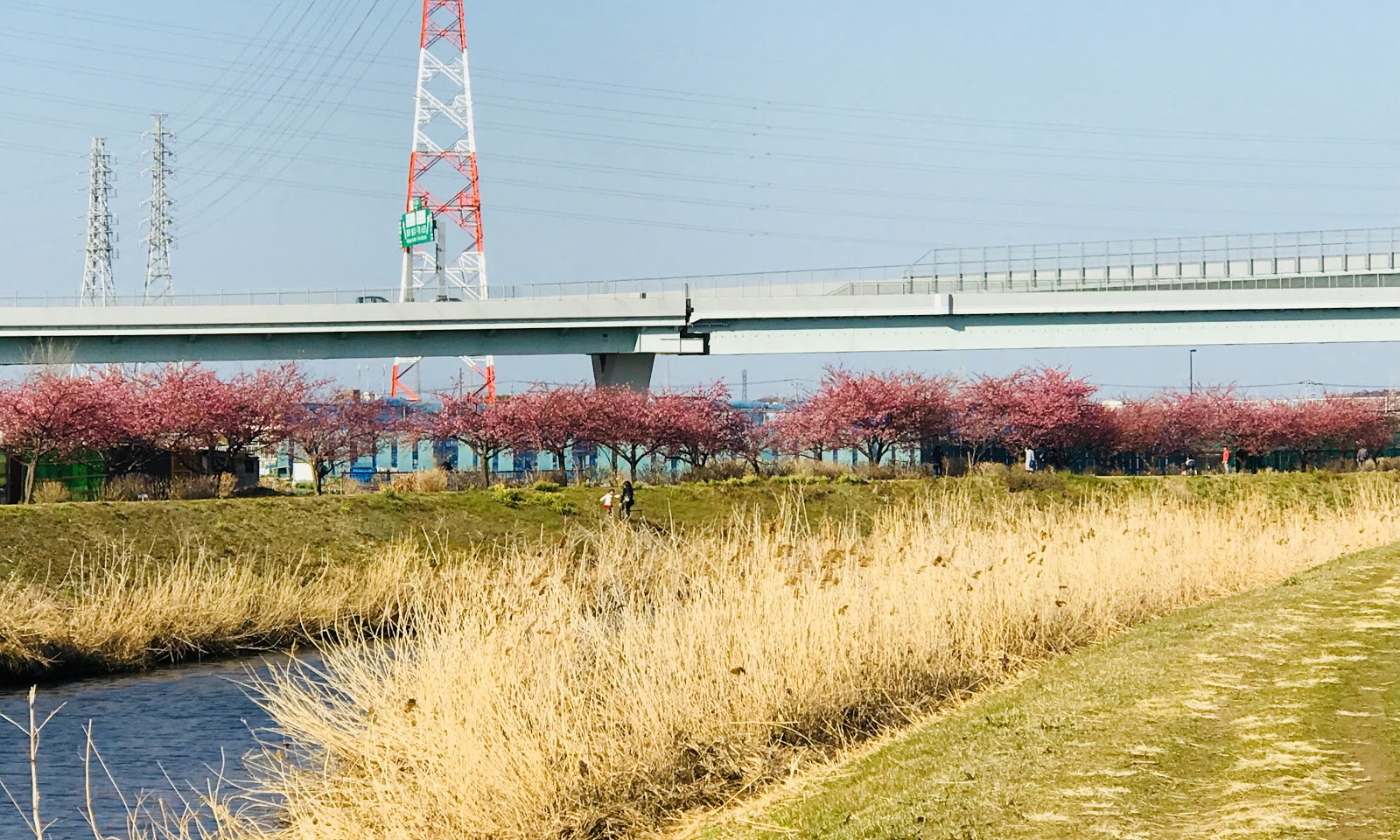
Above: The sakura trees, seen from the road 
As a part of a small day trip to the Shonan area (south of Tokyo) I and some friends stopped by the Oide River (小出川) where they were having a small sakura festival.
Above: A sign that says Oide Sakura Festival


We were quite lucky with the timing, as most of the flowers were in full bloom. It seemed like some of the locals were enjoying flower-watching (hanami) by the river, but to be honest there wasn't that much going on there besides the little hanami.
Above: A blooming cherry tree with locals enjoying their hanami in the background.
Above: Visitors viewing the beautiful flowers.
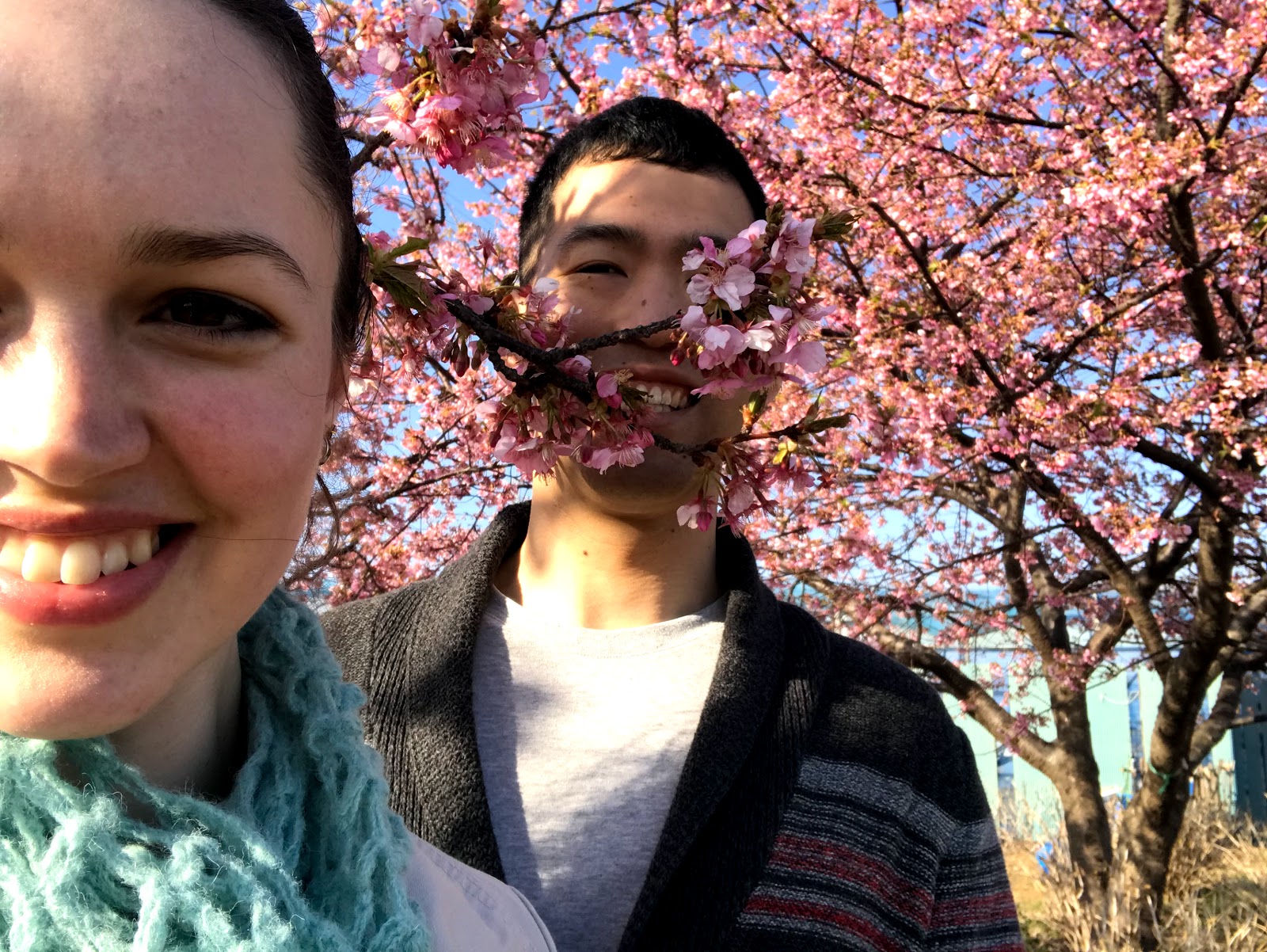
Above: Sakura date with hubby
This is an event most recommended to those who have other plans in the vicinity. There are some entertainment scheduled during the festival period, but if you visit on a day without anything scheduled there honestly isn't that much to see besides the flowers. We got our nice cherry blossom pictures and headed over to Enoshima for some more in-depth sightseeing. If you find yourself in the Tokyo area early March and looking for opportunities to see the sakura it might be a good option as a part of a trip to Shonan.

Thank you for reading! Please feel free to leave any comments or questions below
- Anette

 Basic Info
  • ・Oide River Cherry Blossom Festival (小出川桜まつり)
  • ・Event Page: http://www.city.chigasaki.kanagawa.jp/kankou_list/event/1006878.html (Japanese only)

Related blog posts


Recommended Sakura View Hotels in Tokyo

Hotel Chinzanso Tokyo
Hotel Chinzanso
★★★★★
 
→ review
.
Centurion Classic Akasaka
Hotel New Otani Tokyo
★★★★★

.
The Prince Sakura Tower Tokyo
★★★★★

,
Grand Prince Hotel New Takanawa
★★★★

.


This page contains affiliate links, and if you follow a link and make a hotel reservation through these links you help support this blog without any additional cost to you. Thank you so much for your kind support!


Thursday, March 1, 2018

Spring in Tokyo: Plum Blossom Viewing at Ueno's Yushima Tenmangu Shrine (湯島天満宮)

10:54:00 PM
Above: Plum flowers in bloom at Yushima Tengu
Japan is already known worldwide for its beautiful cherry blossom trees blooming around late March until early April in the areas around Tokyo. It is no wonder that this also is when the number of visiting tourists to Japan hits its yearly peak, a number that keeps increasing every year. But did you know that if you visit Japan a little bit earlier you can enjoy the just as beautiful plum flowers that are blooming from the beginning of February to early March?

Tuesday, February 20, 2018

The Ultimate Sakura - Cherry Blossom - Forecast for Japan 2018

9:09:00 PM

It is finally time for the most popular season here in Japan; the Cherry Blossom (Sakura) Season! After the coldest winter in some 40 years, it is really nice that we're finally approaching warmer days. Due to the cold weather this winter the sakura flowers are projected to start blooming slightly later than usual. If you're traveling to Japan this cherry blossom season you can check out where to go below. The list begins in the north of Japan and goes down to the south of Kyushu.

Monday, February 12, 2018

Cherry Blossom Season in Japan: 6 Top Tokyo Hotels to Enjoy the Sakura

2:43:00 PM

Time for Cherry blossom season!

The 2017 cherry blossom season is getting closer! It is fun to go out in the park and enjoy the sakura flowers, but while you're here why not stay at a hotel where you can enjoy the view of the beautiful flowers right outside your doorstep? As they say in Japan: Ichigo ichie (一期一会) - “Treasure every encounter, for it will never recur”! The short encounter with the Japanese sakura will indeed be a memory for life. So without further ado here is an introduction to 6 hotels that are perfect as a base to experience the Japanese cherry blossoms!


Sakura Hotels
1.Grand Prince Hotel New Takanawa (Shinagawa)
2.The Prince Sakura Tower Tokyo(Shinagawa)
3.Hotel New Otani Tokyo (Akasaka)
4.Hotel Chinzanso Tokyo (Shinjuku)
5. Hotel Gajoen Tokyo (Meguro)
6.Rihga Royal Hotel Tokyo (Takadanobaba)

1. Grand Prince Hotel New Takanawa
(グランドプリンスホテル新高輪)

~~A garden with approximately 230 cherry trees~~ 

グランドプリンスホテル新高輪のホテル外観
Above: From hotel's page
All of the 938 rooms at the Grand Prince Hotel New Takanawa come with a private balcony for you to enjoy the view of the beautiful Japanese garden right outside your window. Encircled by the 3 Prince hotels Grand Prince Hotel Takanawa, Grand Prince Hotel New Takanawa and The Prince Sakura Tower Tokyo lies the 20,000 sqm Japanese garden exclusive for hotel guests, and here there are 19 types of Sakura, with a total number of around 230 trees. You can enjoy a stroll around the garden, and the view of the garden from the hotel lobby is also stunning. During the sakura season, you can admire the special evening atmosphere with light-up of the sakura trees. 
Above: View of the garden from the hotel lounge. From hotel's page


2. The Prince Sakura Tower Tokyo
(ザ
・プリンス さくらタワー東京)

~~The cherry blossom tower~~

ザ・プリンス さくらタワー東京のホテル外観
Above: From hotel's page
The Prince Sakura Tower Tokyo is as mentioned one of the three Prince hotels surrounding a Japanese garden with more than 230 sakura trees. The hotel is a great choice if you want to see the cherry blossoms at its best, with the sakura trees outside The Prince Sakura Tower being particularly dense. From morning till night you can enjoy seeing the cherry blossoms in different shades of pink, and the road outside of the hotel also has an arch of sakura trees. With good timing, you're almost guaranteed a memorable cherry blossom season with a stay here.


3. Hotel New Otani Tokyo
(ホテルニューオータニ)

~~Get spellbound by the beauty of the Japanese garden~~

ホテルニューオータニのホテル外観
Above: From hotel's page
Inside the hotel area, there's a 40,000 sqm Japanese garden that has become known both as the symbol of Hotel New Otani and as one of the finest gardens in Tokyo. In this magnificent garden, you can view the blossoming cherry trees, some of them beautifully surrounding the hotel garden's waterfall just like an idyllic picture. In the middle of the Japanese garden there's a Japanese Teppanyaki restaurant, and here you can also try out the hotel's special sakura cocktail.
See also: Visit to a Luxury Outdoor Pool in Tokyo: The Hotel New Otani Garden Pool

4. Hotel Chinzanso Tokyo
(ホテル椿山荘東京)

~~120 Cherry Blossom trees in full bloom~~ 

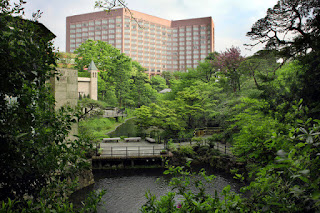
ホテル椿山荘東京のホテル外観
Above: From hotel's page
The 20,000 sqm garden at Hotel Chinzanso Tokyo has a more than 130 years long history, and with more than 20 types of cherry blossom flowers the sakura (河津桜 - Kawazu Sakura and 寒緋桜 - Kanhizakura / Taiwan Cherry) start to bloom from the middle of February and from then the different types of cherry trees will bloom one by one all the way up till April. In the evening there are light-ups of the garden, providing yet another wondrous spectacle for the lucky guests. 

5. Hotel Gajoen Tokyo
(目黒雅叙園)

~~~~Right by Tokyo's most popular Sakura Spot Meguro River!~~ 


Above: From hotel's page
Hotel Gajoen Tokyo has only 23 rooms, all of them with a size of more than 80㎡, but it is still one of the most highly rated hotels in TokyoParts of their rooms underwent a renovation in 2017 and this year they're celebrating their 90th anniversary. Hotel Gajoen Tokyo is also a part of the wonderous Meguro Gajoen wedding complex that inspired locations in the Gibli movie "Spirited Away". Guests visiting during the sakura season will find the location of the hotel impeccable, as it lies right by Tokyo's number one hanami (cherry blossom viewing) spot the Meguro River. The riverside of the Meguro River is home to around 830 Someyoshi cherry trees and provides a breathtaking scene when the flowers are in bloom. 


6. Rihga Royal Hotel Tokyo 
(リーガロイヤルホテル東京)

~~A hotel surrounded by famous cherry blossom spots~~

Above: From hotel's page
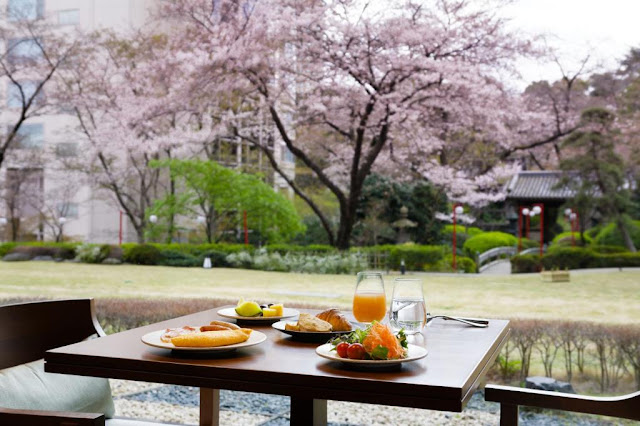
Winner of the TripAdvisor Certificate of Excellence 2016 this classical European style luxury hotel is guaranteed to give you a good base for experiencing the sakura season. There are numerous famous cherry blossom spots in the area surrounding the hotel including the Ōkuma Garden (大隈庭園), the Kandagawa River (神田川) and Asukayama Park (飛鳥山公園). At the hotel restaurant, you can enjoy the taste of spring with various seasonal dishes, and they also serve a seasonal special sakura cocktail for the occasion.

Final comment

How about a luxurious Ohanami?


Above: Norwegian bunda and sakura by Joe Photography
The sakura season is one of the most beloved times of the year in Japan, and if you're lucky enough to find yourself in Tokyo during this special season a stay at a hotel with good access - or even better; a view of a sakura garden - would be the perfect way to spoil yourself during your visit. For more information about sakura spots in Japan, you can check out some of the blog posts below. 

Related blog posts


This blog post has been based on an article by Yoyaq

This page contains affiliate links, and if you follow a link and make a hotel reservation through these links you help support this blog without any additional cost to you. Thank you so much for your kind support!


Thank you for reading! Please feel free to leave any comments or questions below
~Anette

About Me

Adventures ofAnette


A modern day shield-maiden who loves to explore the unbeaten paths of the world. From her base in Tokyo, Anette takes on both rural and urban challenges, and goes by the motto "No challenge too big, no adventure too small"!
・Read more →


Recent Posts

recentposts

Random Posts

randomposts