Adventures of Anette: Work in Japan
Showing posts with label Work in Japan. Show all posts

Thursday, June 28, 2018

Tokyo Trains: 5 Tips to Survive Your Daily Commute

9:57:00 PM

A messy glimpse into a regular day's commute in Tokyo
Photo: Anette

Eight years ago, when I had decided to study in Japan, I sat down and made a list of the universities I wanted to study at. Although I had many different criteria on my list, the most important to me was that the university wasn't located in Tokyo. Why, you ask? Well, that's simple: too big, too noisy, and...Packed trains
. Little did I know that a few years later I would make this city my home, and in turn have to face my fears of the packed Tokyo trains on a daily basis. Throughout the years I've learned a thing or two about commuting in Tokyo, and I hope that the tips below can be of help to you too!

Tuesday, September 6, 2016

Working in Japan: The basics of Japanese business phone calls

9:02:00 PM
When I started working in Japan I had little no experience with making business phone calls in Japanese. As the extroverted introvert I am just making phone calls in itself, even in my native language, used to be a nerve-wracking experience for me. As you can imagine I went through a rather difficult month when, after having entered a Japanese company as a new grad, we were going to start making phone calls as a part of our 研修 (new grad training).

I was the only foreigner taking part in this training, and all of a sudden I had to sit down and make 40 daily phone calls to an never-ending list of clients all in Japanese. We got no prior training about what sort of phrases to use or anything, and were expected to learn through 数をこなす- through repeating. And believe me, in Japan this mentality seems to be extremely popular. If there's something you can't do you just need to 頑張る (work harder!!). In the beginning I was horrified, and was staring blankly on the telephone numbers of the clients for like five minutes before gathering enough courage to actually make the phone call. Not to mention eavesdropping on my Japanese 同期s (colleagues) to figure out what kind of phrases they would use. Now, two years later, I can proudly say that I've reached a certain level for making business phone calls in Japanese much thanks to the strict environment of the company. It is true that practice makes perfect, but if you're considering working in a Japanese company where you'll have to be able to make phone calls you might want to memorise some phrases in advance in order to make the learning process smoother. I hope the following phrases can be of help:

Basics of making a phone call:
Introduction (To receptionist):
お忙しいところ、恐れ入ります。わたくし、(会社名)の(名前)と申します。
Excuse me, my name is XX from company XX.

いつもお世話になっております。
Thank you for your ongoing support (standard opening/closing phrase for business)

●●様はいらっしゃいますでしょうか.
Is Mr/Ms XX available?

Introduction 2 (To the client):
●●様、いつも大変お世話になっております。
Mr/Ms XX, thank you for your ongoing support

or
(Mr/Ms)様、初めてお電話させて頂きます。わたくし(会社名)の(名前)と申します。
お世話になっております。
Mr/Ms XX, I'm calling you for the first time. My name is XX from XX company. Thank you for your ongoing support.

今、お話してよろしいでしょうか?  /  今、お時間よろしいでしょうか?
Do you have time now?

Other phrases:
たびたび恐れ入ります
Sorry for bothering you again (if you've called the same place earlier the same day etc)

いつも電話ばかりで失礼しております
Sorry for always calling instead of visiting you directly

お電話が遠いようで...
or お電話が遠いようなのですが。
I'm sorry I can't hear you clearly.. (literarily means "the phone sounds far", because saying "I can't hear you" would indicate that the client isn't talking clearly enough, which would sound slightly impolite to a Japanese client)

Final phrases:
お時間有難うございました
Thank you for your time!

引き続きよろしくお願いいたします
Looking forward to continuing our cooperation

それでは、失礼いたします。
Good bye! (used when hanging up)


Basics of receiving a phone call:
Note: Always have a note-block available to write down the contact details for the person calling you

お待たせいたしました。
Sorry for keeping you waiting (used if the phone rings more than 3 times)

お電話ありがとうございます。株式会社●●の●●でございます
Thanks for calling. This is XX from XX company.

失礼ですが、お名前をお伺いしても宜しいでしょうか or
恐れ入りますが、お名前を頂戴できますでしょうか
Excuse my rudeness but may I have your name?

申し訳ございませんが、もう一度御社名をお願いいたします。
I'm really sorry but could you state your company name again?

少々お待ちください
Please wait a second

申し訳ございませんが、●●は現在席を外しております
申し訳ございませんが、●●は現在外出しております
I'm sorry but (person's name, without using -san after the name) is not present / is out.

現在外出しておりまして、○時頃戻る予定となっております
XX is out of the office but will be back around XX o'clock

戻り次第ご連絡させていただ きましょうか?
Shall I ask him/her to call you back when he/she returns?

念のため、お電話番号を伺いしてもよろしいでしょうか。
Just to be on the safe side, may I ask your phone number?

頂いたお電話で恐縮ですが・・
Sorry for changing topics, but.. (used when you want to change topics during a received phone call)

よろしくお願いいたします。
Thank you for your ongoing support

それでは、失礼いたします
Good bye! (used when hanging up)


Business manners to keep in mind:
・Remember that your voice is the representative of the company. Since the person you're calling can't see your face you should smile while talking and raise your voice to a higher pitch than you normally would to sound happier on the phone.
・Note that apparently some foreigners mistakenly use san after their own name. Make sure you avoid using san for yourself and your coworkers when you talk to clients. This is even the case when talking about your superiors! If you use san when you talk about your manager in front of a client your manager will most likely tell you to drop it - "呼び捨てていいよ!".
・In the business world you use negative language to describe your own company while talking to clients. While the word for "Your company" - 御社 / おんしゃ means something like "your honorable company" the kanji 弊 used in the word "My company" - 弊社 / へいしゃ has meanings such as abuse, evil, breakage and harmful. In relation to my previous point you could refer to your superior - let's say Tanaka-san - as 弊社の田中. For instance, 打合せには弊社の田中も同席いたします - Tanaka will also join the meeting.
・After the call is over it is preferable to hang up the phone in a way that makes as little sound as possible to avoid making a bad impression. You should also count to three after having said 失礼いたします before actually hanging up the phone to make sure the client doesn't have anything more to say.

A lot to keep in mind right?! Of course not all of it is a must, but remembering some of these rules and phrases will definitely get you a long way and leave a good impression on your clients.

Thanks for reading! Please let me know in the comments below if you have any questions or comments. Good luck!

-Anette

Related blogposts


Sunday, August 9, 2015

Working at Rakuten: The New Crimson House Office in Futako-Tamagawa

5:34:00 PM
Crimson House
The Crimson House 
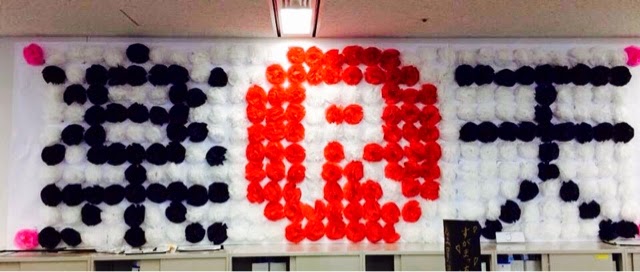
Rakuten's plans of moving their headquarters to a whole new office in the upscale residential area called Futako-Tamagawa has been in the making for quite some years now, and in July 2015 Mikitani-san's "Crimson House" (what internally also has been referred to as the 'nest of the Rakutenians') finally reached its completion.
View from the 22-floor cafeteria of the Crimson House 
Futako-tama is situated in Setagaya-ku, only a short trainride from Shibuya. It is an area popular among young families with kids, and in addition to the fancy boutiques people are also attracted to Futako-Tamagawa for its riverbank where one can enjoy recreational activities such as for instance barbecue with friends. It is in other words an ideal location for people who want to balance work and private life (if you're in a department where you're lucky enough to be allowed to leave at 定時)

The entrance to the Crimson House present various events in Rakuten's history
Rakuten's presence around the globe

In terms of space the Crimson House feels a lot more comfortable than the previous building. The elevator is spacious and the work floor has a more laid-back atmosphere with comfortable furniture and opportunities to have meetings in a corner with sofas. The hight of the desks can be adjusted in accordance to one’s preference, so people with long legs won't have to suffer from lack of space and it’s even possible to work standing for those who might prefer that.


The cafeteria also looks pretty stylish, and the free lunch that Rakuten has become known for is just as good, if not even better, than the lunch we had at Shinagawa Seaside. Since Rakuten started up its own cafe in Shibuya last year they've also expanded that business to include a cafe outside the Crimson House, and there's also a Rakuten Cafe inside the 22-floor cafeteria.
The Rakuten Cafe inside the cafeteria
A small selection of some of the food at sale in the company cafe
From the Rakuten Cafe/Cafeteria
You can write your own message at the blackboard in the cafeteria

While we had two offices in Shinagawa Seaside all employees are going to work at the same building in Futako-Tamagawa. As of the beginning of August Rakuten Travel moved into the Crimson House and the office felt very spacious during the weeks I was there, but as all Ichiba employees in Tokyo are scheduled to move to the Crimson House in September it might get pretty crowded.

Visiting the Crimson House? Read my review for the Futakotamagawa Excel Hotel Tokyo here

Final note: I actually only had only 2 working weeks left at Rakuten when Travel moved to the new office in Futako-Tamagawa, and I was thus very lucky to have the chance to try and work at the new office for a couple of weeks before I'm changing jobs. The new office is a big improvement from the previous one and I would have liked to have the chance to stay there longer than I did, but I already have other plans for my next step. After one and a half year in Rakuten I’m feeling wistful to leave the company, but I'm already looking forward to the new challenges ahead.


Related blogposts


Monday, January 12, 2015

Wednesday, June 25, 2014

Rakuten Travel Hotel Training: Karuizawa Prince Hotel

4:01:00 PM

Two of my dōkis (coworkers) who worked as porters during our Hotel Training
As some of you might know I received my department placement results at Rakuten in the end of May, and it turns out I will be working for Rakuten Travel in the years to come. Considering how much I love traveling I was quite happy with that result (also, Rakuten Travel is one of the most international departments in our company). Right now we are going through another month of training at Rakuten Travel, and last weekend we had our Hotel Training at Karuizawa Prince Hotel. The goal with this training was to experience a hotel from the inside to see and learn more about the hotel's omotenashi - Japanese hospitality.
The entrance hall at Prince Hotel's Karuizawa West building
We discovered many ways that the hotel is trying to present their guests with omotenashi during our stay at the hotel. One example is the welcome message that was prepared for us in our cottage. In Japan the Teru Teru Bozu doll is believed to bring good weather, so it is not uncommon that it is used as decoration. When we entered our cottage we found a cute Teru Teru Bozu doll left as decoration at the table in our common room with the welcome message. Apparently the hotel receives a lot of good feedback regarding this small doll, and a lot of guests even take the doll with them home as a souvenir.
A cute Teru Teru Bozu doll that is believed to bring you good weather
Below is a picture of the inside of the cottage we stayed at. While Karuizawa Prince Hotel has four main buildings with regular hotel rooms they also offers cottages that can be rented for people who want to stay together in bigger groups. The cottage our group stayed at had a common room and four bedrooms with a total of 8 beds, so it was possible for us to hang out in the common room after work was done.

The common room of our cottage
As mentioned our main purpose of going to Karuizawa was to experience a hotel from the inside and to take part in their daily routines. This year Rakuten Travel accepted 24 New Grads (among them 4 foreigners), and for the Hotel Training we were divided into 4 groups all with different schedules and roles for the 2 days the training lasted. Our tasks involved working in a restaurant or banquet hall for the first day and working as a porter or maid for the second.
Group meeting in the hotel's New York restaurant
Task 1: Restaurant Training
On the first day I had the chance to work in one of Prince Hotel's restaurants. The hotel actually has 4 restaurants in total: Japanese style (washoku), two of Western style (A French style restaurant and the one on the picture above called New York) and a Chinese restaurant called Tori. Me and two of my dōkis were assigned to the Chinese restaurant called Tori, and for the working hours at the restaurant we got to dress up in this cute green uniform:
Ready for work
The Chinese restaurant at Hotel Prince where we worked
Right outside the window there was a small pond with 

The restaurant had gotten a large number of reservations for the evening and I was a bit nervous about having to deal with the guests directly. But for most of the time I ended up helping with bringing empty dishes to the kitchen and delivering plates with food to the real waiters working in the restaurants. It is difficult to remember the name of the Chinese dishes so it was probably for the better that this part of the job was left to the experts.! The supervisor of the restaurant, Ikeda-san, was very friendly and helped me and my dokis understanding more about the services of the restaurant.


Day 2: Hotel Room Training
On the second day we were supposed to help cleaning hotel rooms, but apparently this day the maids didn't have that much work for us so instead of the cleaning my group had the honor of being shown around the great resort area by Seino-san, who supervises reservations at the hotel.

Karuizawa is a popular tourist destination and a lot of people visit the place just to go shopping in the many outlets situated right by the station. Karuizawa Prince Hotel is situated only a couple of minutes away from the shopping outlet, and it also has its own popular facilities such as a golf court and a ski resort. Since they also have machines for creating artificial snow you can actually enjoy the Koyou (紅葉 - red leaf) season while skiing at the resort in November!

During the winter people can go skiing in the hotel's own ski resort
The hotel has some large halls where they arrange weddings, and hundreds of couples are wed at the resort every year
View from inside The Prince Karuizawa
The French style restaurant at The Prince Karuizawa
Seino-san showed us the four main buildings of Prince Hotel, and he also showed us some of the special facilities the hotel has to offer. The part of the hotel that was most interesting to see was the dog hotel, where owners can stay with their beloved pet. Apparently the hotel staff has to refer to the dog as Wanchansama (ワンちゃん様), which is really hard to translate into meaningful English but it would probably be something like "our honorable guest Little Mr. Doggie" and use keigo (extremely polite Japanese) when talking about the dog to its owner.
The dog hotel cottages
The inside of one of the dog hotel cottages


Special items presented to the guests at the dog hotel. Even includes a dog poop mat to the left!


Sunday was the last day of our training, so after all groups were done with their work we left for Tokyo by bus in the afternoon. Some groups apparently had to fulfill more demanding tasks than others, so I was really lucky that I was in a group that got to experience both working at a restaurant and getting a tour of the hotel resort area. All in all I think it was a good experience to see the hotel from the inside, and get to see how hard the staff works behind the scene to satisfy their guests. If I get the chance I definitely want to come back to the resort in November for the nice skiing-kouyou combination!
But now it’s back to regular work again of course. On Monday we will get our next placement results, so I’ll finally know the specific content of my future work. Looking forward to that!

As always, thanks for reading my blog!
I’ve added some links that hopefully can be of interest:


For more information about Karuizawa Prince Hotel, please visit the following pages:


Related blogposts


Saturday, May 31, 2014

Working at Rakuten - Introduction Training (研修) Summary!

10:45:00 PM

This week was the last week of the initial training period (研修) for Rakuten's April 2014 New Graduates Group. We were 279 new-grads who joined the company on April 1st, and together we have been working on different projects to adjust ourselves to the working culture and life at Rakuten. 
Throughout the training we have learned a lot about doing business in Japan, and the courses we have had covered a wide range of topics such as Japanese business manner, omotenashi, the Rakuten Shugi, lectures from executive officers, and even a Q&A session with Rakuten CEO Hiroshi Mikitani.

In this blogpost I'm going to write a little bit about my experiences during these two months. I will not go too much into detail about the training due to confidentiality issues, but feel free to ask me any question you might have and I'll try my best to answer!

After a couple of weeks our large group with new employees was divided into 4 groups; the Domestic Merchant Development Group, the International Merchant Development Group, the Taiwanese Merchant Development Group and the Japanese Language Group. 

Group 1: The Domestic Merchant Development Group
The job of the Domestic Merchant Development Group was to contact merchants in Japan asking them about their interest in selling on Rakuten Ichiba, and the goal was for each new employee to get one company to sign up. As Rakuten already has more than 40.000 merchants selling their products on Rakuten's e-commerce site it is pretty hard for new Japanese companies to stand out in the crowd, so in that sense it must have been a pretty tough job to convince the merchants to join Rakuten.

Group 2: The Taiwanese Merchant Development Group
The Taiwanese Merchant Development Group was sent of to Taiwan to recruit merchants to join the Taiwanese version of Rakuten. The people selected for this training were native Chinese speakers either from China or from Taiwan.

Group 3: The Japanese Language Group
The Japanese Language Group had *surprise, surprise* Japanese language lessons during their training! This group consisted of foreigners who only had basic knowledge of Japanese, and only 7 new-grads were selected for this group.

Group 4: The International Merchant Development Group
I was selected to be a part of the International Merchant Development Group, a new initiative that was initiated last year with the October '13 New Grads. Our group comprised of 32 people divided into 6 teams, and our job was to contact American merchants to ask about their interest in selling their products to Japan through Rakuten Ichiba. This initiative just started last autumn so it was a new and exiting project to be a part of. 

32 members of the International Merchant Development Group
We were divided into teams of 6-7 members + 1-2 mentors, and my team ended up choosing the slightly humorous team name "All Nighters". We had to work night shifts in order to contact the American merchants due to the time difference, and that is how we got the idea for the group name..! The great thing about this training is that we got to talk directly to CEOs from a lot of interesting and unique companies! But although I learned quite a lot during the process I have to say I'm really happy that this training only lasted for 6 weeks.. Night shifts is not something I would like to do as a regular job to be honest, it is quite tiring.
The Rakuten All Nighters!
But although the training itself was pretty tough we bonded very well as a team. Everybody really did their best to perform well and support other team members, and I felt really proud of working with such talented and ambitious people. I'm convinced that I've made some really great friends, and hopefully we'll be able to stay in touch with each other also after we have been assigned to different departments.
Our 7 members + 2 mentors
So as I've already mentioned, this week our initial training period was finally over! On Friday we had a placement ceremony (配属式) where our superiors announced our future departments, and for the 32 members of the International Merchant Development Group most people were assigned to Rakuten Ichiba. This is the biggest department in Rakuten, so it was not really that surprising. Other departments people in my group was placed in included Rakuten Travel, Rakuten Card, Rakuten Marketing Japan, and finally the Creative & Web Design Department. Members of the DU (Engineering New Grads) have also been a part of the same training program as the Business New Grads (BU), but they get their placement results later as they will have their own training program starting from next week.
Got assigned to Rakuten Travel. In the background: The Rakuten Shugi
I got assigned to Rakuten Travel along with 23 other new-grads (among them 3 foreigners)! I'm pretty happy about my placement, and I think that it will be a really interesting place to work. I already had the opportunity to talk to some of my sempais, and they seem to enjoy their job a lot. So far so good.! 
Getting ready to change office 
Goodbye to the large office we have had our first training at!
I still would have to say that in general I do think that Rakuten is a very stereotypical Japanese company in many ways. There is a lot of focus on reaching the monthly KPI, and although the company is trying to become global there is still a long way to go. Unless you are prepared for long working days (sometimes you might even have to stay until the last train) you might find the work in this company pretty tough. From what I've heard from others working in the company there is a huge gap in the working conditions depending on departments, so you might be lucky and end up in the more international parts of the company where they're better at providing their employees with life-work balance but you might also be very unlucky and end up in the departments where you'll have little spare time outside of work.

Luckily Rakuten Travel is known as one of the more foreigner-friendly departments at our company so hopefully I'll be fine. From now on my Rakuten Travel group is going to have another month of training before we get to know our actual position in the company. I look forward to the training and I'll be back with more blogposts about my experiences here in Japan.

As always, thanks for taking your time to read my blogpost! I really appreciate all the comments and feedback I receive from you guys^^


Related blogposts


Tuesday, April 1, 2014

楽天入社式: Our First Day as a Rakuten Employees

10:50:00 PM
The first of April marks the beginning of a new semester in Japan, and it is also the time when new employees starts their business careers. For me it meant the end of my many years as a university student, and the beginning of my life as a shakaijin working for Rakuten Inc, Japan's largest e-commerce company.

Rakuten
The registration started pretty early, and some of us (dependent on surname) had to meet up at the Rakuten Tower at 6:45 am this morning. Once a week Rakuten is having a morning meeting called the Asakai, and since this week's Asakai coincided with the Welcome Ceremony for new graduates I have a feeling that we might have had to be present earlier than what has been the standard for previous welcome ceremonies.
Flowers in bloom in front of the Rakuten Tower
Anyway, I will of course not go too much into detail about the actual content of the ceremony, as it is confidential information. All I can say is that we had a long and informative day filled with a lot of speeches from among others our CEO Mikitani-san, other superiors and one of our douki
At the Welcome Ceremony
From tomorrow on we are beginning our training period, where we'll learn all the necessary basics to ensure that we can succeed in our careers in the company. I'm looking forward to the many challenges ahead!
View from Rakuten's cafeteria


Related blogposts


Friday, April 12, 2013

就職活動終わり:I'm officially a Future Rakuten Employee!

9:44:00 PM
My life as a student is coming to an end, and I have long been wondering about what I want to do when my last semester is over. Although I might be finished as a student I didn't want to go back to Norway just yet, and decided to look for jobs in Japan starting from my previous semester.

One thing is doing 就職活動 (Japanese job hunting) while living in Japan, another thing is doing job hunting for a job in Japan while living abroad. The companies usually expect you to do at least three interviews with them, which means that you have to commute to their office in order to finally get a job offer. In addition to all of this most people apply to a large number of companies; some of my Japanese friends sent up to a hundred applications before they finally got accepted at one of the companies.

Since I'm living in Korea my last year in University I knew right away that it would be impossible for me to follow the normal job hunting schedule as the other students. Some of you might remember that I went to Boston last semester for the annual Boston Career Forum, and this is where my job hunt began.
I had already signed up for interviews with some of the companies before I went there, and one of these companies was the Japanese e-commerce company Rakuten.

What I really like about this company, is its focus on empowering society. Rakuten works closely with the merchants who sell their products through Rakuten's page, and helps them both set and reach their goals in terms of sales. In the future there is also a possibility that I can work in one of Rakuten's offices abroad, as the company is expanding to countries all over the world. This includes many developing countries, where Rakuten thus is helping to increase people's opportunities to empower their local communities. My biggest trouble about finding a job in Japan was that most of the companies did not have any goals like that; their focus was limited to making as much profit as possible. Of course profit is necessary, but a company should also give something back to its community! Also, in addition to work for the empowerment of the society Rakuten is also a very ambitious company, aiming to become the world's number one in e-commerce. 私も頑張らなくちゃ!

It took me many months of interviews and tests (2 essays, 3 written tests, one oral Japanese test and 4 interviews) before I finally got a job offer from them. But although the process has been long I am very pleased with the flexibility the company showed me, as all the interviews after I came back from the career forum have been conducted through Skype! Fantastic!! :D
My only regret now, is about my TOEFL test.. Two years ago when I applied for Ritsumeikan's master degree program I had to take this test to prove my English abilities. However, I knew it would be fairly easy for me so I didn't study for it at all, and got 108/120. Now it turns out that Rakuten demands 110 or higher, so my test score isn't good enough >< oh, the pain.. Haha.. So I'll be taking the TOEIC exam some time before or right after entering the company. But at least I get to take the test for free through Rakuten^^

Anyway, when working in a Japanese company it is normal to go through a period of introduction courses where you learn more about the company and the different types of jobs they offer. So although my main interest would be to work as an e-commerce consultant it is possible that they'll find me better fit for some other roles within the company.

I'm really exited about my future work in Rakuten. It seems like a great company!! Now I just have to make sure that I can finish my thesis and graduate in time this summer!! *Back to writing thesis*
Ciao!


Rakuten's Mission
To empower people and society through the Internet, and to transform and enrich society through its own success


Related blogposts


Tuesday, October 23, 2012

Boston Career Forum 2012!

4:37:00 PM
This weekend I traveled all the way to Boston to participate in the Boston Career Forum, a forum mainly for companies searching for possible employees who are at least fluent in both English and Japanese. My reason for participating was that I want to work in Tokyo after I graduate, and since I live in Korea at the moment it is not possible to follow the normal Japanese shushoku katsudou (就職活動  -> job-hunting) system.
The logo of the CF Boston Career Forum
In Japan it is quite common that one applies to a large number of companies, many of which not necessarily have any relation at all with what you studied in university. Getting a job requires around 4 rounds of interviews, which means that the students have to do quite a lot of travelling in order to go through with their interviews.
Some of the interview booths at the career forum
Disco International, the company behind the career forum in Boston, thus has a vision to make the job hunting process easier for the students, and give them the opportunity to spend less time to get a job than they do in the traditional Japanese system. Many of the companies at the career forum offer the opportunity to have 2-3 interviews during the 3 days of the forum, and although most of the companies require further interviews after the forum is over there are also some companies that even hire you at the spot.

Through the Internet page of the career forum you can prepare for the event in advance through extensive information about the different companies, and their requirements for the students. Most of the companies offer the opportunity to send in your resume along with a general application for the company in advance, and the companies will then regard you for interviews at the forum. Personally I had Skype interviews with some of the companies before the actual career forum as well, so the procedures really depend on the different companies.
At the career forum itself you have the opportunity not only to have pre-scheduled interviews, but also participate in information sessions about the different companies (so-called setsumeikai - 説明会). Additionally some of the companies offer walk-ins based on your resume, which you can turn in while you are there.
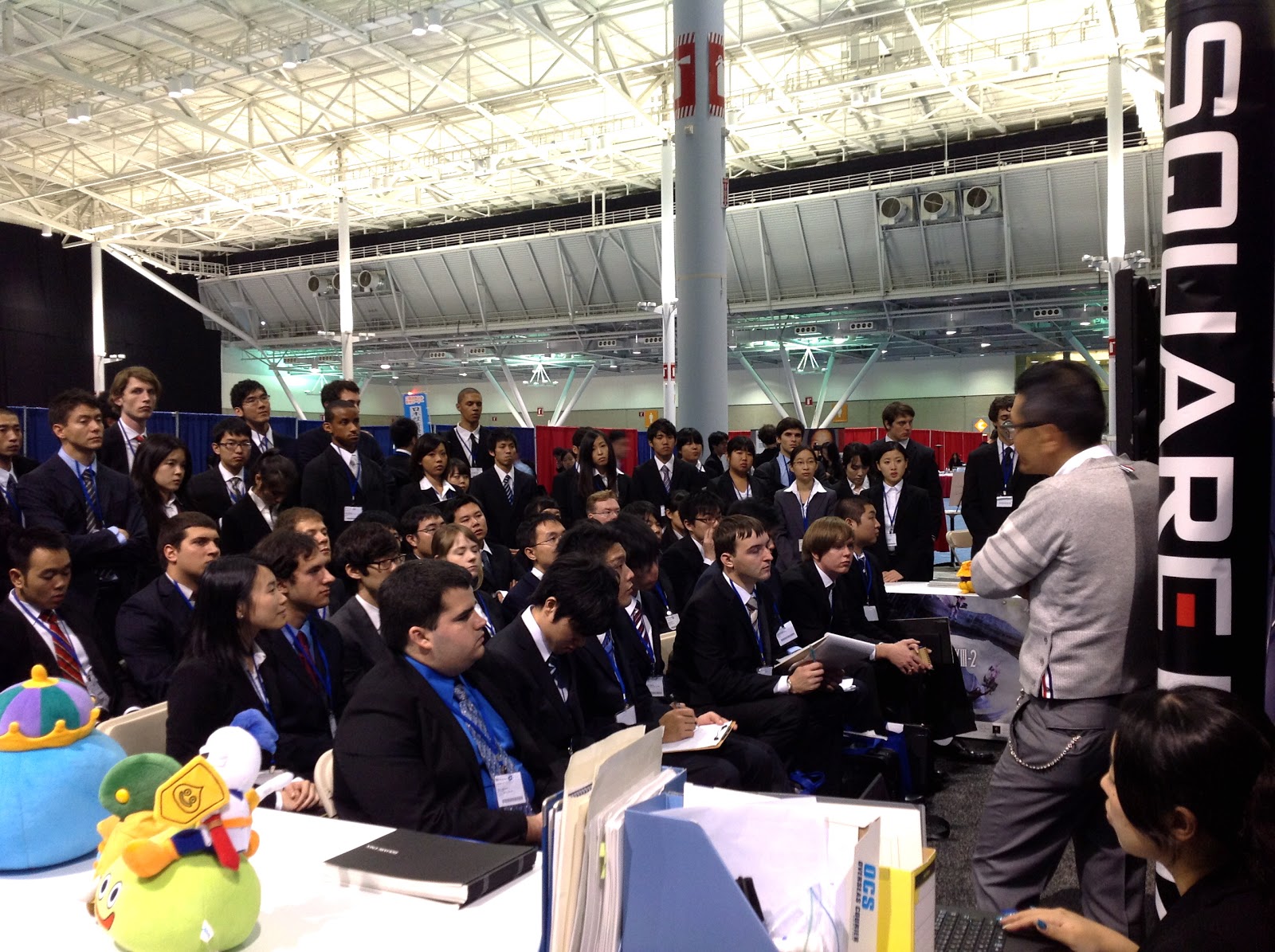
Probably the most popular setsumeikai of the event was that of the gaming company Square Enix.

There is usually more than enough time to sit down
and read about the companies between the interviews.
In general most of the students seemed to have quite a lot of time between their interviews. I was one of them, and I spent a lot of my time just by sitting down and preparing for interviews. Although I haven't gotten any concrete job interviews yet there are still a couple of companies that are considering me for further interviews, so right now I'm just waiting for what hopefully will be some positive answers. Anyway, it was an interesting experience (but a very tiring one considering all the hours spent travelling), and I'm really happy for the opportunities this event has given me to actually meet representatives from a lot of interesting companies. 万が一, if I don't end up with any job offers after all I suppose I'll have to attend Disco's next career forum in June as well. But at least this one will be in Tokyo, so I don't have to travel that far x).


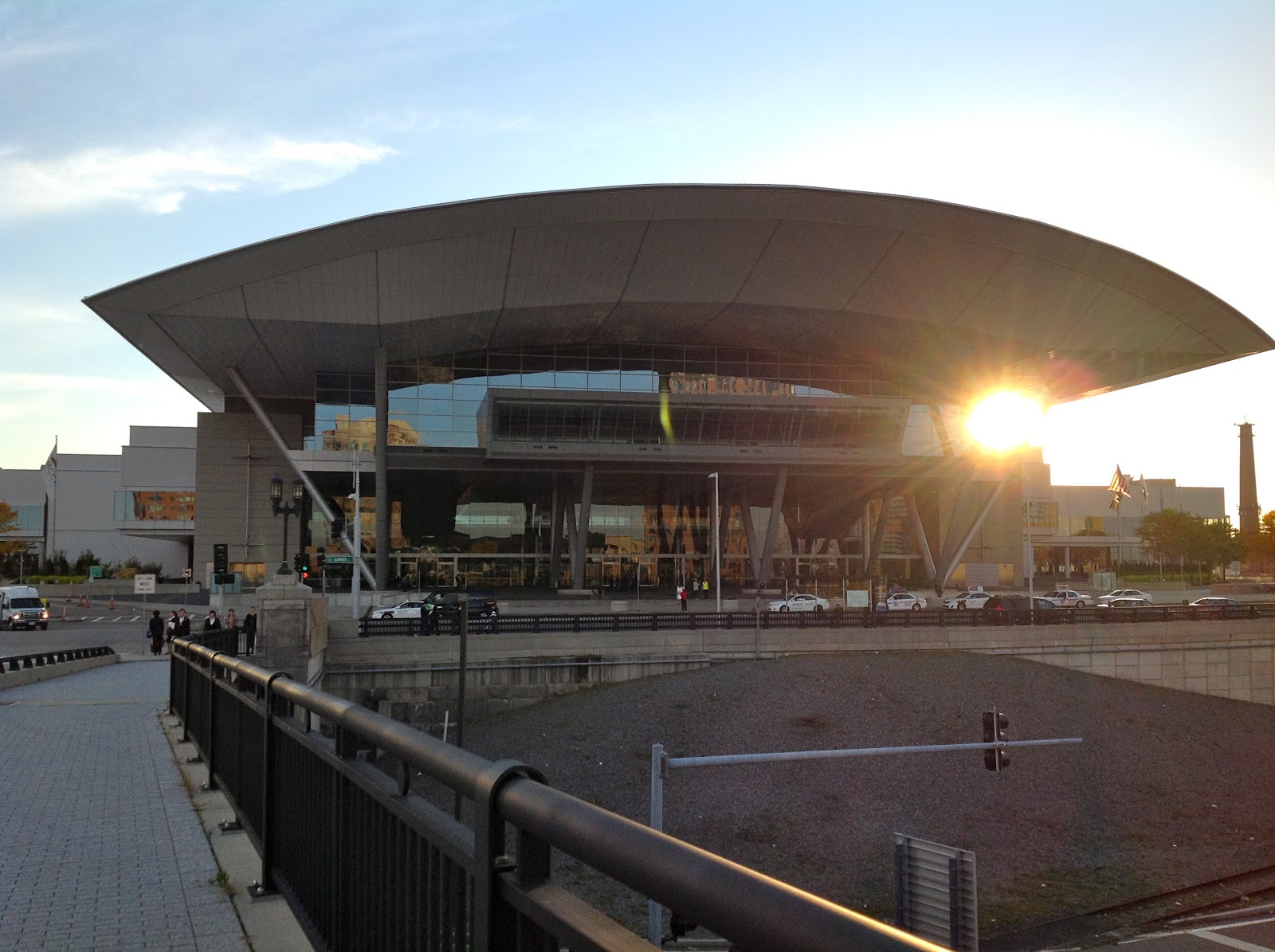
Boston Convention & Exhibition Centre, where the career forum took place.
Unfortunately I did not get to see much of Boston beside my hostel and the conference hall

You can find all posts related to work in Japan here

Sunday, August 26, 2012

About Me

Adventures ofAnette


A modern day shield-maiden who loves to explore the unbeaten paths of the world. From her base in Tokyo, Anette takes on both rural and urban challenges, and goes by the motto "No challenge too big, no adventure too small"!
・Read more →


Recent Posts

recentposts

Random Posts

randomposts