Adventures of Anette: Niigata
Showing posts with label Niigata. Show all posts

Wednesday, April 11, 2018

The Oiran Cherry Blossom Festival Report: Tsubame Sakura Festival - Oiran Dochu (つばめ桜祭り)

6:56:00 PM

The cherry blossom period is one of the best time of the years to visit Japan. Not only can you enjoy the marvelous sight of the thousands of flowers in bloom, but the temperature is also perfect (Japanese summer can be extremely hot and humid). If you want to combine the sakura season with a traditional Japanese festival featuring an Oiran Dochu parade you even have the chance to do this after the last sakura in Tokyo has fallen.

Saturday, April 22, 2017

Sightseeing in Niigata: A Visit to the Ponshukan Sake Vending Machines

5:35:00 PM
With the largest number of sake breweries in Japan the Niigata prefecture is known as the ”sake prefecture”. The taste of sake can vary a lot so finding your favorite sake is not an easy job. But do not despair: Inside the Ponshukan (魚沼釜蔵 ぽんしゅ館) situated inside the building of Niigata station you can taste over hundred types of sake from a selection of 92 different local sake producers for only 500 yen.

Tuesday, May 31, 2016

[Hotel Review] Niigata: Shikinoyado Minoya Ryokan (Yahiko) - 四季の宿みのや

10:19:00 PM

The prefecture Niigata is among other things known for its hot springs (onsen), and one of the areas most famous for onsen is Yahiko, a village not too far from Tsubame City south in Niigata. I visited Yahiko with my family a little while ago, and we had the pleasure of spending a night at the traditional Japanese ryokan hotel there called Shikinoyado Minoya (四季の宿みのや) - the Inn of Four Seasons

Monday, May 9, 2016

Sightseeing in Niigata: The Ito Estate - Northern Culture Museum (北方文化博物館)

10:55:00 PM


The Northern Culture Museum (Hoppou Bunka Hakubutsukan / 北方文化博物館) is a part of the Ito Estate, the former home of one of Japan's largest landowners; the Ito family. The museum was established in 1946 as a donation in the same year as the Land Reform Act was officially proclaimed. Today the estate is open all year around for visitors from all over the world.

Sunday, May 8, 2016

Sightseeing in Niigata: The Yahiko Shrine (弥彦神社)

12:59:00 AM

The Yahiko shrine (弥彦神社 or 彌彦神社) in Niigata is situated at the root of the sacred Mt. Yahiko, and surrounded by a forest of 400-500 year old cedar and zelkova trees it is known throughout Niigata as a "power spot". It is one of the most popular shrines in the prefecture, and has a history dating back to around 711 when according to ancient records the main shrine was built.

During my trip to Niigata for the Tsubame Sakura Matsuri festival we made a short visit to the Yahiko shrine, which I have written more about below.

Wednesday, May 4, 2016

Niigata: Wine and Hot Spring Haven at Cave d'Occi Vinespa Winery Resort

3:26:00 AM
Niigata is among other things known for its great hot springs (onsen), and throughout the prefecture you can find some really nice places to visit if you'd like to try out this typical Japanese bathing culture. If you’re up for a slightly different onsen experience you might want to try out the Cave d'Occi Vinespa Winery Resort, where you'll find that a hot spring experience that can be combined with a full winery tour.

Monday, May 2, 2016

Behind the Scene of the Tsubame Sakura Matsuri - The Oiran Dochu (つばめ桜まつりおいらん道中)

10:49:00 AM
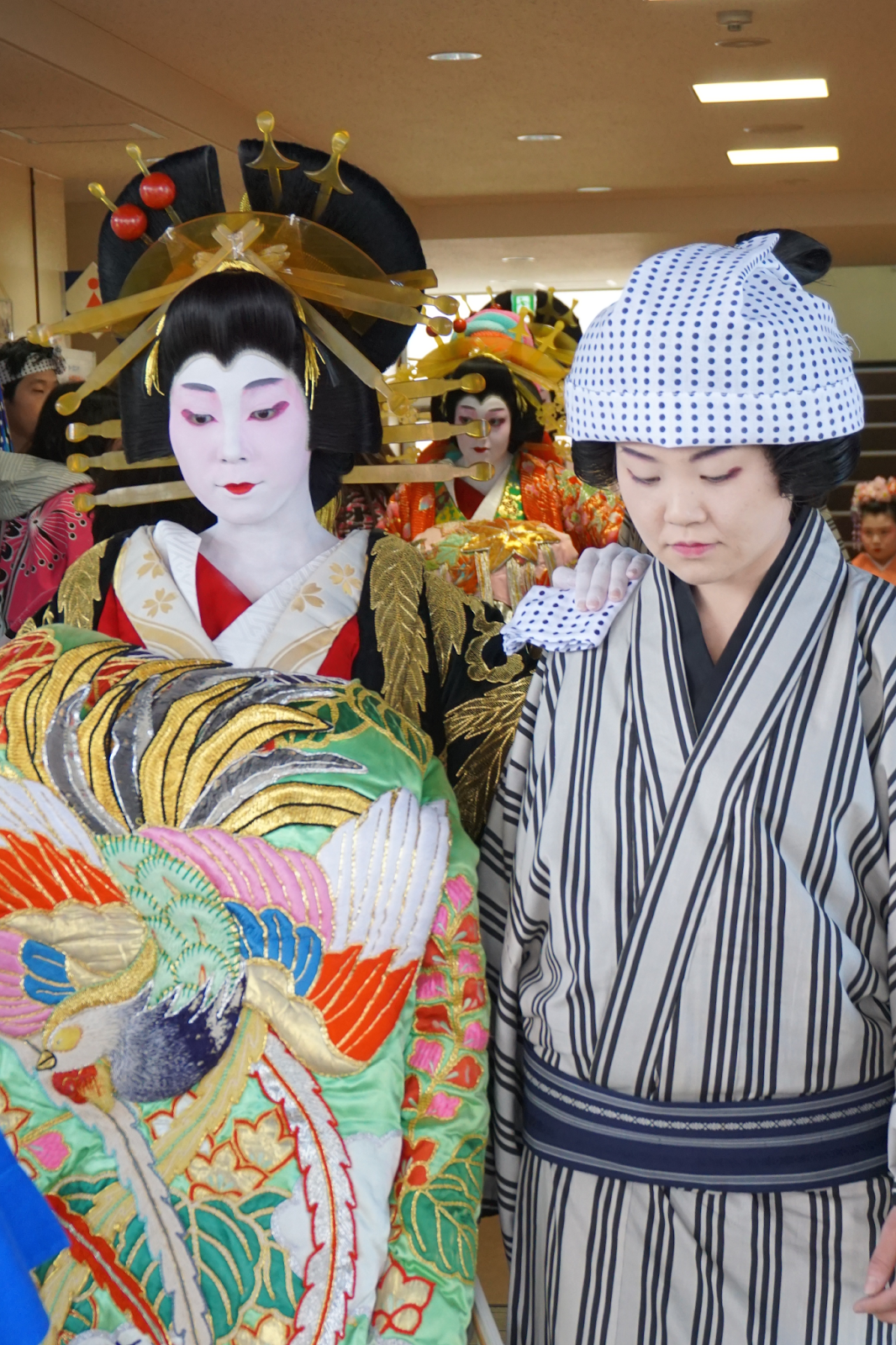
Above: The oiran procession of the Tsubame Sakura Festival where I participated as an Oiran

On the 17th of April, it was finally time for the Tsubame Sakura Matsuri (つばめ桜まつり), a festival that is held annually in April in the southern part of Niigata (新潟). 
Earlier this year I had applied for a role as one of 3 oiran in what is thought of as the highlight of the festival, the Oiran Dochu (おいらん道中) procession, and as the first foreigner in the 74-year long history of the festival, I was selected for the role. As preparations for the festival we had been practicing to walk on 15-cm high geta-shoes in a style called sotohachi-monji (外八文字) and taken part in various PR-events for the festival, and were all extremely excited for the big day. 

Above: Me dressed up as the sakura taiyu Oiran

A video from the procession

In the morning we gathered at the Tsubame Bunsui Welfare Center where it was time to get dressed for the event. With more than 70 people participating in the procession in different roles you can imagine all the work that is necessary to prepare for the parade.
It took a couple of hours before we finally were ready to leave the building.

In advance of the festival I had been a bit nervous about the weight of the outfit; with a 20-kilo heavy kimono, a 10-kilo heavy wig and 15 cm high geta shows I had been slightly worried about my ability to finish the whole 2-hour long parade. However, it turned out that the weight of the outfit itself was no problem, it was the wig (katsura - 桂) that ended up being the biggest challenge for me. At one of the practices we had had two professional katsura-makers from Tokyo measuring our heads and shaping the inner metal frame of the katsura to fit our heads perfectly, but despite the detailed construction, the constant pressure on the head from the katsura was still harder to handle than expected. This experience certainly made me a lot more impressed with the oiran who had to wear these sorts of outfits on a regular basis! To me, the katsura felt more like a torture device than something to wear for beauty.. Haha..
Usually the festival is carried out in an area of Bunsui famous for its beautiful cherry trees, but unfortunately, we were unlucky with the weather, and the procession had to be carried out inside the local gymnasium. After arriving at the gymnasium we got our final pep talk before entering the area where the audience was waiting. People had been lining up to get tickets since early morning, and the gymnasium was packed with visitors. 
The procession itself wasn't that long, we walked around in a circle inside the gymnasium using both regular walk and sotohachi-monji. All in all we had 4 performances to make sure that all the visitors could see the procession. Below are some more photos from the Oiran Dochu:
shamizen-performers onstage
Although it was a bit disappointing that we weren't able to walk outside underneath the cherry trees it was still a fantastic day and without a doubt one of the highlights of my stay in Japan. Personally, I enjoyed just being a part of the preparations for the festival too, for instance, to be able to see part of the process of making the katsura or the huge transformation people go through when they get totally painted with the white makeup. As a foreigner, I felt very blessed to be a part of all this, as it is definitely a once-in-a-lifetime experience. If I get the chance I would love to visit Bunsui next year and hopefully see the Oiran Dochu procession outside with the blooming cherry trees in the backdrop.

Related blog posts

Sunday, April 3, 2016

Geisha vs. Oiran: The Characteristics of the Japanese Courtesans

10:48:00 AM
The Tsubame Sakura festival in Bunsui. 
From the Tsubame Tourism Assoication
Japan is a country of some very distinct traditions, and one thing that might come to mind when thinking about this far-east country is the graceful Japanese courtesan ladies. That is especially the case for the Japanese Geisha, as these courtesans were made famous through the movie “Memoirs of a Geisha” from 2005. There are however another type of Japanese courtesan ladies that hold at least as much history as the Geisha, namely the Oiran (花魁). Some of you might be wondering what the difference is between an Oiran and a Geisha, and although they might appear similar at a first glance there are a few important things that sets them apart.

History

Although the Geisha are more well-known in Western countries the role and position of the two courtesans used to be very different. The Oiran tradition flourished back in the early Edo period (1600-1868), a time where they were seen as entertainers and superstars. The Geisha on the other hand were held in the background and dressed restraint in order for them to not be in competition with the Oiran, and the Oiran profession is thus in a sense the forerunner of the Geisha. The Oiran were educated women who were masters of a wide range of traditional arts, and highly respected for their profession. Back in the days a night with an Oiran would cost as much as one year’s salary for a commoner, but even if you could afford it the Oiran was still free to reject a customer if he was deemed unworthy. 

The Oiran profession has however died out, and unlike Geishas there are no professional working Oiran left in Japan today. The Oiran tradition does however live on even today through Oiran Dochu (おいらん道中) parades. During their primetime the Oiran ladies used to do daily parades around their district, which in a sense functioned as a sort of advertisement for their services. Oiran Dochu parades are still held throughout the country mostly as parts of local festivals, and the most famous among these are Asakusa’s Edo Yoshiwara Oiran Dochu (江戸吉原おいらん道中) and the Tsubame Sakura Festival (つばめ桜祭り)’s Oiran Dochu in Niigata.

So what is it that physically distinguishes an Oiran from a Geisha?

The Kimono

From my Oiran costplay experience
The Geisha is dressed modestly, and her kimono is not supposed to be too flashy. The Oiran is on the other hand supposed to attract customers, and her kimono is made to get her the attention. She is extravagantly dressed, typically in a kimono with patterns in gold and with strong vivid colours. The quality of the kimonos is also different. While the Geisha traditionally wore kimonos of cheaper materials the Oiran wear a kimono made of the purest silk. And then comes all the layers! The Tayuu (太夫) is the highest-ranked Oiran, and in addition to the kimono she also wears a special obi called uchikake which is tied at the front. Her full attire can weigh about 20 kilos, so as you can imagine she has to be physically strong as well.

The Hair

From DeepJapan.org
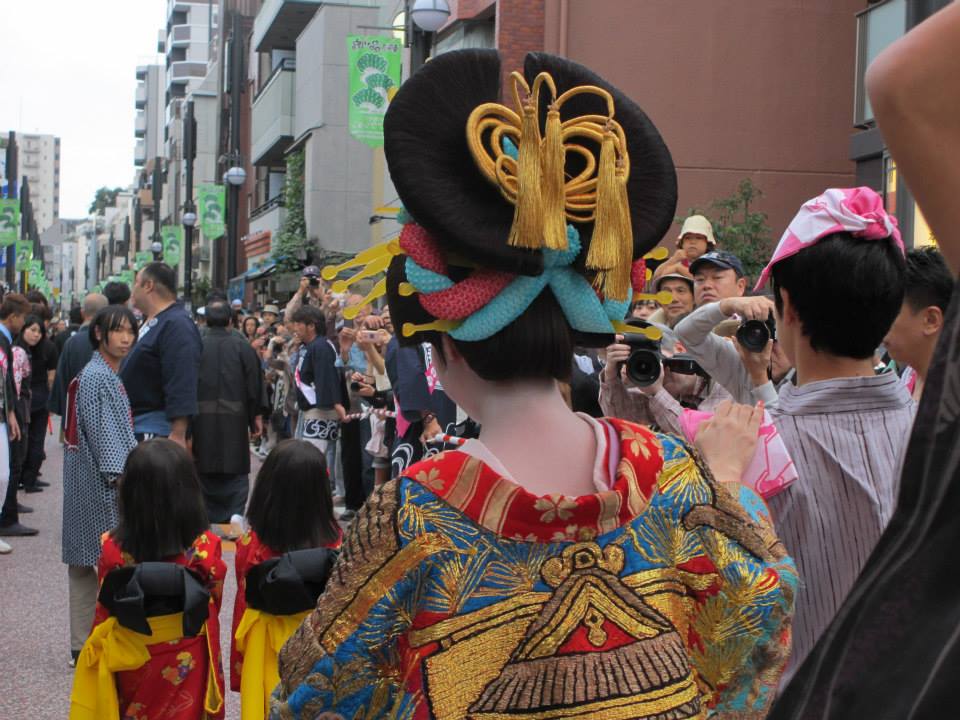
The part about Geisha ladies dressing modestly is also the case for her hairstyle; She traditionally would wear a simple wig without any accessories. The Oiran on the other hand has her hair filled with ornamental hairpins (kanzashi) and other golden coloured accessories. Her katsura wig also has a special bow shape that helps distinguish her from the Geisha. Her katsura weigh around 10 kilos, which brings the total weight of the Oiran outfit to around 30 kilos.


The Geta (Shoes)

While both Geisha and Oiran ladies walk around in the distinct Japanese wooden geta shoes there is a big difference in how tall the shoes are. The geta worn by a Geisha do not differ that much from regular shoes in terms of hight, but the geta shoes of the Oiran are about 15 cm tall. This is to ensure that the Oiran ladies are the tallest in the Oiran Dochu parades and to make them more visible to the audience. The Oiran also walk in a particular style knows as Soto-Hachi-Monji (外八文字 - "Outside 8 sign"), and her walking style is considered a type of art in itself.
(I've written about this topic in the post Tsubame Sakura Matsuri Oiran Dochu: The Soto-Hachimonji (外八文字) - How to Walk like an Oiran ).


The Feet

Back in the Edo period it was not common for ladies to show off their bare skin in pubic. While the Geisha ladies wore white socks known as tabi to cover up, the Oiran women didn’t wear anything except their geta. This both showed their endurance during the cold winter, and at the same time made men go crazy just by sight of the bare skin. But even here the Oiran ladies didn’t go completely without cover; instead their bare skin was painted white, which also was the case for any part of their bodies that was not covered in cloth.

Video about Oiran from ONLY in JAPAN

This post is a part of my series about the Tsubame Sakura Festival where I will participate in the Oiran Dochu as the Sakura Tayuu (桜太夫) Oiran on April 17th 2016. All blogpost about this topic can be found in the links below.

Related blogposts


Tuesday, March 15, 2016

Tsubame Sakura Matsuri Oiran Dochu: The Soto-Hachimonji (外八文字) - How to Walk like an Oiran

10:55:00 PM

The devil is in the detail, and that can particularily be said in the case of Japanese traditional arts. For the Edo-period courtesan women called Oiran everything was planned down to the tiniest detail to make sure that they performed their role to perfection, and they even had their own walking style known as the Soto-hachimonji (外八文字). Soto-hachimonji can be translated into something like "outside 8-shape", and simply put this technique involves drawing the character 8 with your feet as you walk. Add the 15-cm high geta shoes and the 30-kilo costume and you might start to get an idea about how tough this must have been back in the days.

All posts about the Tsubame Sakura Matsuri 

About Me

Adventures ofAnette


A modern day shield-maiden who loves to explore the unbeaten paths of the world. From her base in Tokyo, Anette takes on both rural and urban challenges, and goes by the motto "No challenge too big, no adventure too small"!
・Read more →


Recent Posts

recentposts

Random Posts

randomposts