Adventures of Anette: Sendai
Showing posts with label Sendai. Show all posts

Saturday, October 17, 2015

Sightseeing in Sendai: The house of Bansui Doi (晩翠草堂)

10:10:00 AM
Sendai is Northern Japan's largest city, and it is situated in the Miyagi prefecture approximately 1 hour and 40 minutes away from Tokyo by the bullet train (Shinkansen).

During the Japanese Silver Week I had the chance to go traveling to Miyagi prefecture with my friend Amee, and we had decided to spend one day in Sendai. We arrived in Sendai in the morning without any concrete plans for the day, and since the weather was good we decided to walk to our hotel to drop of our luggage.
House of the famous poet Bansui Doi
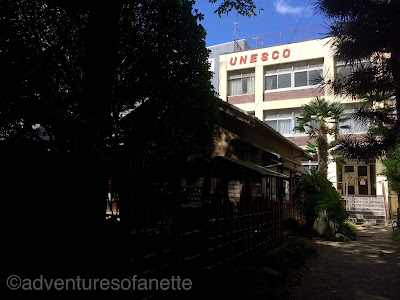
On the way to our hotel we passed by an interesting traditional Japanese building that was situated next to an UNESCO building, and just because we liked the atmosphere of the place we decided to check out what it was. Imaging our surprise when we entered the house and were greeted by a guide who could tell us that this used to be the home of the famous poet Bansui Doi (土井 晩翠).
Doi's house (turned out quite dark unfortunately) with the UNESCO House in the background
The guide, mr. Kikuchi, could also tell us that the UNESCO building also was a part of Doi's land, and that UNESCO had received approval to use the space which resulted in the Sendai UNESCO House opening in 1957. Unfortunately the building was heavily damaged during the Great East Japan Earthquake and has not been in use since.

A statue of Bansui Doi seen from his house
The guide seemed very enthusiastic and happy to have visitors (perhaps in particular because he could talk with us without having to to use English), and gladly taught us the whole life story of Bansui Doi.


Doi was born in Sendai in 1871, and started studying Chinese already in his early childhood. During his youth he spent many years living in Europe. According to our guide he was also a friend of the famous novelist Natsume Soseki, who also was living in Europe during the same time, and they regularly exchanged letters.
Some of Doi's works, including the translation of the Iliad and Odyssey

Naturally Doi was influenced by European culture and writings, and as a master of many languages he translated a number of Greek and Latin classics into Japanese. Among the titles were famous works such as Homer’s Iliad and Odyssey. But he also published his own poetry, and together with Shimazaki Toson his epoch-making works sat the standard for this period.
Some of his famous works include the poem and song "Kojo no Tsuki" (The Moon over the Ruined Castle), the poetry collections "Tenchi Ujo" (Emotion in the Universe) and "Gyosho" (Morning Bell).

Bansui Doi's bed. Notice the garden and statue of Bansui Doi in the background
Unfortunately for Doi his house and many of his books were lost during the fire bombing in World War II. His students and supporters helped build the Bansui Sodo house on the site of his former residence in 1949, and he spent his last years in this house until he passed away in 1952.

The house is still kept the way it was in 1952, and entrance to the house is free. If you're spending some time in Sendai and are interested in Japanese poetry and writings this house will be well worth a visit.


Here is the English version of Doi's famous "Kojo no Tsuki" (The Moon over the Ruined Castle) (credit: Norio Shimizu from Lyric Translate)

The Moon over the Ruined Castle 

Flowery feast in spring high up in the castle
Cups were passed around with moonlight reflected on the surface of sake
The moonlight shined through the old pine branches
Where is that old moonlight now?
 Encampment in autumn was white covered with frost
A number of geese honked as they flew across the sky
The moonlight shined on the swords thrusted upright into the ground
Where is that old moonlight now?
 Now at midnight the moon is right above
For whom does it shine like in the past?
Nothing remains on the rampart but some ivy
Nothing to hear but the rustle of pine branches in the storm
Up in the sky the moon and the stars remain unchanged
But in the earthly life, rises and falls come and go
Does the moon hang there to reflect those changes?
Ah! the midnight moon over the ruined castle

The bed where Bansui Doi passed away
Address:
1 Chome-2-2 Omachi, Aoba Ward, Sendai, Miyagi Prefecture
宮城県仙台市青葉区大町1丁目2−2


Recommended Hotels in Sendai

Sendai Washington Hotel
The Westin Sendai Hotel
Mitsui Garden Hotel Sendai
Sendai Royal Park Hotel


Related blogposts


Monday, October 12, 2015

The City of Trees: A visit to Sendai and the Aoba Castle

4:28:00 PM

The Hirose (広瀬) River
Sendai is Northern Japan's largest city, and it is situated in the Miyagi prefecture approximately 1 hour and 40 minutes away from Tokyo by the bullet train (Shinkansen).

As many costal areas in Miyagi, parts of Sendai were also affected by the tsunami that followed the Great East Japan Earthquake that struck Japan in March 2011. Some places you can still see the effect of the disaster, and if you visit areas close to the coast you might notice the many new buildings and building projects as you pass by. Still, life in Sendai seems to be back to normal, and tourists are finally starting to come back to visit the area as well. With its history and beauty it is well worth a trip if you're looking for a short getaway from Tokyo.

Saturday, September 26, 2015

Dining out in Sendai: Ruriza (瑠璃座) in Kokubuncho (国分町)

5:45:00 PM

If you're spending an evening in Sendai and want to experience the nightlife here you might want to go and check out the down town area called Kokubuncho (国分町). Here you can find a lot of the typical things Japanese nightlife has to offer, such as karaoke, traditional izakaya bars and restaurants. During my recent trip to Sendai my friend Amee and I ended up at a small Japanese restaurant in this area called Ruriza (瑠璃座). Here are some pictures for those who might be interested in checking the place out:
Entrance to the Kokubuncho area
Entrance to Ruriza
Details from the interior
If you sit by the counter you can watch as the food is being prepared
Sushi ready to be served
Otoshi (お通し)
At a lot of Japanese izakaya-style restaurants it is common to get served an otoushi (お通し), which is a small appetizer that you pay for in lieu of a cover charge. This restaurant served us a couple of pieces of sushi with our drinks (picture above), and the cover charge was 432 yen incl. tax.
Sashimi (raw fish)
All in all it was a nice place. We payed around 2500 yen each in total for our food and drinks there, but the food came in relatively small portions so if you don't mind spending more on a dinner you might want to order more than we did. For those interested in trying the Sendai speciality Beef tongue gyuutan (牛タン) you can also get it here.
Either way the atmosphere was good, and an evening here will definitely be a nice dining experience in Sendai.

Recommended Hotels in Sendai

Sendai Washington Hotel
The Westin Sendai Hotel
Mitsui Garden Hotel Sendai
Sendai Royal Park Hotel


Related blogposts


Thursday, November 24, 2011

8 Months After the Tohoku Earthquake: Trip to Ishinomaki

12:55:00 AM

As you probably already know, in March 2011 Japan was hit not only by one of the most powerful earthquakes in history but also an enormous tsunami. More than 20,000 people lost their lives, not to mention all the damages and all the people still without homes. 
The areas around Sendai (to the north of Tokyo) were among the places hardest hit by the tsunami, and many of the nearby villages were completely destroyed.

石巻
The media has mostly gone quiet when it comes to the people in Tohoku, but their need for help is definately still there. This weekend I took the trip to Ishinomaki-shi right outside Sendai city to take a look at the situation there, to do some volunteer work and to gather information for my thesis paper.

It was quite a strange experience to actually go up there and see what it looks like for myself.
I was quite lucky; my adviser at Ristumeikan had introduced me to Izuhara-San who has been volunteering in the Sendai area twice before and was planning to go volunteering again. We decided to go together, and since he already had been there before he also had some contacts willing to help us getting around. His friend, Sannou-san, did us the favor of showing us around in Ishinomaki, which is one of the areas where the damages were the biggest. And trust me, there is still a long way to go when it comes to the recovery of the area..
Kadowaki Elementary School (門脇小学校): Gasoline from cars carried by the tsunami caused curtains and trees to catch fire. Today the school looks like a ghost town.
Kadowaki Elementary School seen through a broken widow
Flowers and teddybears
Though there has been done a lot of cleaning, and the place doesn't smell in the way it apparently did in the months after the earthquake, it was still a shocking experience to see the villages totally viped out, the destroyed and burnt-out school buildings, or the flowers remainding you that it was not only buildings that got destroyed..
Items left by the tsunami
Still, the locals are working together to make progress, even when it is just small steps. A couple of months after the tsunami, the people of Ishinomaki experienced another flooding. This time it was a typhoon, and people who finally had had their houses dried from the water caused by the tsunami had to go through the frustration of water-filled houses once again.. As a consequence, a lot of volunteer groups are now cleaning the grounds and drains to make sure that the water will flow easier back to the sea if another typhoon were to occur.
Volunteers cleaning up the areas in Ishinomaki
Still after all these months you can still see the traces of the natures forces; it was both frightening and amazing to see how the big wave had left traces in places you would never believe a wave could ever reach.
Even though Japan is being known as fast to handle situations like these, there is no doubt that the traces of the tsunami will be hard to wipe away anytime soon.
A big can by the road side
A road that disappears into the ocean

Tanigawa Elementary School
The road to Tanigawa Elementary School (谷川小学校) is totally destroyed
Tanigawa Elementary School is on a cliff high up over the sea. Still, the tsunami managed to reach the building and leave it in ruins.
Trees sticking out of windows in the second floor.
Luckily at least this story had a happy ending: Apparently all the children of this school managed to escape.

It's Not Just Mud
I had contacted Jamie, the leader of the volunteering group It's Not Just Mud, before going to Sendai, and he had agreed to participate in my interviews for my master degree thesis. So after our trip around Ishinomaki me, izuhara-San and Sannou-San decided to go to the volunteer groups location to do the interviews. We really felt welcome when we came there; one of the first thing they asked us about was if we had a place to sleep. Which we actually hadn't got already, so we gladly accepted their offer of spending the night at their base.
After a trip to the local sentou (bath house) we went back there, and I got the chance to spend most of the evening doing interviews. I think that all of them really helped me with interesting insight that I'm sure will come in handy when I write my report. I'm really thankful!!

The group consists of both foreigners from all over the world, and also some Japanese people, both locals and from other cities. I was impressed to see their engagement; some of them even commuted to Sendai every weekend from Tokyo to help out, even though they were working full-time during the week.
I can promise you that you'll make some good friends for life if you spend some time volunteering here; the bond in the group seems to be strong. Besides, It's Not Just Mud already has the facilities and equipment needed ready, so if you want to help them out by volunteering there really isn't a lot you need to worry about.

Some of the members of the volunteer group It's Not Just Mud.
Currently the group is stationed in a couple of the houses that are still standing after the tsunami.
Although I thought it would be terribly cold in Sendai, it is actually not as cold as it has been in Kyoto lately. This might be because the volunteer group had done a great job insolating the house they are staying at, so it did not feel as cold as it does in Kyoto.
For those who wants to volunteer, the group already have the necessary equipment available.
The group is doing a lot of different work in the community. In the start they concentrated on cleaning out houses filled with mud from the tsunami and taking down destroyed houses, but these projects are mostly finished by now. There are still a lot of things that have to be done, and right now they are working on projects to do the daily life easier for the survivors of the earthquake.

Okawa Elementary School
As you all know there are a lot of tragic stories that can be told about the earthquake and the following tsunami. One of the schools with the biggest losses was Ogawa elementary school. Seeing this school was probably one of the things that made the biggest impression on me. The school is situated quite far from the sea, and I'm pretty sure nobody ever though that a tsunami would pose a threat to the school or its pupils. There is a mountain behind the school, but the distance is long, and it must have been hard to escape. 70 of the 108 children lost their lives, and one is still missing. Almost all of the teachers that were in school that day lost their lives too.
津波到達点: A sign that marks how high the tsunami hit the land.
Okawa Elementary School seen from the highest place the tsunami reached.

We also visited a school where they have been collecting items found in the area that still haven't been picked up by anybody. Here a big hall was filled up with everything from photographies to purses and books. Worst was it to see the typical red rucksacks used by Japanese school kids, all lined up.
I wonder if their owners will ever return to pick them up..

Further we stopped by a local community hall, where we got to take a look at a bus left by the tsunami on the top of the roof. If it weren't for the damages one could almost believe that it had been parked there..
A bus that had been swept away by the tsunami on top of the local community house,
View from inside the community house
Lastly I want to show you guys a picture of an Eon-mall in Ishinomaki. Even though it does not look like it is something out of the ordinary, this place was filmed when the tsunami came washing away the cars at the parking lot, and the video has been broadcasted all over the world. I have posted the youtube-video underneath so you can see how it looked like when the tsunami came.
The area around the Eon-mall has recovered from the tsunami.

As you can see, there has been improvements. Actually we did get to see a lot that had become better during the last eight months. But still I think it is necessary that we do not forget about the people in the Tohoku area just because the media does not write a lot about it anymore.
Ishinomaki has been deemed safe in terms of radiation, and I do recommend anybody who has got the chance to take the trip to the area to volunteer.


Related blogposts


About Me

Adventures ofAnette


A modern day shield-maiden who loves to explore the unbeaten paths of the world. From her base in Tokyo, Anette takes on both rural and urban challenges, and goes by the motto "No challenge too big, no adventure too small"!
・Read more →


Recent Posts

recentposts

Random Posts

randomposts